
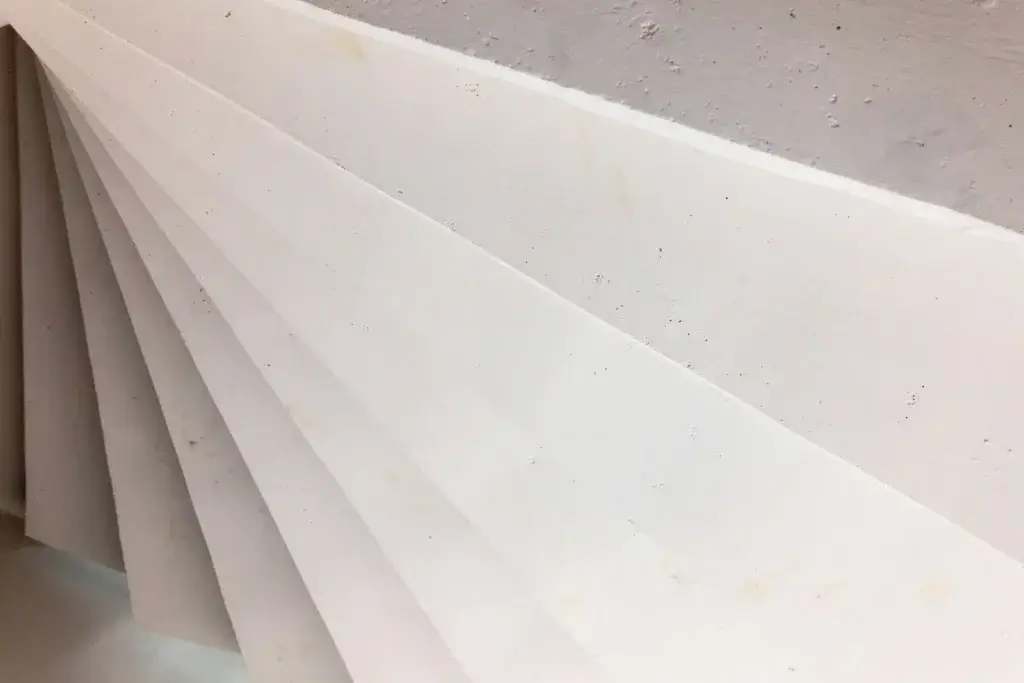
From semiconductor fabrication cleanrooms to high-temperature industrial furnaces, advanced ceramic materials have quietly become the backbone of modern manufacturing. Among these engineered materials, alumina ceramic plates stand out as one of the most versatile and widely adopted solutions. Their unique combination of extreme hardness, thermal stability, and electrical insulation has made them indispensable across electronics, aerospace, medical devices, and heavy industrial processing. Yet despite their ubiquity, the technical nuances of alumina plates—ranging from purity grades to manufacturing methods and supplier selection criteria—remain poorly understood by many procurement and engineering teams.
An alumina plate is a flat, dense ceramic component made primarily from aluminum oxide (Al2O3) with purity levels typically ranging from 92% to 99.9%. It delivers exceptional hardness, temperature resistance up to 1700°C, outstanding electrical insulation, and near-total chemical inertness, making it the material of choice for wear-resistant liners, electronic substrates, furnace components, and high-voltage insulators in environments where metals and polymers simply cannot perform.
Understanding the full landscape of alumina plates—how they are made, which grade suits which application, and what drives their growing market adoption—empowers engineers and buyers to make decisions that balance performance, cost, and long-term reliability. This guide provides a complete, technically grounded overview of alumina ceramic plates, drawing on established material science and current industry data.
What Is an Alumina Plate and How Is It Manufactured?
An alumina plate is an advanced technical ceramic component composed predominantly of aluminum oxide (Al2O3), produced through a multi-stage powder processing and high-temperature sintering route that yields a dense, hard, and chemically stable flat product suitable for precision industrial applications.
The raw material foundation of every alumina plate is high-purity aluminum oxide powder, typically derived from bauxite ore through the Bayer process. This calcined alumina powder is carefully selected based on particle size distribution, purity, and surface area—parameters that directly influence the final product’s density, grain structure, and mechanical properties. Before forming, the powder is blended with organic binders, plasticizers, and often small amounts of sintering aids such as magnesia (MgO) or silica (SiO2). These additives serve a dual purpose: they facilitate uniform shaping during forming and promote densification during the subsequent firing stage.
Forming represents the stage where the ceramic compound receives its plate geometry, and the method chosen depends heavily on the required dimensions, tolerances, and production volume. Dry pressing is the most common technique for standard-sized plates, where powder is compacted in a rigid die under uniaxial pressure. For larger plates requiring uniform density throughout the cross-section, isostatic pressing applies pressure equally from all directions using a flexible mold immersed in fluid. Slip casting and tape casting offer alternative routes for thin, large-area plates or complex near-net shapes. Hot pressing, which combines simultaneous heat and pressure, produces plates with exceptionally low porosity but at a higher manufacturing cost. Each forming technique leaves its signature on the green body’s microstructure, which carries through to the sintered product.
After forming, the green ceramic body undergoes a critical binder removal step, typically between 200°C and 900°C, where organic additives are thermally decomposed and evacuated. The plate then enters the high-temperature sintering phase at temperatures ranging from 1600°C to 1800°C. During sintering, alumina particles bond through solid-state diffusion, eliminating pores and driving the body toward its theoretical density. The sintering atmosphere, ramp rate, soak time, and cooling profile are tightly controlled to avoid warping, cracking, or grain growth anomalies. Post-sintering, the plate may undergo precision grinding, lapping, polishing, CNC machining, or metallization to achieve the final dimensional tolerances, surface finish, and functional integration required by end-use specifications. This entire manufacturing chain—from powder selection to final inspection—determines whether a plate meets the rigorous demands of semiconductor wafer handling, high-voltage insulation, or abrasive slurry processing.
What Are the Key Properties of Alumina Ceramic Plates?
Alumina plates combine extreme mechanical hardness, high-temperature stability beyond 1500°C, excellent dielectric strength, and comprehensive chemical inertness into a single material system, delivering performance characteristics that no single metal or polymer can replicate.
The property profile of alumina ceramic plates explains their adoption across such a wide range of demanding environments. The most prominent attribute is hardness. With Vickers hardness values ranging from 1500 to 2000 HV depending on purity, alumina plates resist scratching, abrasion, and erosive wear far better than hardened tool steels. This translates directly into extended service life for wear liners, pump components, and material handling equipment operating in abrasive media. Flexural strength, typically between 300 and 550 MPa for high-purity grades, provides adequate resistance to bending loads, while compressive strength values of 2000 to 4000 MPa make alumina plates exceptionally resistant to crushing forces.
Thermal performance is another defining advantage. Alumina plates sustain continuous operating temperatures up to approximately 1600°C for 96% grades and 1700°C or higher for 99%+ purities, with a melting point of 2050°C. Their low coefficient of thermal expansion, typically around 7 to 8 × 10⁻⁶/°C, minimizes dimensional change during thermal cycling and reduces the risk of stress-induced cracking. Thermal conductivity, moderate at roughly 24 to 30 W/m·K, supports heat dissipation in electronic substrates and thermal management applications without introducing the electrical conductivity concerns associated with metal heat sinks.
On the electrical side, alumina is an outstanding insulator. Dielectric strength ranges from 12 to over 15 kV/mm depending on purity, and volume resistivity exceeds 10¹⁴ Ω·cm, making alumina plates ideal for high-voltage standoffs, power module substrates, and vacuum feedthroughs. These electrical properties remain stable across a wide temperature window, a critical requirement for power electronics and aerospace applications. Chemical resistance rounds out the property set. Alumina resists attack from most acids, alkalis, and organic solvents, and it does not react with molten metals under standard industrial conditions. This inertness ensures long-term reliability in chemical processing equipment, medical implants, and semiconductor fabrication environments where contamination must be rigorously excluded.
The following table summarizes the mechanical, thermal, and electrical properties across typical alumina purity grades:
| Property | 96% Al2O3 | 99% Al2O3 | 99.5%+ Al2O3 |
| Density (g/cm³) | 3.7 | 3.8–3.9 | 3.9+ |
| Hardness (HV) | 1500 | 1650–1700 | 1800–2000 |
| Flexural Strength (MPa) | 300–350 | 310–400 | 350–550 |
| Compressive Strength (MPa) | 2000 | 2200 | 2500–4000 |
| Thermal Conductivity (W/m·K) | ~24 | ~25–28 | ~30 |
| Max Operating Temperature (°C) | ~1600 | ~1700 | ~1750 |
| Dielectric Strength (kV/mm) | ~12 | ~14–15 | 15+ |
| Thermal Expansion (×10⁻⁶/°C) | 7–8 | 7–8 | 7–8 |
What Are the Primary Applications of Alumina Plates Across Industries?
Alumina plates serve as electronic substrates and insulators, wear-resistant liners in heavy machinery, high-temperature furnace components, ballistic armor elements, medical implant substrates, and precision fixtures in semiconductor manufacturing, with the electronics sector alone accounting for over 45% of global demand.
The electronics and semiconductor industry represents the single largest consumer of alumina ceramic plates. In this domain, alumina plates function as substrates for integrated circuits, insulating bases for power modules, and heat sinks for high-density electronic packaging. Their combination of electrical insulation and moderate thermal conductivity enables efficient heat dissipation without short-circuit risk—a requirement that grows more stringent as electronic devices miniaturize and power densities climb. The 5G infrastructure rollout, expansion of electric vehicle power electronics, and proliferation of Internet of Things (IoT) devices are all amplifying demand for alumina substrates that can handle higher frequencies and temperatures than conventional PCB materials.
Industrial machinery and wear protection form the second-largest application segment, representing an estimated 27.6% of market value. Alumina plates line chutes, hoppers, pipes, and mixing vessels in mining, cement, steel, and chemical processing facilities, where they protect structural steel from abrasive slurries, powders, and granular materials. A ceramic-lined pipe section can outlast an unlined steel equivalent by a factor of five to ten, dramatically reducing maintenance downtime and replacement costs. In pump and valve applications, alumina wear rings, seal faces, and bushings maintain dimensional accuracy under continuous sliding contact and corrosive fluid exposure.
Aerospace and defense applications account for approximately 14.9% of the market, driven by alumina’s ability to withstand extreme thermal and mechanical loads without adding excessive weight. Alumina plates appear in heat shields, turbine engine components, and radar-transparent structural elements. The ballistic protection segment is particularly notable: high-purity alumina plates are integrated into composite armor systems for personnel carriers, aircraft, and body armor, where their extreme hardness defeats incoming projectiles by shattering the penetrator tip upon impact.
Medical and healthcare uses, at roughly 8% of the market, leverage alumina’s biocompatibility and chemical inertness. High-purity alumina plates serve as substrates for orthopedic implants, dental prosthetics, and surgical instrument components. The material’s non-porous surface prevents bacterial colonization, while its hardness ensures that cutting edges and bearing surfaces maintain sharpness through repeated sterilization cycles. In laboratory settings, alumina plates provide chemically resistant work surfaces, microtome cutting stages, and precision instrument bases.
The remaining demand spans energy and power generation, where alumina plates insulate high-voltage busbars and support heating elements in industrial furnaces, as well as specialized niches such as optical equipment fixturing and vacuum chamber components for thin-film deposition processes.
How Do Different Purity Grades of Alumina Plates Compare?
Alumina plates are classified by Al2O3 content into three broad purity tiers—standard (92–96%), high-purity (99–99.7%), and ultra-high-purity (99.8%+)—with each tier offering a distinct balance of performance, cost, and processability tailored to different application severity levels.
Selecting the correct purity grade is arguably the most consequential decision in alumina plate procurement, because it determines the performance ceiling, manufacturing complexity, and unit cost simultaneously. The standard grade, typically 92% to 96% Al2O3, incorporates a deliberate glassy phase (usually a combination of silica, magnesia, or calcia) that acts as a sintering aid, lowering the firing temperature and reducing energy costs. These plates deliver reliable mechanical strength, good wear resistance, and adequate electrical insulation for general industrial applications such as wear liners, pump seals, valve components, grinding media, and textile thread guides. Their cost-effectiveness makes them the default choice when extreme thermal or electrical demands are absent.
The high-purity grade, spanning 99% to 99.7% Al2O3, represents a significant step up in performance with a moderate cost increase. The reduced glassy phase content yields higher density, greater hardness, improved dielectric strength, and lower outgassing—the latter being critical for vacuum applications. These plates find their primary homes in electronic substrates, vacuum feedthroughs, semiconductor handling tools, and non-implantable medical device components. They offer an optimal price-to-performance ratio for buyers who need better properties than 96% alumina provides but do not require the extreme purity levels demanded by wafer fabrication environments.
Ultra-high-purity alumina, at 99.8% Al2O3 and above, pushes the glassy phase to near-zero levels. The resulting material exhibits maximum hardness (1800–2000 HV), exceptional wear resistance, the highest dielectric strength, and extremely low outgassing. In thin sections, it can even achieve translucency. The semiconductor industry is the dominant consumer of this grade, using it for etch chamber components, deposition chamber liners, plasma-resistant parts, and wafer handling fixtures where even trace contamination can destroy chip yields. High-temperature furnace tubes, precision optical mounts, and laser components represent additional application spaces where ultra-high-purity alumina’s property envelope justifies its premium cost.
The table below maps each grade tier to its typical use cases and selection rationale:
| Purity Grade | Al2O3 Content | Relative Cost | Typical Applications | Selection Rationale |
| Standard | 92–96% | Low | Wear liners, pump seals, valve seats, grinding media, thread guides | Adequate performance at lowest cost for non-critical environments |
| High-Purity | 99–99.7% | Moderate | Electronic substrates, vacuum feedthroughs, medical devices, semiconductor tools | Superior insulation and lower outgassing without ultra-purity premium |
| Ultra-High-Purity | 99.8%+ | High | Etch/deposition chamber parts, plasma-resistant components, optical fixtures | Maximum purity for contamination-sensitive semiconductor and vacuum processes |
What Should You Consider When Selecting an Alumina Plate Supplier?
Effective supplier selection for alumina plates centers on five criteria: verifiable material purity certification, demonstrated dimensional accuracy capability, surface finishing competence, customization flexibility, and rigorous quality assurance documentation, because lot-to-lot variability directly impacts end-product reliability.
Material purity and certification form the foundation of supplier evaluation. A credible supplier should provide detailed material composition data, ideally with third-party test reports confirming Al2O3 content levels and trace impurity profiles. In semiconductor and medical applications, the absence of specific contaminants—sodium, iron, calcium—can matter as much as the alumina percentage itself. Buyers should request certificates of analysis (CoA) that accompany each production batch, not just a general datasheet.
Dimensional accuracy and tolerance capability differentiate commodity suppliers from precision manufacturers. Standard alumina forming methods inherently produce some dimensional variation, which must be corrected through post-sintering grinding and machining. A supplier’s ability to hold tight tolerances—typically within ±0.02 to ±0.05 mm for precision-ground plates—reflects their investment in advanced grinding equipment and metrology infrastructure. Flatness, parallelism, and surface roughness specifications should be clearly agreed upon before production begins, because reclaiming plates that arrive out of tolerance introduces costly project delays.
Surface finishing competence encompasses grinding, lapping, polishing, and metallization. Mirror-polished alumina surfaces achieve roughness values below 0.1 μm Ra, which is essential for wafer handling and optical applications. Some suppliers offer thick-film metallization, depositing conductive traces of tungsten, molybdenum, or noble metals directly onto the alumina surface, enabling the plate to function as a circuit substrate. The presence of in-house finishing capability generally indicates a supplier with deeper process control than one that outsources these steps.
Customization flexibility matters for applications that fall outside standard catalog dimensions. The supplier’s proficiency with multiple forming routes—dry pressing, isostatic pressing, tape casting—determines the range of plate sizes, thicknesses, and geometries they can deliver. Buyers with non-standard requirements should evaluate whether the supplier can handle small-lot prototyping as well as scaled production without inconsistent property shifts.
Quality assurance documentation, ideally aligned with ISO 9001 or equivalent frameworks, provides confidence that the supplier operates under systematic process controls. Inspection reports covering visual appearance, dimensional checks, and performance testing should be available on request. For critical applications, buyers may also seek evidence of statistical process control (SPC) data, demonstrating that key property outputs remain within defined control limits across production runs. The market is moderately fragmented, with the top five producers accounting for a combined share near 80%, but the competitive differentiation lies less in brand and more in execution: consistent purity, tight tolerances, and reliable lead times.
What Is the Outlook for the Alumina Ceramic Plate Market?
The global alumina ceramic plates market is valued at approximately $1.36 billion in 2025 and is projected to grow at a compound annual growth rate of 6.5% through 2034, driven primarily by semiconductor industry expansion, 5G infrastructure deployment, electric vehicle power electronics, and increasing adoption of wear-resistant ceramic components across heavy industries.
Several structural forces underpin this growth trajectory. The semiconductor sector, already the dominant application segment at over 45% of market value, continues to invest heavily in new fabrication capacity globally. Each new fab requires alumina components for wafer handling, etch and deposition chambers, and thermal management—creating a direct multiplier effect on alumina plate demand. The trend toward smaller node sizes only intensifies purity and contamination-control requirements, favoring high-purity and ultra-high-purity alumina grades.
The electrification of transportation represents a second powerful demand driver. Electric vehicle power modules, onboard chargers, and DC-DC converters all depend on ceramic substrates for electrical isolation and heat dissipation. As EV production volumes scale toward tens of millions of units annually, the substrate market alone anchors sustained demand growth. The parallel rollout of 5G base stations, each containing multiple power amplifier and filter modules built on ceramic substrates, further expands the addressable market.
On the industrial side, the cost-of-downtime calculus increasingly favors ceramic wear protection over traditional steel liners. Mining operations, cement plants, and steel mills operating under tight margin pressure recognize that alumina-lined equipment, despite higher initial material cost, delivers lower total cost of ownership through extended replacement intervals and reduced maintenance labor. This awareness is gradually shifting procurement behavior from lowest-unit-price purchasing toward life-cycle-cost analysis, expanding the market for alumina wear plates in regions with growing heavy industrial activity.
Geographically, Asia Pacific dominates both production and consumption, anchored by China’s extensive ceramics manufacturing base and the region’s concentration of electronics assembly and semiconductor fabrication. North America and Europe represent mature markets with stable demand driven by aerospace, defense, and advanced medical device manufacturing. The following table outlines the market’s projected growth trajectory and key regional dynamics:
| Metric | Value | Period |
| Market Size (2025) | $1.36 billion | Current |
| Projected CAGR | 6.5% | 2025–2034 |
| Dominant Application | Electronics & Semiconductors (45.5%) | 2025 |
| Largest End-User Region | Asia Pacific | 2025 |
| Key Growth Driver | Semiconductor capacity expansion | Ongoing |
| Secondary Driver | EV power electronics substrates | Accelerating |
Competitive dynamics remain shaped by technical capability rather than brand recognition. The leading producers combine vertical integration from powder processing through finished machining with application engineering support that helps customers optimize grade selection and plate geometry. Capacity expansions in ultra-high-purity alumina grades signal confidence in sustained semiconductor-driven demand. For buyers, the market’s steady growth and improving manufacturing technologies continue to expand the range of available grades, sizes, and surface finishes, making alumina plates an increasingly accessible option for demanding industrial applications.