3D Printing Alumina
- Home /
- Alumina /
- Alumina Application /
- 3D Printing Alumina
What Is 3D Printing Alumina?
Key Advantages of 3D Printing Alumina
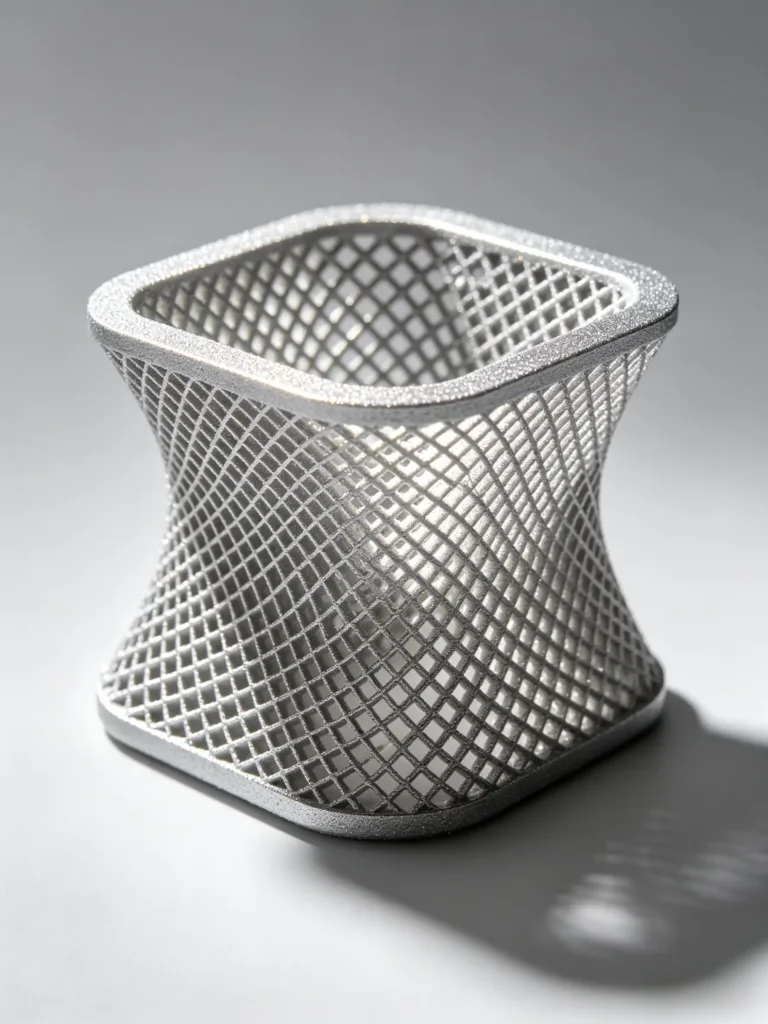
- Complex Geometry Production Without Tooling or Forming Constraints: The use of aluminum oxide to produce a ceramic additive removes geometrical constraints imposed by die-pressing, sliding - and extrusion-producing aluminum alloy parts having inner passages, grid configurations, conformational characteristics and complex curvature that can not be obtained by traditional ceramic fabrication processes in an economically feasible volume of production.
- High-Performance Sintered Properties Equivalent to Conventionally Formed Alumina: Appropriately prepared and sintered 3D printed aluminium oxide has a density, a hardness, a bending strength, and a chemical resistance that is equivalent to a conventional manufacturing process - providing the complete material properties of high purity aluminium oxide in geometry complicated parts which had previously required costly processing of dense aluminium sheets.
- Rapid Prototyping and Short-Run Production Without Hard Tooling Investment: Additive manufacturing removes the mould, mould, and mould costs that are related to traditional ceramic shaping – making it possible to produce customized aluminum oxide parts cheaply in a sample volume, a small batch size, and often modified design, while not requiring a specialized ceramic tooling.
- Controlled Porosity and Microstructure for Functional Ceramic Applications: Advanced ceramic 3-D printing techniques permit controlled changes in the local density, porosity, and microstructures in the individual aluminum oxide parts - making it possible to achieve a function gradient structure, an engineered porous scaffold for medical implants, and an optimal heat and sound properties profile that a conventional conventional ceramic can not provide.
- Customization for Medical, Aerospace, and Electronic Application Requirements: 3-D printing aluminum oxide supports patient specific medical implant geometry, application-specific electronics board layout, and component specific aerospace structure profiles – by combining aluminum oxide's biocompatibility, insulating properties, and heat properties in conjunction with the dimension customization that is becoming more and more required by high-valued specialty applications in advanced ceramic manufacturing vendors.
Industry Challenges
Feedstock particle size and distribution inconsistency disrupting slurry stability and print resolution
Sintering shrinkage prediction and dimensional control in complex printed geometries
Achieving sintered density and mechanical properties equivalent to conventionally formed alumina
Product overview
Alumina
AP-α-3DP/G500
Specific Use Scenarios — 3D Printing Alumina
Aerospace and Defense Structural and Thermal Components
Medical Implants and Biomedical Device Components
Electronic Substrates and Microelectronic Packaging Components
Industrial Wear Parts and Custom Ceramic Components
Research, Prototyping, and Custom Ceramic Development
High-Temperature Laboratory and Analytical Equipment Components
Our 3D Printing Alumina Advantages
Complex Ceramic Geometry Production Without Tooling or Forming Constraints
The use of aluminum oxide to produce ceramic additive removes mold pressure and geometry constraints - making it possible to produce aluminum oxide parts with inner passages, grid patterns, and complex curvature that can not be obtained by traditional ceramic molding techniques, while avoiding the lead time and capital costs associated with specialized ceramic tooling.
Full Sintered Performance Properties in Geometrically Complex Component Forms
Appropriately prepared and sintered 3D printed aluminium is as thick, tough, and chemically resistant as those of conventional technology - providing a high purity aluminium oxide's full material properties in a complicated assembly geometry that would have required costly processing of compact aluminium sheets.
Rapid Prototyping and Small-Batch Production Without Hard Tooling Investment
Additive fabrication removes the mould and mould costs related to traditional ceramic fabrication – allowing for economical fabrication of customized aluminum oxide parts in a sample amount and a small batch size, while not producing a minimal number of orders and tooling lead times that are needed for traditional ceramic fabrication.
Find All Activated Carbon Categories
Find All Industrial Solutions
Packaging & Logistics Services
Secure & Customizable Packaging
The products shall be enclosed in a durable, moistureproof pouch or bulk container, so as to guarantee the cleanliness and completeness of transportation. Customized packing options for special size and handling needs.
Reliable & Flexible Global Shipping
Working with reliable logistic partners, we provide a flexible delivery system for maritime, aerial and land-based cargo. Prompt delivery and safe transport to worldwide destinations.
Dedicated Order & Support Coordination
We offer special support for tracking and documenting from the order validation to the last shipment. Availability of technical and logistical support to guarantee the success of the supply chain experience.
Ready to Find Your Perfect Industrial Solution?
How to Order!
Send us your detailed question, or ask for a quote tailored to your activated carbon requirements.