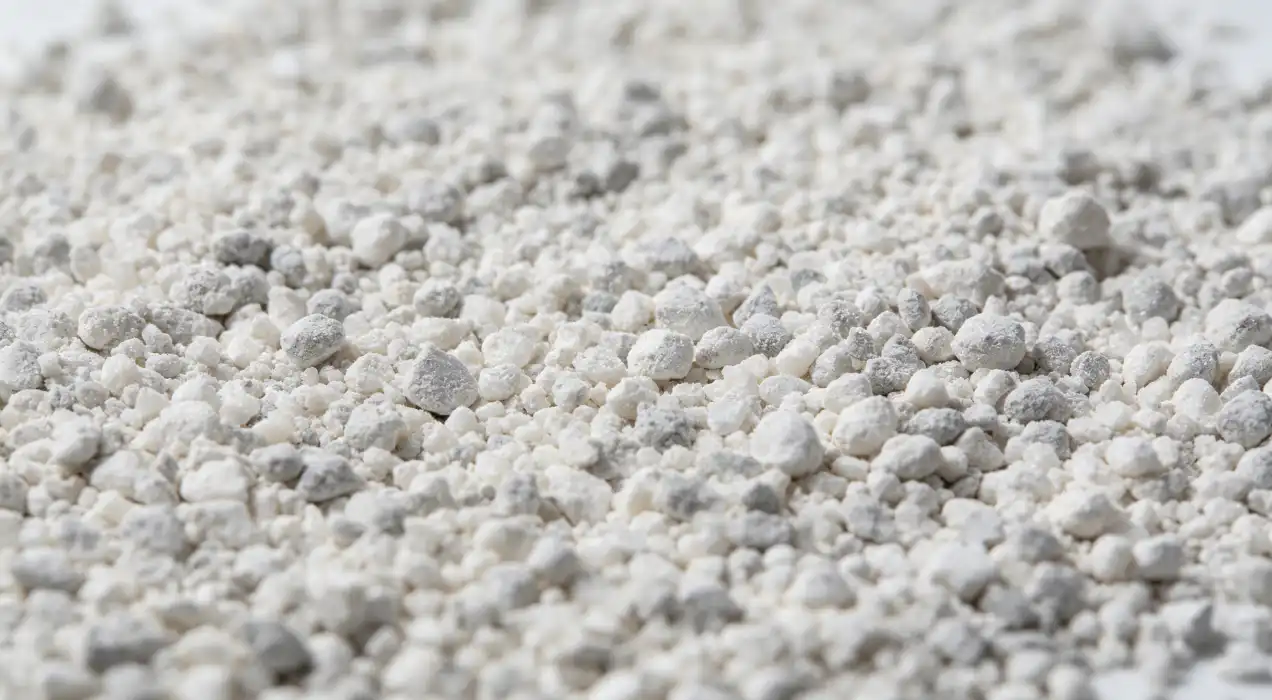
Dealloying for Alumina
- Home /
- Alumina /
- Types of Alumina /
- Dealloying Alumina

What Is Dealloying for Alumina?
Dealloying for Alumina is an advanced materials synthesis technique in which one or more components are selectively dissolved or removed from an aluminum-containing alloy — typically through chemical or electrochemical etching — leaving behind a highly porous, three-dimensional aluminum oxide (Al₂O₃) framework with a uniquely interconnected nanoporous architecture.
Unlike conventional alumina production methods that build structures from powder precursors, dealloying works by subtraction — engineering porosity directly into a solid material at the nanoscale. The process typically begins with a binary or multi-component aluminum alloy, where the less noble or more reactive elements are selectively leached away using acid solutions or electrochemical treatments. The remaining aluminum skeleton is subsequently oxidized or converted to alumina, preserving the intricate bicontinuous pore network formed during dealloying.
The result is an alumina material with a structurally unique, self-supporting nanoporous architecture — characterized by uniform ligament widths, high open porosity, and an extraordinarily high surface-to-volume ratio. These structural features are fundamentally different from those achievable through any powder-based or solution-phase synthesis route, opening new possibilities in applications that demand extreme surface activity, rapid mass transport, and precisely controlled nanostructure.
Why Choose Dealloying for Alumina?
- Unique Bicontinuous Nanoporous Architecture Dealloying produces a self-supporting, three-dimensionally interconnected pore network that enables simultaneous rapid fluid transport and maximum surface exposure — a structural combination that conventional particulate or templated alumina materials cannot replicate.
-
Exceptionally High Surface-to-Volume Ratio The nanoscale ligament and pore dimensions generated through dealloying deliver surface areas far exceeding bulk alumina forms, providing an unprecedented density of active sites for catalytic, sensing, and adsorption applications.
-
Precisely Tunable Pore Size Pore dimensions and ligament widths can be systematically controlled by adjusting alloy composition, etching conditions, and post-treatment parameters — enabling application-specific nanostructure engineering with a high degree of reproducibility.
-
Monolithic, Self-Supporting StructureUnlike powder-based alumina, dealloyed alumina can be produced as a freestanding, mechanically coherent monolith — eliminating the need for binders or support matrices and simplifying integration into device architectures and reactor systems.
-
Superior Mass Transport Properties The open, interconnected pore channels facilitate rapid diffusion of gases, liquids, and ions throughout the material — delivering performance advantages in electrochemical energy storage, sensor response times, and flow-through catalytic systems.
-
Cutting-Edge Application PotentialDealloyed alumina's distinctive nanostructure positions it at the frontier of next-generation technologies — including supercapacitors, hydrogen storage, biosensors, and advanced membrane applications — where conventional alumina materials are structurally insufficient.
Industry Challenges
High Process Complexity
Achieving consistent nanoporous architecture requires precise simultaneous control over alloy composition, etching chemistry, temperature, and reaction time — making the dealloying process significantly more technically demanding than conventional alumina production methods.
Limited Production Scalability
The intricate electrochemical and chemical etching steps involved in dealloying are difficult to translate from laboratory scale to large-volume industrial production without compromising structural consistency and pore network uniformity.
High Raw Material & Processing Costs
Specialty aluminum alloy feedstocks and controlled etching environments require substantial investment, resulting in production costs considerably higher than standard powder-based or calcination-derived alumina alternatives.
Mechanical Fragility of Nanoporous Structures
The thin ligaments and high porosity that define dealloyed alumina’s performance also make it inherently brittle and susceptible to structural collapse under mechanical stress during handling, processing, or application integration.
Etching Byproduct Management
Chemical dealloying generates acidic or alkaline waste streams containing dissolved alloying elements, requiring careful waste treatment and environmental compliance management that adds operational complexity and cost.
Product overview
Alumina
AP-α-3DP/G500
Why Use Our Dealloying for Alumina
Unique Bicontinuous Nanoporous Architecture
Dealloying creates a self-supporting, three-dimensionally interconnected pore network that simultaneously enables rapid fluid transport and maximum surface exposure — a structural combination impossible to achieve through conventional powder-based or solution-phase alumina synthesis routes.
Precisely Tunable Pore Size & Ligament Width
Pore dimensions and ligament widths are systematically controlled by adjusting alloy composition, etching conditions, and post-treatment parameters — enabling reproducible, application-specific nanostructure engineering with a high degree of structural precision.
Superior Mass Transport Performance
Open, interconnected pore channels facilitate rapid diffusion of gases, liquids, and ions throughout the material — delivering measurable performance advantages in energy storage, flow-through catalysis, and fast-response sensor applications.
Related Applications

Industry Solutions
Packaging & Logistics Services
Secure & Customizable Packaging
The products shall be enclosed in a durable, moistureproof pouch or bulk container, so as to guarantee the cleanliness and completeness of transportation. Customized packing options for special size and handling needs.
Reliable & Flexible Global Shipping
Working with reliable logistic partners, we provide a flexible delivery system for maritime, aerial and land-based cargo. Prompt delivery and safe transport to worldwide destinations.
Dedicated Order & Support Coordination
We offer special support for tracking and documenting from the order validation to the last shipment. Availability of technical and logistical support to guarantee the success of the supply chain experience.
Ready to Find Your Perfect Industrial Solution?
How to Order!
Send us your detailed question, or ask for a quote tailored to your activated carbon requirements.