Titanium Dioxide For Fiber
- Home /
- Titanium Dioxide /
- Titanium Dioxide Usage /
- Fiber Titanium Dioxide
What Is Titanium Dioxide for Fiber?
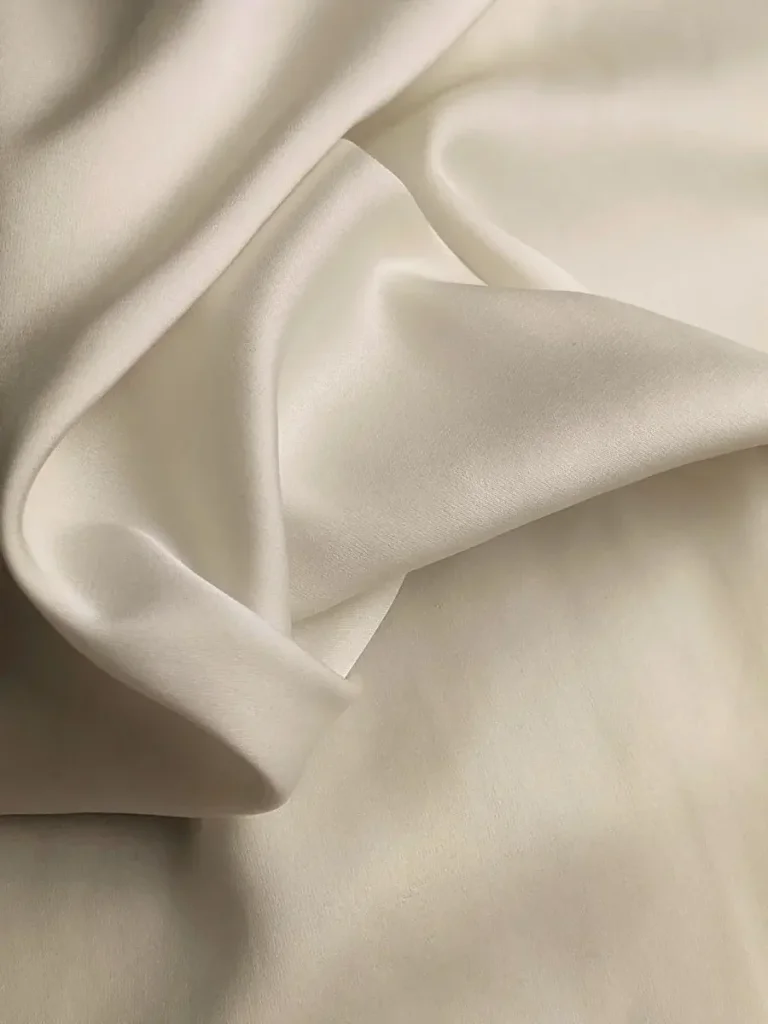
Titania for fibre is the special use of TiO₂ as a function additive in the production of synthetic and semi synthetic fibres. In this case, titanium dioxide is used mainly as an illusion- a substance that lowers the natural luster of synthetic fibres like PET, NYLONS and RAYON to give it a softer, more natural look as desired by both the textile market and the final consumer.
In the manufacture of fibres, TiO₂ particles are added to a polymeric melt or a spinning liquid at a accurately controlled concentration prior to extrusion. The tiny TiO₂ particles disperse the incoming light that is passing through the fibre, effectively reducing its transparency and surface luster. Through adjustment of TiO₂ loading levels, producers are able to manufacture fibres in a wide variety of light finishes – from light and semidark to completely dark – satisfying the various aesthetic needs of clothing, household, industry and technological fibre applications.
In addition to being deluding, titanium dioxide also provides brightness, UV protection, and enhanced fibre handling – it is a versatile ingredient that provides beauty and functionality across the entire fibre manufacturing cycle as well as the final fabric life cycle.
Key Advantages of Titanium Dioxide for Fiber
- Precise Gloss & Sheen Control—TiO₂ allows fibre makers to fine tune their surface gloss levels – from light to completely dark – allowing fabric makers to adapt their products to a wide range of market specifications and end uses.
- Enhanced Whiteness & Color Performance —Titania gives the fibre an outstanding foundation gloss, enhances the gloss and vitality of the dyed fabric, and decreases the amount of dye needed to reach the desired colour depth - it is also capable of providing high quality and cost-effective performance.
- UV Protection & Fiber Stability —TiO₂ absorbs and distributes UV rays, offering an intrinsic UV shield that prolongs the useful lifetime of a finished product – especially useful in outdoor clothing, sports wear and UV protection.
- Consistent Dispersion & Processing Compatibility—High quality fiber titanium dioxide is designed to distribute uniformly in the polymer melt, to minimise the blockage of the filter, to decrease the amount of spindle wear, and to guarantee a steady, uninterrupted spinning process throughout the high volume continuous manufacturing environment.
-
Broad Fiber Type Compatibility—Titanium dioxide performs reliably across a wide range of fiber types — including polyester, nylon, polypropylene, viscose, and acetate — thus acting as a universally applicable functional additive throughout the entire spectrum of fiber manufacturing operations.
Industry Challenges
Consistent Particle Size Control
In fibre applications, the achievement of a homogeneous TiO2 particle size distribution is crucial – too large grains can lead to a spinning block, a blocking of the filter, and a break in a thread that can disrupt a continuous high speed manufacturing process.
Dispersion Uniformity in Polymer Melts
Ensuring homogeneous TiO₂ dispersion throughout the polymer melt is technically demanding — poor dispersion leads to optical inconsistencies, surface defects, and uneven delustering across finished fiber.
Abrasion & Spinneret Wear
In the process of extruding, titanium dioxide is applied to the spinning device and spindle, which speeds up the wear of parts and improves the repair rate and the downtime.
Product overview
Titanium Dioxide
AS-F100
Titanium Dioxide
AS-F500
Specific Use Scenarios — Titanium Dioxide for Fiber
Polyester Fiber Delustering
Nylon Fiber Optical Adjustment
Viscose & Rayon Fiber Whitening
Polypropylene Fiber Processing
UV-Protective Functional Fiber Production
Fine Denier & Microfiber Applications
Our Titanium Dioxide for Fiber Advantages
Precise Delustering & Optical Contro
Solid Titanium Oxide provides high consistency of Luminous, Semidull and Completely Dull - allowing the Maker to precisely control the Fibre Appearance and Repeat Light Quality Batch by Batch Through High Volume Continuous Spinning.
Superior Dispersion & Processing Stability
Engineered with tightly controlled particle size distribution, fiber-grade TiO₂ disperses uniformly in polymer melts — which minimizes spinneret wear, reduces filter pressure buildup, and facilitates stable, uninterrupted production throughput in polyester, nylon, and polypropylene spinning processes.
Multifunctional Performance Benefits
In addition to being deluding, titanium dioxide also increases the brightness of the fibre, increases the rate of absorption of the dye, and also offers an intrinsic UV protective effect – bringing several functionality benefits into one component that can be measured across the entire life cycle of the fabric.
Find All Activated Carbon Categories
Find All Industrial Solutions
Packaging & Logistics Services
Secure & Customizable Packaging
The products shall be enclosed in a durable, moistureproof pouch or bulk container, so as to guarantee the cleanliness and completeness of transportation. Customized packing options for special size and handling needs.
Reliable & Flexible Global Shipping
Working with reliable logistic partners, we provide a flexible delivery system for maritime, aerial and land-based cargo. Prompt delivery and safe transport to worldwide destinations.
Dedicated Order & Support Coordination
We offer special support for tracking and documenting from the order validation to the last shipment. Availability of technical and logistical support to guarantee the success of the supply chain experience.
Ready to Find Your Perfect Industrial Solution?
How to Order!
Send us your detailed question, or ask for a quote tailored to your activated carbon requirements.