
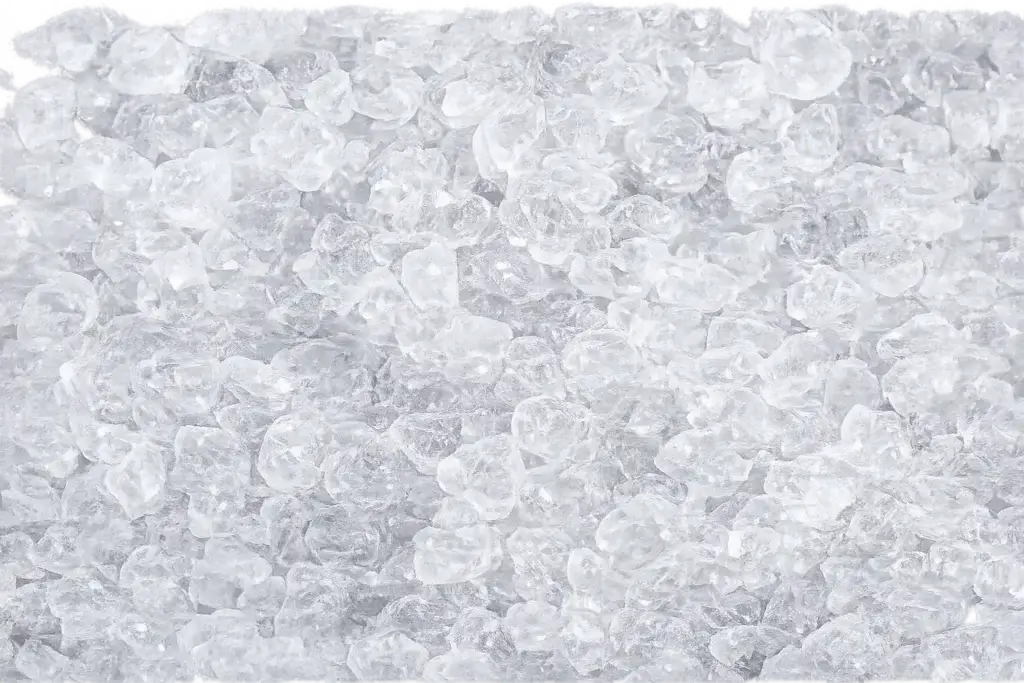
Fused alumina is one of the most widely consumed synthetic industrial minerals on the market, serving as the backbone material for abrasives, refractories, and surface preparation across sectors ranging from steelmaking to aerospace. It is produced by melting high-alumina raw materials in an electric arc furnace at temperatures exceeding 2,000 degrees Celsius, yielding a crystalline product with exceptional hardness, thermal stability, and chemical inertness. In 2025, the global fused alumina market reached an estimated USD 4.2 billion, with projections pointing toward USD 5.99 billion by 2032 at a compound annual growth rate of 5.2%. As industries continue to demand materials that withstand higher temperatures, deliver longer service life, and meet tighter purity specifications, understanding the nuances of fused alumina has never been more important for procurement professionals, engineers, and manufacturing decision-makers.
Fused alumina is a synthetic corundum material produced by electric arc smelting of bauxite or high-purity alumina powder. It exists in three primary grades — brown fused alumina (BFA) for toughness and cost-efficiency, white fused alumina (WFA) for high-purity precision applications, and black fused alumina for economical heavy-duty use — with refractories accounting for 64.7% of demand and abrasives for 30.3%. Read the full market segmentation at PW Consulting
The industrial significance of fused alumina extends well beyond its role as a grinding grain. In refractories, it provides the thermal and mechanical backbone for furnace linings, ladles, and kiln furniture that operate continuously at temperatures above 1,600 degrees Celsius. In abrasives, it enables everything from heavy snagging of cast iron to the precision polishing of semiconductor wafers. This dual-role versatility, combined with ongoing technological improvements in smelting efficiency and purity control, keeps fused alumina at the center of industrial material strategy. The following guide examines the manufacturing process, compares the key grades in detail, surveys major applications across industries, offers a framework for grade selection, and analyzes forward-looking market dynamics.
What Is Fused Alumina and How Is It Manufactured?
Fused alumina is a synthetic form of aluminum oxide (Al₂O₃) produced by melting calcined bauxite or high-purity industrial alumina in an electric arc furnace at approximately 2,000 to 2,200 degrees Celsius, followed by controlled cooling, crushing, and classification into specific grit sizes. The resulting material achieves a Mohs hardness of 9, second only to diamond among commonly available industrial minerals.
The production process begins with careful raw material selection. For brown fused alumina, the primary feedstock is calcined bauxite — a mineral containing approximately 88% aluminum oxide that has been pre-heated at 1,400 to 1,500 degrees Celsius to drive off volatile compounds and improve furnace efficiency. This bauxite is blended with anthracite coal as a reducing agent and iron filings to facilitate impurity separation. The mixture is fed into a tilt-pour or fixed electric arc furnace, where carbon electrodes generate the extreme temperatures necessary for complete fusion. During smelting, the carbon reduces silica and iron oxides, which separate as a ferrosilicon slag layer on top of the molten alumina. The purified alumina settles in the middle zone and is poured into molds or onto cooling floors, where it solidifies over 24 to 48 hours into large ingots.
After cooling, the fused alumina ingots undergo a multi-stage size reduction process. Primary crushing with jaw crushers breaks the material into manageable lumps, followed by secondary crushing through cone and roll crushers. Ball mills achieve finer particle sizes for specialty applications. Magnetic separation removes residual iron particles introduced during crushing, and the cleaned material passes through vibrating screens and air classifiers to achieve precise particle size distributions conforming to FEPA, ANSI, or JIS grit standards. For refractory-grade material, additional washing with water or acid removes dust and trace contaminants that would otherwise compromise high-temperature performance. The entire energy-intensive process typically yields a product with 95% or greater Al₂O₃ content for brown grades and 99% or above for white grades. For a detailed breakdown of BFA specifications and procurement considerations, see this comprehensive sourcing guide.
Quality control at each stage is essential. Chemical composition analysis verifies Al₂O₃, TiO₂, Fe₂O₃, and SiO₂ levels per batch. Particle size distribution is checked against the specified grit range, and bulk density measurements flag processing inconsistencies. For abrasive-grade BFA, magnetic material content is typically held below 0.05%, while refractory-grade specifications tighten the limit to 0.02% or less. These rigorous standards ensure that fused alumina delivers predictable, repeatable performance across its many downstream applications.
Brown Fused Alumina vs White Fused Alumina: Key Differences
Brown fused alumina (BFA) contains approximately 95% Al₂O₃ with titanium dioxide (1.5–3.8%) as a naturally occurring toughening agent, delivering higher impact resistance and cost-efficiency for heavy-duty grinding and refractory applications. White fused alumina (WFA) achieves 99% or greater Al₂O₃ purity through smelting of refined industrial alumina powder, resulting in superior hardness, sharper cutting edges, and minimal contamination — making it the preferred choice for precision grinding, polishing, and high-performance refractories, albeit at 1.5 to 2 times the cost of BFA.
The difference in raw material inputs drives the divergence in properties and pricing. BFA production starts with natural bauxite, whose inherent impurities — primarily titanium, iron, and silicon oxides — remain partially in the finished product. These impurities are not merely tolerated; they are functionally exploited. Titanium dioxide in particular acts as a grain toughening agent, making BFA grains resistant to impact fracture under heavy feed rates. This is why BFA grinding wheels consistently outperform WFA wheels on cost-per-part in carbon steel applications, even though WFA cuts sharper initially. BFA’s blocky, slightly rounded grain morphology further contributes to its durability in cyclic loading environments such as blast rooms and recycling abrasive systems. For a detailed side-by-side comparison of WFA and BFA across sandblasting, grinding, and surface preparation, refer to this comprehensive technical guide.
WFA takes the opposite approach. By using Bayer-process industrial alumina powder as the starting material and introducing virtually no reducing agents during smelting, WFA achieves a purity level that eliminates ferrous contamination risks in sensitive metal processing. Its angular, sharp-edged grain morphology promotes micro-fracturing during use: as cutting edges dull, they break away to expose fresh, equally sharp surfaces underneath. This self-sharpening behavior makes WFA ideal for precision applications where surface finish quality is paramount, including stainless steel blasting, aerospace coating preparation, optical glass grinding, and semiconductor wafer polishing. However, this friability means WFA wears faster than BFA in heavy stock removal scenarios, and the higher energy and raw material costs push its price to roughly 1.5 to 2 times that of comparable BFA grades.
The following table summarizes the key differentiating parameters:
| Property | White Fused Alumina (WFA) | Brown Fused Alumina (BFA) |
| Al₂O₃ Content | ≥99% | ≥95% |
| TiO₂ Content | Negligible | 1.5–3.8% |
| Mohs Hardness | 9.0 | 8.9 |
| Toughness | Lower (brittle, self-sharpening) | Higher (impact-resistant) |
| Grain Shape | Angular, sharp | Blocky, slightly rounded |
| Density | ~3.9 g/cm³ | ~3.8 g/cm³ |
| Refractoriness | ≥1900°C | ≥1800°C |
| Contamination Risk | Minimal | Possible iron/silica residue |
| Price Level | 1.5–2× higher | Lower, economical for bulk use |
Black fused alumina, the third commercially significant variant, occupies the economy tier with an Al₂O₃ content of 45–75%, the highest toughness of all three types, and the lowest production cost. It finds use in sandblasting, anti-slip flooring, cement kiln refractories, and applications where thermal shock resistance takes priority over purity. Its refractoriness range of 1650–1750°C, while lower than WFA or BFA, is offset by superior resistance to cracking under rapid temperature cycling. A systematic comparison of all three fused alumina types is available here.
Major Industrial Applications of Fused Alumina
Fused alumina serves two dominant industrial application segments: refractories, which accounted for approximately 64.7% of global demand (USD 2.72 billion) in 2025, and abrasives, representing 30.3% (USD 1.27 billion). The remaining 5% covers niche uses including ceramic proppants, anti-slip surfaces, and industrial filtration media.
In refractories, fused alumina functions as a high-performance aggregate in monolithic castables, gunning mixes, ramming compounds, and pressed bricks. Its combination of high melting point, chemical inertness, and resistance to slag penetration makes it indispensable for hot-face linings in steelmaking electric arc furnaces, basic oxygen furnace vessels, ladles, and tundishes. BFA-based refractories are particularly valued in sliding gate plates and well blocks, where the material must resist both thermal shock and the erosive flow of molten steel. WFA-based refractories, with their higher purity and refractoriness exceeding 1900°C, serve more demanding environments such as glass furnace regenerators, high-grade ceramic kilns, and petrochemical reactor linings where contamination from iron or titanium would compromise product quality. Growing demand from the global steel industry — which showed a strong recovery in 2025 — continues to anchor refractory consumption of fused alumina, with Asia-Pacific mills accounting for the bulk of throughput.
The abrasives segment spans a wide range of bonded, coated, and loose-grain applications. In bonded abrasives, BFA dominates vitrified and resin-bonded grinding wheels for general-purpose metalworking on carbon steel, cast iron, and low-alloy steels. Its toughness maintains consistent material removal rates under heavy feed pressure and extends wheel life compared to more friable grain types. WFA bonded wheels address the precision end of the spectrum: tool and cutter grinding, cylindrical grinding of hardened steel, and surface grinding where minimal workpiece heating and superior surface finish are required. Coated abrasives — sanding belts, flap discs, and sandpaper sheets — use BFA for woodworking and general metal deburring, while WFA-coated products serve stainless steel finishing and aerospace component preparation. In loose-grain abrasive blasting, BFA is the standard media for structural steel descaling, ship hull maintenance, and bridge repainting projects due to its favorable balance of cleaning rate, media longevity, and cost. For blasting stainless steel, titanium, and aluminum substrates where ferrous contamination must be avoided, WFA is specified.
Emerging applications continue to expand the fused alumina demand base. In the oil and gas sector, ceramic proppants made from high-strength fused alumina keep hydraulic fractures open in deep-well stimulation. In construction, black fused alumina aggregates provide durable anti-skid surfaces for airport runways, bridge decks, and industrial flooring. In water treatment, fused alumina-based filtration media offer chemical stability and mechanical strength for demanding process streams. These specialized applications, while individually small, collectively represent growth vectors that diversify the industry beyond its traditional refractory-abrasive core.
How to Choose the Right Fused Alumina Grade
Grade selection depends on three primary factors: the base material being processed, the required surface finish or performance specification, and the operating cost envelope. For heavy stock removal on ferrous metals, brown fused alumina with higher TiO₂ content (2.5–3.8%) delivers the best cost-performance ratio. For precision finishing on stainless steel, non-ferrous alloys, and sensitive substrates where contamination control is critical, high-purity white fused alumina is the correct specification.
The decision framework starts with the workpiece material. Carbon steel, cast iron, and structural steel tolerate BFA’s minor iron and titanium residues without adverse effects, making it the economical default for these substrates. Stainless steel, aluminum, titanium, and surface-sensitive alloys require WFA to prevent embedded contamination that can lead to post-processing corrosion or coating adhesion failure. In refractory applications, the material compatibility calculus shifts toward thermal and chemical factors: slag composition, operating temperature range, and thermal cycling frequency determine whether BFA’s balanced performance or WFA’s higher purity and refractoriness provides better service life. Facilities processing aggressive slags or requiring maximum hot strength should evaluate WFA-based formulations, while standard steel mill linings operating below 1700°C can achieve excellent results with BFA.
Beyond material compatibility, application-specific performance requirements further refine the choice. For abrasive blasting where media is recycled multiple times in enclosed blast rooms, BFA’s greater toughness translates to longer cycle life and lower media consumption per ton of steel cleaned. For single-pass blasting or applications where the risk of ferrous contamination on stainless or non-ferrous substrates is unacceptable, WFA’s higher unit cost is offset by eliminating rework and quality rejects. Grinding operations follow a similar logic: rough snagging of castings and heavy weld removal favor BFA for durability, while tool sharpening, cylindrical grinding to tight tolerances, and surface finishing on hardened components demand WFA’s sharpness and cool-cutting properties. The TiO₂ content within a given BFA specification provides a secondary tuning parameter: higher titanium levels (2.5–3.8%) produce tougher grains suited for heavy grinding, while lower-titanium semi-friable grades (1.0–2.0% TiO₂) offer sharper cutting action for coated abrasives.
Cost structure considerations complete the decision. While WFA carries a price premium of 1.5 to 2 times over BFA on a per-ton basis, the total cost of ownership may favor either grade depending on throughput, rework rates, and end-product value. An aerospace component manufacturer losing a high-value part to surface contamination from BFA blasting would find WFA’s premium trivial in comparison. Conversely, a structural steel fabricator processing thousands of tons annually would incur disproportionate costs by specifying WFA where BFA meets all technical requirements. Procurement teams should evaluate on a cost-per-part or cost-per-ton-cleaned basis using in-house trial data rather than relying solely on raw material price comparisons.
Fused Alumina Market Trends and Growth Outlook
The global fused alumina market was valued at USD 4.2 billion in 2025 and is projected to reach USD 5.99 billion by 2032, expanding at a CAGR of 5.2%. Asia Pacific dominates with 54.7% of market revenue (USD 2.3 billion), driven by integrated steelmaking and automotive manufacturing supply chains in China, India, and Southeast Asia, while North America and Europe account for 15.0% and 20.1% respectively.
The market’s growth trajectory is anchored by the sustained recovery of the global steel and metallurgy industries, which directly consume fused alumina in refractory linings and indirectly drive abrasive demand through downstream metal fabrication. Rising vehicle production, infrastructure investment in developing economies, and expanding industrial automation all contribute to steady volume growth. On the supply side, however, manufacturers face mounting cost pressures. Electricity — the single largest variable cost in electric arc furnace smelting — saw power costs surge 28–34% at major Chinese production hubs in 2025, compressing gross margins from the 23–26% range seen in 2024 down to 14–17%. Environmental compliance costs in key producing regions such as Henan province doubled from 6.8% of total costs in 2022 to 14.2% by 2025, reflecting tighter emissions enforcement and industrial solid waste regulations.
Regional dynamics continue to reshape supply chains. Asia Pacific’s 54.7% revenue share reflects not only massive domestic demand from steel, automotive, and construction sectors but also China’s position as the world’s dominant producer of both BFA and WFA. However, actual capacity utilization rates tell a more constrained story: operational utilization in 2025 was estimated at only 58–63% industry-wide, with Q1 2025 utilization in Shanxi dropping to 41–47% due to power rationing and environmental production controls. US Section 301 tariffs on Chinese BFA imports have begun tilting sourcing patterns toward alternative Asian suppliers and regional producers, potentially strengthening intra-Asia trade flows while raising landed costs for North American buyers. India’s policy of imposing a minimum export price of USD 735 per ton on bauxite feedstock further complicates the raw material cost landscape for manufacturers dependent on imported bauxite.
On the product development front, several trends are reshaping the competitive landscape. The adoption of advanced grading and purity control technologies is enabling deeper penetration into high-specification markets such as semiconductor manufacturing, where ultra-high-purity WFA is increasingly specified for wafer polishing and precision ceramic components. The shift toward energy-efficient production processes — including improved furnace designs, waste heat recovery systems, and renewable energy integration — is gradually reshaping the cost structure for forward-looking producers. Meanwhile, the growing demand for sustainable and eco-friendly abrasive solutions is driving interest in closed-loop recycling systems and lower-carbon-footprint manufacturing processes. These trends, combined with steady end-market demand growth, position the fused alumina industry for measured but durable expansion through the end of the decade and beyond.