
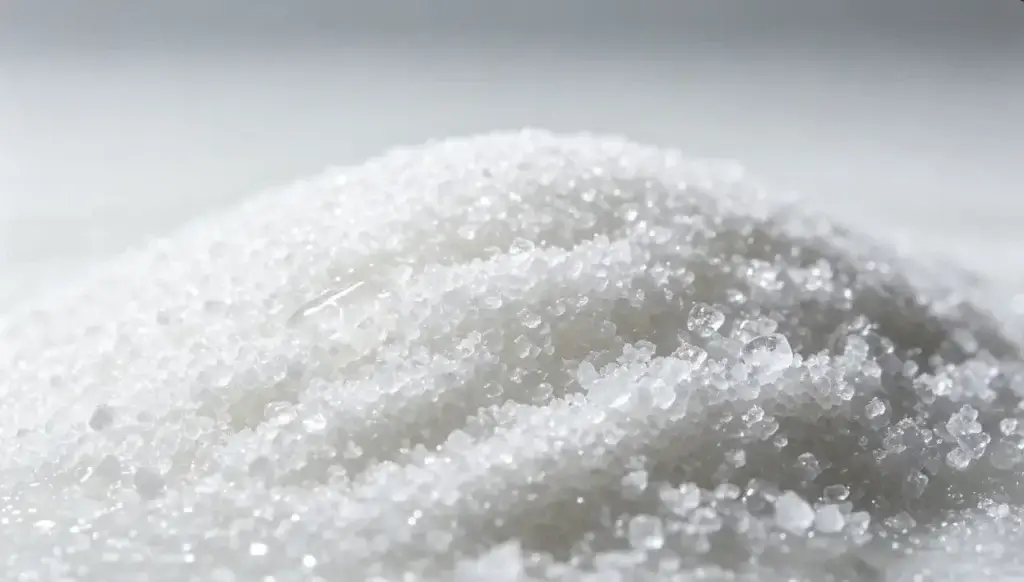
Alumina, or aluminum oxide (Al2O3), is one of the most widely used industrial materials, valued for its exceptional hardness, thermal stability, electrical insulation, and corrosion resistance. While the vast majority of global alumina production relies on the Bayer process, yielding a product with 99.6% to 99.9% purity suitable for smelting and refractories, a specialized class of high-purity alumina produced through wet chemical routes has emerged as a critical enabler of advanced technologies. This category, commonly referred to as wet chemical alumina or high-purity alumina (HPA), is defined by purity levels exceeding 99.99% (4N) and often reaching 99.999% (5N) or higher.
Wet chemical alumina has become indispensable across industries that demand precise material performance: lithium-ion battery separators for electric vehicles, sapphire substrates for LED lighting, advanced ceramics for semiconductor manufacturing, and high-precision polishing slurries. As global electrification accelerates and electronics manufacturing becomes more sophisticated, understanding the nuances of wet chemical alumina production, its distinguishing characteristics, and the forces shaping its market has never been more relevant for procurement professionals, engineers, and industry strategists.
Wet chemical alumina refers to high-purity aluminum oxide (Al2O3 of 99.99% or higher) produced through solution-based synthesis routes, including alkoxide hydrolysis, ammonium aluminum sulfate thermolysis, and hydrochloric acid leaching, and it is fundamentally different from Bayer-process smelter-grade alumina in terms of purity, particle morphology, and application scope.
The distinction between commodity alumina and wet chemical HPA is not merely academic; it carries profound implications for downstream manufacturing. A lithium battery separator made with 4N HPA behaves entirely differently from one using 3N Bayer alumina, particularly regarding thermal stability and ionic conductivity. Similarly, a sapphire crystal grown for LED substrates demands impurity levels measured in parts per million, not percentage points. This article provides a structured exploration of wet chemical alumina, beginning with its production pathways, moving through its defining characteristics versus conventional alumina, examining its most important end-use applications, analyzing the market forces driving its rapid growth, and concluding with practical guidance for quality evaluation and a look at future industry trends.
What Is Wet Chemical Alumina and How Is It Produced?
Wet chemical alumina is high-purity Al2O3 synthesized through liquid-phase chemical methods rather than the traditional Bayer digestion of bauxite. The principal commercial routes include aluminum alkoxide hydrolysis, ammonium aluminum sulfate (alum) thermolysis, ammonium aluminum carbonate hydroxide (AACH) decomposition, and hydrochloric acid leaching followed by crystallization, each offering distinct trade-offs in purity ceiling, cost structure, and particle morphology control.
Aluminum alkoxide hydrolysis is the dominant commercial method for producing the highest grades of HPA, with established production technology described in industry literature. In this process, high-purity aluminum metal reacts with an alcohol such as isopropanol or butanol to form aluminum alkoxide, which is then purified by distillation. The purified alkoxide undergoes controlled hydrolysis to yield hydrated alumina (typically boehmite), and subsequent calcination above 1,200 degrees Celsius transforms it into alpha-phase Al2O3. This route, which has been commercially practiced since the early 1980s, can consistently achieve 4N to 5N purity because the distillation step effectively removes metallic impurities. The alkoxide method accounts for the largest share of premium-grade HPA production globally, particularly for LED sapphire and lithium battery applications.
The ammonium aluminum sulfate thermolysis route begins with dissolving aluminum hydroxide in sulfuric acid, followed by crystallization of ammonium alum (NH4Al(SO4)2·12H2O). Repeated recrystallization progressively purifies the intermediate, which is then thermally decomposed and calcined to produce HPA. While this method can achieve 4N purity and has lower raw material costs than the alkoxide route, it generates sulfur oxides and ammonia gases that require scrubbing systems, adding to capital expenditure. Researchers have demonstrated that this approach can be combined with chloride-system crystallization to further refine purity, as shown in a study where iron-rich kaolin was processed through a hybrid ammonium alum route to yield alumina exceeding 99.99% purity.
Hydrochloric acid leaching represents a growing alternative, particularly for projects seeking to use non-bauxite feedstocks. In this route, aluminum hydroxide or clay is digested with concentrated HCl, producing an aluminum chloride solution. After filtration to remove unreacted solids, the solution is cooled to crystallize ultra-high-purity aluminum chloride hexahydrate (ACH), which is then washed, decomposed, and calcined. This method has demonstrated the ability to achieve 5N (99.999%) purity with extremely low sodium and calcium levels, making it attractive for battery-grade applications where alkali metal contamination is a known performance risk.
The following table compares the major wet chemical production routes:
| Production Route | Typical Purity | Key Advantages | Key Limitations |
| Aluminum Alkoxide Hydrolysis | 4N to 5N | Highest purity, proven at scale, excellent particle control | High raw material cost (aluminum metal), complex process |
| Ammonium Alum Thermolysis | 4N | Lower feedstock cost, established technology | Gas emissions requiring treatment, longer cycle time |
| HCl Leaching and ACH Crystallization | 4N5 to 5N | Can use non-bauxite feedstocks, very low sodium | High chloride corrosion management, HCl recovery complexity |
| AACH Decomposition | 4N | No sulfur emissions, controllable morphology | Longer production cycle, higher processing cost |
How Does Wet Chemical Alumina Differ from Conventional Alumina?
Wet chemical alumina differs from conventional Bayer-process alumina in four fundamental dimensions: purity level (99.99%+ versus 99.6-99.9%), impurity profile (ppm-level versus percent-level contaminants), particle characteristics (controlled submicron morphology versus broader distribution), and application domain (functional high-tech uses versus commodity smelting and refractories).
Conventional alumina produced by the Bayer process from bauxite ore typically contains 99.6% to 99.9% Al2O3, with the balance consisting of sodium oxide (typically 0.2-0.5%), silica, iron oxide, calcium oxide, and other trace elements. For aluminum smelting, this purity level is perfectly adequate. However, when this same alumina is used in applications such as lithium battery separator coatings, the sodium content can leach into the electrolyte, compromising battery safety and cycle life. Researchers have linked sodium contamination in alumina separators with diminished performance and increased safety risks in Li-ion batteries, underscoring why wet chemical HPA with sodium levels below 100 ppm has become the standard for this application.
The impurity threshold is the most immediately visible distinction. While Bayer alumina reports impurities in weight percent, wet chemical HPA specifications are expressed in parts per million. A typical 4N HPA product specification limits silicon below 200 ppm, iron below 80 ppm, sodium below 200 ppm, and calcium below 20 ppm. For 5N grades, total metallic impurities are constrained to under 10 ppm. This order-of-magnitude difference in purity is not merely a laboratory achievement; it directly determines whether a material can function in a semiconductor polishing slurry, where a single large impurity particle can create a wafer-level defect, or in a sapphire growth furnace, where trace elements distort the crystal lattice.
Particle morphology control is the second critical differentiator. Wet chemical routes enable producers to engineer particle size distribution (PSD), specific surface area (BET), and crystal phase (alpha, gamma, theta) with far greater precision than the Bayer process allows. For lithium battery separator applications, HPA with a D50 of 0.5 to 1.2 microns and a narrow size distribution is essential to form a thin, uniform ceramic coating that does not block lithium-ion transport channels. For polishing applications, near-spherical particle morphology with no sharp edges prevents scratching of delicate substrates. For advanced ceramics, controlled sintering activity allows densification at lower temperatures, reducing energy consumption during downstream processing.
The cost differential reflects these technical distinctions. Commodity smelter-grade alumina trades in the range of several hundred dollars per ton, while 4N HPA commands prices of $20,000 to $40,000 per ton, and 5N material can exceed $50,000 per ton depending on particle specifications. This two-order-of-magnitude price gap accurately reflects the complexity of removing the final 0.1% of impurities from an already pure material.
What Are the Key End-Use Applications?
Wet chemical alumina serves as a critical functional material across five major application domains: lithium-ion battery separators and electrode coatings, LED sapphire substrates, advanced ceramics and semiconductor components, precision polishing slurries, and phosphors and optical materials. Each application imposes distinct purity, particle size, and morphology requirements that only wet chemical HPA can satisfy.
Lithium-ion battery applications represent the fastest-growing demand segment for wet chemical alumina. HPA is applied as a nano-thin ceramic coating on polymer battery separators, typically in thicknesses of 1 to 4 microns. This alumina coating provides multiple performance benefits: it dramatically reduces thermal shrinkage at elevated temperatures, prevents lithium dendrite penetration that can cause internal short circuits, and improves electrolyte wettability. A study on alumina nanocoated separators demonstrated that the ceramic layer served as a robust thermal insulation barrier without adversely affecting mass transport, achieving discharge capacities of 166 mAh/g at 0.1C. As electric vehicle adoption accelerates and battery safety regulations tighten globally, the use of alumina-coated separators has transitioned from a premium differentiator to an industry standard.
The LED and sapphire substrate segment, while maturing, remains a high-volume consumer of 4N and 5N HPA. Sapphire (single-crystal alpha-alumina) is grown from high-purity alumina feedstock using methods such as Kyropoulos and edge-defined film-fed growth (EFG). The resulting sapphire crystals serve as substrates for LED epitaxy and as cover glass for premium smartphones and wearable devices. Sapphire substrate manufacturing demands HPA with total impurity levels below 10 ppm, as even trace contamination can introduce lattice defects that scatter light and reduce LED efficiency.
Advanced ceramics and semiconductor manufacturing constitute the third major application domain. HPA is used in the production of semiconductor equipment components such as electrostatic chucks, wafer handling parts, and chamber liners, where its combination of high electrical resistivity, thermal conductivity, and plasma resistance is unmatched by alternative materials. Additionally, HPA serves as a critical raw material for chemical mechanical planarization (CMP) slurries used in semiconductor wafer polishing. The market for HPA in semiconductor applications was estimated at approximately $1.1 billion in 2025 and is projected to reach $3.6 billion by 2032, according to industry research.
Precision polishing represents a specialized but high-value application. Submicron alpha-alumina powders with tightly controlled particle size distributions and near-spherical morphology are the abrasive of choice for polishing optical glass, semiconductor wafers, and precision metal components. The polishing performance of HPA is directly tied to its particle characteristics: a D50 in the range of 0.5 to 1.0 microns with no abnormally large particles (D100 below 4 microns) prevents surface scratching while maintaining an efficient material removal rate. High-purity alpha-alumina polishing powders with a narrow particle size distribution are particularly valued in the finishing of camera lenses, AR/VR optical components, and aerospace components where surface quality directly impacts functional performance.
What Is Driving Global Market Growth?
The global wet chemical alumina (HPA) market is experiencing extraordinary growth, driven primarily by the electrification of transportation and the expansion of energy-efficient lighting and electronics. Market valuations place the industry at approximately $3.1 to $4.6 billion in 2024, with projections ranging from $16 to $30 billion by 2032-2034, reflecting compound annual growth rates of 16% to 23%.
Multiple independent market research sources converge on a consistent growth narrative. According to industry analysis by Grand View Research, the HPA market was valued at $4.63 billion in 2024 and is projected to reach $30.79 billion by 2033 at a CAGR of 23.4%. Other estimates from Polaris Market Research place the market at $3.11 billion in 2024 growing to $20.26 billion by 2034 at 20.6%. In volume terms, Mordor Intelligence data indicates HPA consumption of approximately 97 kilotons in 2024 with growth to over 300 kilotons by 2030, representing a CAGR of 20.3%. While specific figures vary by research methodology, the directional consensus confirms that HPA is one of the fastest-growing segments in the broader specialty chemicals and advanced materials landscape.
Regional dynamics heavily favor the Asia Pacific region, which accounted for approximately 59% to 74% of global HPA consumption in 2024 depending on the source. China alone represents the single largest national market, driven by its dominant position in LED manufacturing, lithium battery production, and electronics assembly. Japan, South Korea, and Taiwan form a secondary demand cluster centered on semiconductor manufacturing and precision ceramics. North America and Europe, while smaller in market share at approximately 11% to 20% each, are seeing accelerated investment as governments prioritize domestic supply chains for critical battery materials and semiconductor inputs.
The lithium-ion battery application has emerged as the primary growth engine. HPA consumption for battery separators was estimated at $88.2 million for alumina sol alone in 2025, and this figure captures only a portion of the broader battery-grade HPA market. The rapid expansion of EV manufacturing capacity, particularly in China, the United States, and Europe, has created a structural demand shift that is expected to persist through at least 2035. Government policies such as the U.S. Inflation Reduction Act and the European Battery Regulation have further accelerated this trend by incentivizing localized battery material supply chains.
The HPA market by product grade shows 4N material holding the largest revenue share at approximately 48% to 58% of the total market, driven by its cost-effectiveness for LED and battery applications. The 5N segment, while smaller, commands premium pricing and is growing rapidly as semiconductor and sapphire applications demand progressively higher purity levels.
| Application Segment | 2025 Market Value (Estimated) | Growth Driver |
| Lithium-Ion Battery Separators | $88M+ (Alumina Sol); much larger total | EV adoption, battery safety regulations |
| LED and Sapphire Substrates | ~$500M | LED lighting penetration, smartphone cover glass |
| Semiconductors and CMP | ~$1.1B | Chip manufacturing expansion, advanced node scaling |
| Phosphors and Optical Materials | ~$78M | Display technology, specialty lighting |
| Precision Ceramics | ~$19M (Alumina Sol); broader ceramic market larger | Industrial equipment, aerospace |
What Quality Parameters Should Buyers Evaluate?
When sourcing wet chemical alumina, buyers must evaluate a multi-dimensional set of quality parameters that go well beyond nominal purity claims. The most critical specifications include total impurity content by element (with particular emphasis on sodium, iron, silicon, and calcium), particle size distribution (D10, D50, D90, D100), specific surface area (BET), alpha-phase content, and powder morphology. Each parameter has direct consequences for downstream processability and final product performance.
Purity, while the most commonly cited specification, must be evaluated by individual impurity elements rather than a blanket 4N or 5N label. Sodium content is especially critical for battery and electronic applications because sodium ions are electrochemically mobile and can degrade separator performance and electrolyte stability. A typical battery-grade HPA specification limits sodium below 200-400 ppm, while premium grades target below 100 ppm. Iron, silicon, and calcium each present their own risks: iron can introduce magnetic foreign matter that causes battery micro-shorts, silicon can form glassy phases during ceramic sintering, and calcium can flux alpha-alumina grain boundaries, reducing high-temperature strength. Buyers should request GD-MS or ICP-MS analytical reports that quantify at least 15 elemental impurities, not just a summary total.
Particle size distribution (PSD) is equally important and is often the parameter that distinguishes functionally equivalent products from functionally inadequate ones. For battery separator coating, a D50 of 0.5 to 1.2 microns with D100 below 4 microns is typical. The absence of oversized particles is critical; a single 10-micron particle in a separator coating formulated for 2-micron thickness can create a defect that compromises the entire cell. For CMP slurries, particle size uniformity directly impacts polishing rate uniformity and defect density. For advanced ceramics, the PSD influences green body packing density and therefore final sintered density and mechanical properties.
Specific surface area (BET) provides an indirect measure of primary particle or crystallite size and is a key predictor of sintering activity. Higher BET values (8-10 m2/g) indicate finer primary particles with greater surface energy, promoting densification at lower sintering temperatures, while lower BET values (4-6 m2/g) correspond to coarser crystallites suitable for applications where excessive shrinkage during firing must be avoided. Alpha-phase content, typically specified as greater than 95% for most technical applications, ensures phase stability during high-temperature processing, as transitional alumina phases (gamma, delta, theta) will undergo volume changes upon conversion to alpha that can cause cracking or warping.
| Parameter | Battery Separator Grade | Polishing Grade | Ceramic Grade |
| Al2O3 Purity | 99.9% | 99.99% | 99.9% |
| D50 (microns) | 0.5-1.2 | 0.5-1.0 | 0.6-1.2 |
| D100 (microns) | <4 | <4 | <6 |
| BET (m2/g) | 5-8 | 4-8 | 4-10 |
| Alpha-phase (%) | 95 | 95 | 95 |
| Na (ppm) | <200 | <100 | <200 |
| Fe (ppm) | <80 | <30 | <80 |
| Morphology | Near-spherical | Near-spherical, no sharp edges | Near-spherical |
What Are the Future Trends Shaping the Industry?
The wet chemical alumina industry is being reshaped by five interconnected trends: the shift toward non-bauxite and recycled aluminum feedstocks, the development of ultra-fine nanoparticle grades below 100 nanometers, increasing vertical integration between HPA producers and battery manufacturers, tightening environmental regulations driving cleaner production processes, and the emergence of next-generation applications in solid-state batteries and advanced semiconductor packaging.
The feedstock diversification trend reflects both economic and strategic motivations. Traditional alkoxide hydrolysis depends on high-purity aluminum metal, which in turn depends on the Bayer process and ultimately on bauxite mining. Several projects are now commercializing alternative feedstocks, including kaolin clay, coal fly ash, and even recycled aluminum-air battery electrolyte. A 2020 study demonstrated the feasibility of producing 4N-plus alumina from aluminum-air battery waste electrolyte through a multi-step purification process involving impurity removal, seed precipitation, acid dissolution, and calcination. While these alternative routes face their own technical challenges, their development is strategically important for regions lacking access to high-quality bauxite or seeking to reduce dependence on imported aluminum metal.
Nanoparticle-grade HPA with primary particle sizes below 100 nanometers represents the frontier of product development. These ultra-fine powders exhibit dramatically different sintering behavior, enabling ceramic densification at temperatures 200 to 300 degrees Celsius lower than conventional submicron powders, with corresponding energy savings. They also enable the formulation of CMP slurries for next-generation semiconductor nodes where defect tolerance is measured in single-digit nanometers. Achieving these particle sizes while maintaining phase purity and avoiding hard agglomeration remains a significant technical challenge that only a limited number of producers have solved.
Vertical integration is accelerating as battery manufacturers seek to secure high-quality HPA supply. Long-term supply contracts between HPA producers and Tier-1 battery makers are becoming more common, with alumina sol and powder specifications being co-developed rather than purchased off-the-shelf. This trend favors producers who can offer customized particle engineering services and consistent lot-to-lot quality, rather than those competing solely on published purity numbers.
The solid-state battery represents a potentially transformative future application. Solid electrolytes based on alumina and related oxide ceramics are among the leading candidates for next-generation batteries that promise higher energy density and intrinsic safety compared to liquid-electrolyte lithium-ion cells. If solid-state batteries achieve commercial scale, the demand for ultra-high-purity alumina with exacting phase purity and particle characteristics would increase by an order of magnitude.
The wet chemical alumina industry stands at the intersection of two of the most powerful technological mega-trends of the era: electrification and advanced electronics manufacturing. The material’s unique combination of purity, thermal stability, electrical insulation, and tunable particle characteristics positions it as an irreplaceable input across applications that are growing at double-digit annual rates. For industry participants, the key to competitive success lies not merely in meeting nominal purity specifications, but in developing the process control, particle engineering, and application-specific customization capabilities that transform a commodity chemical into a precision functional material. Procurement professionals and engineers who understand the full dimensionality of HPA quality, who look beyond 4N or 5N labels to evaluate individual impurity profiles and particle characteristics, will be best positioned to build resilient supply chains for the advanced manufacturing economy of the coming decade.