
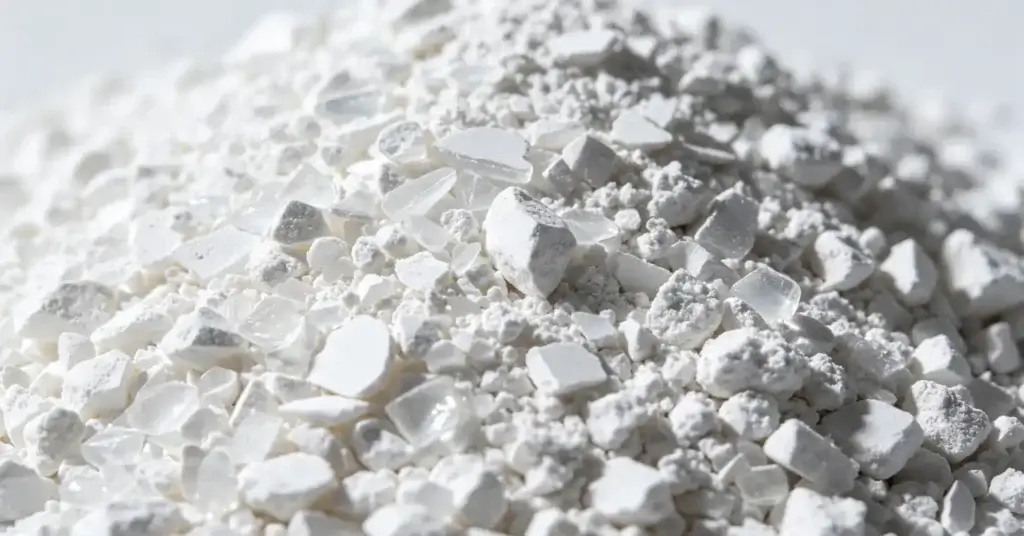
Alumina (aluminum oxide, Al₂O₃) is one of the most widely used advanced ceramic materials in modern industry, valued for its exceptional hardness, high thermal stability, excellent electrical insulation, and remarkable chemical inertness. From electronic substrates and cutting tools to biomedical implants and catalyst supports, the performance of alumina-based products is heavily dependent on the particle size, morphology, and phase purity of the starting powder. Among the various powder processing techniques available, mechanical ball milling stands out as a mature, cost-effective, and industrially scalable method for reducing alumina particle size and tailoring its physicochemical properties. Unlike chemical synthesis routes that often involve complex precursor chemistry, high-temperature calcination, and costly purification steps, mechanical ball milling relies on straightforward physical comminution through the repeated impact, compression, and attrition of alumina particles between grinding media within a rotating or vibrating chamber. This mechanical approach not only achieves particle size reduction down to the submicron or even nanometer range under optimized conditions, but can also induce beneficial structural changes such as crystallite refinement, lattice strain accumulation, and phase transformation, all of which directly influence the sintering behavior and final properties of alumina ceramics.
Mechanical ball milling is a versatile top-down powder processing method that reduces alumina particle size through repeated fracturing and cold-welding cycles driven by grinding media impact, with achievable particle sizes ranging from tens of microns down to below 10 nanometers depending on milling parameters, media selection, and process configuration.
Understanding how to select and optimize the right ball milling approach for alumina is essential whether you are developing high-purity nanocrystalline ceramics, formulating thermal interface materials, or producing feedstock for advanced ceramic components. The interplay between milling parameters creates a multidimensional optimization challenge that directly impacts product quality, energy consumption, and overall process economics. The following sections examine each of these critical dimensions in detail, drawing on both academic research and established industrial practice to provide a comprehensive reference for engineers, researchers, and procurement professionals evaluating mechanical ball milling for their alumina processing needs.
How Does Mechanical Ball Milling Reduce Alumina Particle Size?
Mechanical ball milling reduces alumina particle size through a combination of impact, compression, and attrition forces generated by the collision of grinding media with alumina particles inside a rotating or vibrating chamber, repeatedly fracturing larger particles into progressively finer fragments until a dynamic equilibrium between fracture and cold-welding is reached.
The fundamental mechanism of size reduction in ball milling begins with the rotation or vibration of the milling vessel, which imparts kinetic energy to the grinding media. As the vessel rotates, the grinding balls are lifted along the vessel wall and subsequently cascade or fall onto the powder charge, delivering high-energy impacts that fracture individual alumina particles. The high hardness of alumina (Mohs hardness of approximately 9) means that the grinding media must be comparably hard or harder to achieve effective comminution. During the initial stages of milling, large particles are fractured rapidly due to the presence of pre-existing flaws and grain boundaries that serve as stress concentration points. As particle size decreases, the defect density within each particle is reduced, making further fracture progressively more difficult and requiring higher energy input per unit of size reduction.
Simultaneously with fracture, fine alumina particles experience cold-welding, where freshly created particle surfaces bond together under the intense local pressure and temperature generated by ball impacts. This creates a dynamic equilibrium state: large particles are continuously fractured while fine particles simultaneously agglomerate through cold-welding. The balance point between these competing mechanisms determines the minimum achievable particle size for a given set of milling conditions. Research has demonstrated that with optimized high-energy ball milling parameters, micron-sized α-Al₂O₃ particles can be reduced to an average particle size of approximately 8 nanometers with a purity of 99.96% after extended milling durations. At extended milling times, typically beyond 80 hours in high-energy configurations, the system reaches a steady state where further milling produces negligible additional size reduction and the particle size distribution stabilizes.
The milling mechanism also depends heavily on the type of ball mill employed. Planetary ball mills generate high centrifugal forces that produce both impact and friction, making them particularly effective for laboratory-scale alumina nanoparticle synthesis. Attritor mills, which use a vertical or horizontal agitator to stir the grinding media, provide higher energy density and more uniform milling, making them suitable for pilot-scale production. Tumbler ball mills operate at lower energy levels but offer high throughput capacity for industrial-scale processing where target particle sizes remain in the micron range.
What Are the Key Process Parameters for Optimizing Alumina Ball Milling?
The critical process parameters governing alumina ball milling efficiency and final particle characteristics are rotation speed, ball-to-powder weight ratio (BPR), milling time, grinding media material and size, and the choice of milling atmosphere, with each parameter exhibiting an optimal range beyond which further adjustment yields diminishing returns or introduces undesirable side effects such as excessive contamination or agglomeration.
Rotation speed is arguably the most influential parameter, as it directly determines the kinetic energy imparted to the grinding media. At low speeds, the grinding balls slide or roll without significant impact, resulting in inefficient grinding. As speed increases, the balls enter a cascading motion where they are lifted and then fall onto the powder, maximizing impact energy and grinding efficiency. However, exceeding the critical speed causes the balls to centrifuge against the vessel wall, eliminating impact altogether and halting the grinding process. Experimental studies on alumina milling using vibratory horizontal attritors have identified an optimum rotational speed of approximately 700 rpm, at which the balance between impact energy and effective media motion produces the finest particle sizes. Below this optimum, insufficient energy transfer limits fracture rates; above it, excessive turbulence and heat generation can promote unwanted agglomeration and increase contamination from media and vessel wear.
The ball-to-powder weight ratio (BPR) controls the frequency and intensity of ball-particle collisions. Higher BPR values increase the number of collisions per unit time and the total impact energy available for particle fracture, generally leading to finer particle sizes and faster milling kinetics. Research on alumina attritor milling has systematically investigated BPR values of 5:1, 10:1, 20:1, and 40:1, demonstrating that increasing BPR consistently produces finer mean particle sizes across all tested conditions. However, excessively high BPR values reduce batch throughput capacity, increase contamination risks from media wear, and can generate excessive heat. For most alumina milling applications, a BPR in the range of 10:1 to 20:1 represents a practical compromise between grinding efficiency and operational constraints. The following table summarizes the effect of key parameters on alumina milling outcomes:
| Parameter | Low Range Effect | Optimal Range | High Range Effect |
| Rotation Speed | Insufficient impact, coarse product | 60–75% of critical speed | Centrifuging, no grinding |
| Ball-to-Powder Ratio (BPR) | Few collisions, slow size reduction | 10:1 to 20:1 | Excessive contamination, heat buildup |
| Milling Time | Incomplete size reduction | Material-dependent; 5–80 hours | Agglomeration, contamination saturation |
| Ball Size (diameter) | Less impact energy per collision | 5–20 mm (scales with vessel) | Fewer collisions, less uniform grinding |
| Media Density | Lower impact energy | High-density ceramics (zirconia, alumina) | N/A — higher is typically better |
Milling time determines the cumulative energy input and the approach toward the dynamic equilibrium particle size. In the initial hours of milling, particle size decreases rapidly as large particles undergo primary fracture. The rate of size reduction then decelerates as particles become smaller and more defect-free, eventually approaching an asymptotic minimum. For alumina processed in high-energy planetary ball mills, significant size reduction occurs within the first 10 to 20 hours, with diminishing returns beyond approximately 40 to 60 hours. Prolonged milling beyond the equilibrium point primarily increases contamination from grinding media wear and can promote undesirable phase transformations or amorphization.
Dry vs. Wet Ball Milling: Which Approach Suits Your Alumina Processing?
Wet ball milling is generally preferred for alumina processing when sub-10-micron particle sizes, narrow size distributions, and reduced contamination are required, while dry ball milling is better suited for moisture-sensitive alumina products, applications requiring direct dry powder output without further dewatering, and facilities operating in water-scarce environments.
The fundamental distinction between dry and wet ball milling lies in the presence or absence of a liquid medium—typically water, though alcohol or other solvents may be used depending on material compatibility—within the grinding chamber. In wet milling, the liquid forms a slurry with the alumina powder, serving as a lubricant, coolant, and dispersion aid. This slurry environment dramatically alters the milling dynamics: the liquid film between particles reduces inter-particle friction, prevents the electrostatic agglomeration that plagues dry fine grinding, and efficiently dissipates the heat generated by ball impacts. These advantages translate into tangible performance differences. Wet ball mills typically achieve grinding efficiency improvements of 20 to 30% compared to equivalent dry mills, reaching the same target particle size with 15 to 25% less energy consumption per ton of product. For alumina, which is often processed to submicron or nanometer particle sizes for advanced ceramic applications, wet milling enables practical particle size reduction down to well below 10 microns—a regime that dry milling struggles to reach due to severe particle agglomeration.
The choice between dry and wet milling also carries significant implications for equipment design, operating costs, and downstream processing. The following comparison highlights the key trade-offs:
| Parameter | Dry Ball Milling | Wet Ball Milling |
| Minimum Practical Particle Size | ~25–75 microns | <1–10 microns |
| Energy Efficiency | Lower (15–25% higher kWh/t) | Higher |
| Water Requirement | None | Significant (requires supply and treatment) |
| Dust Control | Mandatory dust collection system | Contained within slurry |
| Liner and Media Wear | Higher (20–40% faster) | Lower (liquid lubrication effect) |
| Downstream Processing | Direct dry powder output | Requires dewatering or drying step |
| Temperature Control | Higher internal temperatures | Self-cooling via liquid medium |
| Material Suitability | Moisture-sensitive, hygroscopic materials | Most ceramic powders including alumina |
Dry ball milling eliminates the need for water supply infrastructure, slurry handling equipment, and post-milling drying steps. This makes it attractive in arid regions, for facilities with stringent effluent discharge regulations, or when processing hygroscopic alumina grades that must remain anhydrous. However, dry milling of alumina to fine particle sizes generates significant dust, requiring robust dust collection and potentially explosion suppression systems if combustible ancillary materials are present. The absence of liquid cooling also causes higher mill interior temperatures, which may affect the surface chemistry of freshly fractured alumina particles.
Wet milling, while requiring additional capital for slurry handling, pumps, and dewatering equipment such as filter presses or spray dryers, typically delivers lower overall operating costs per ton at production scales exceeding 50,000 tons per year. The energy savings and reduced media wear offset the water treatment costs, and certain downstream ceramic processes—such as slip casting and tape casting—require the alumina to be in slurry form anyway, eliminating the need for a separate drying and re-dispersion step. These operational and economic considerations make wet milling the dominant choice for large-scale alumina powder production in the advanced ceramics industry. For a more detailed comparison of dry and wet ball milling across 12 operational and economic parameters, refer to this comprehensive analysis of dry versus wet ball mill selection criteria.
How Does Ball Milling Drive Alumina Phase Transformation?
High-energy ball milling can induce phase transformations in alumina—most notably the conversion of metastable transition aluminas such as γ-Al₂O₃ to the thermodynamically stable α-Al₂O₃ phase—by accumulating lattice defects and strain energy that effectively lower the activation barrier for the phase transition, enabling transformation at temperatures significantly lower than those required by conventional thermal calcination alone.
Alumina exists in several crystallographic phases, with α-Al₂O₃ (corundum) being the only thermodynamically stable form at all temperatures. Other transition phases—including γ, δ, θ, and η—are metastable and convert to α-Al₂O₃ upon heating, typically requiring temperatures above 1,100°C. Mechanical ball milling profoundly influences this phase transformation behavior. The intense mechanical deformation during milling introduces a high density of crystalline defects, dislocations, and grain boundaries, which collectively raise the free energy of the starting phase and provide abundant nucleation sites for the α-phase. This stored mechanical energy effectively reduces the thermal energy required to overcome the phase transformation activation barrier.
A particularly effective strategy combines ball milling with seeding. When a small quantity of α-Al₂O₃ seed crystals is introduced during milling of γ-Al₂O₃ or other transition phases, the seed particles serve as heterogeneous nucleation sites that template the α-phase during subsequent calcination. The ball milling process simultaneously generates the seed particles in situ through partial transformation and disperses them uniformly throughout the powder, maximizing the seeding effect. Research has demonstrated that γ-Al₂O₃ milled with in situ-generated α-Al₂O₃ seeds can fully transform to the α-phase at temperatures as low as 850°C—a reduction of 250 to 300°C compared to unseeded thermal transformation. This low-temperature route enables the production of fine-grained α-Al₂O₃ powders with minimal particle growth and agglomeration, which is critically important for sintering nanocrystalline alumina ceramics with high density and fine grain size.
Beyond the seed-assisted mechanism, direct mechanochemical transformation without any thermal treatment has also been reported. Studies on high-energy ball milling of boehmite (AlOOH) have shown complete conversion to α-Al₂O₃ nanoparticles with a mean size of approximately 13 nanometers and a specific surface area of 140 m²/g after 720 minutes of continuous milling at room temperature. The transformation pathway under these conditions proceeds through dehydration of boehmite to transition alumina, followed by mechanically driven nucleation and growth of the α-phase. The ultrafine particle size and high specific surface area achieved through this entirely room-temperature route are difficult to replicate through conventional calcination, which invariably causes some degree of particle coarsening and sintering at the elevated temperatures required for phase transformation.
The ability to control and lower the α-phase transformation temperature through ball milling has significant practical implications. Lower calcination temperatures reduce energy consumption, minimize particle growth and hard agglomerate formation, and preserve the high surface area and sinterability of the powder. These benefits translate directly into improved ceramic processing: finer starting powders with higher sinterability enable lower sintering temperatures, finer final grain sizes, and better mechanical properties in the finished alumina ceramic component.
What Are the Primary Industrial Applications of Ball-Milled Alumina Powder?
Ball-milled alumina powder serves as a critical raw material across multiple high-value industries, with primary applications in advanced ceramics, thermal management materials, electronic substrates, ceramic composites, wear-resistant coatings, and catalyst supports, where controlled particle size and high purity directly determine end-product performance and reliability.
In the advanced ceramics industry, ball-milled alumina is the foundational feedstock for producing high-performance ceramic components through processes such as dry pressing, isostatic pressing, slip casting, tape casting, and injection molding. The particle size distribution of the milled powder directly influences green body packing density, sintering shrinkage uniformity, and final microstructure. Finely milled α-Al₂O₃ powders with narrow size distributions sinter to high density at lower temperatures, yielding fine-grained ceramics with superior mechanical strength, fracture toughness, and surface finish. Applications span wear-resistant liners for mineral processing equipment, mechanical seals, pump components, thread guides for textile machinery, and armor ceramics for ballistic protection.
Thermal management represents one of the fastest-growing application areas for ball-milled alumina powder. Spherical alumina powder, often produced through a combination of ball milling and subsequent spheroidization processes, is used as a thermally conductive filler in polymer-based thermal interface materials, encapsulants, and substrates for high-power electronics. Alumina’s unique combination of high thermal conductivity (approximately 30 W/m·K for polycrystalline alumina) and excellent electrical insulation makes it indispensable for heat dissipation in LED modules, power semiconductor devices, and 5G communication equipment. The particle size and shape of the alumina filler, which are directly controlled by the milling process, determine the maximum packing fraction achievable in the polymer matrix and thus the overall thermal conductivity of the composite.
The electronics industry relies heavily on ball-milled alumina for ceramic substrate fabrication. Alumina substrates serve as the insulating base for thick-film and thin-film circuits, chip resistors, and multilayer ceramic packages. The surface finish, flatness, and dielectric properties of the fired substrate are all influenced by the characteristics of the starting powder. Submicron alumina powders produced by wet ball milling enable the fabrication of substrates with exceptionally smooth surfaces (Ra below 0.1 μm) required for thin-film deposition and fine-line circuit patterning. As detailed in this overview of alumina powder applications in ceramics and electronics, alumina fillers are also extensively used in thermally conductive ceramic substrates for high-power LED circuit boards, where effective heat dissipation is critical for device longevity and performance.
Additional industrial applications include catalyst supports for the petrochemical and automotive industries, where the high surface area and thermal stability of milled alumina make it an ideal carrier for precious metal catalysts; abrasive grains for grinding wheels, sandpaper, and polishing compounds; and biomedical ceramics for hip joint prostheses and dental implants, where the biocompatibility and wear resistance of high-purity alumina are essential. Each of these applications imposes specific requirements on particle size, purity, and phase composition that are met through careful selection and control of the ball milling process.
How Can Contamination and Wear Be Managed in Alumina Ball Milling?
Contamination from grinding media and vessel wear is managed in alumina ball milling primarily through the selection of appropriately matched milling media (high-purity alumina, zirconia, or silicon nitride), optimization of milling duration to minimize unnecessary wear, use of wet milling to reduce abrasive contact, and implementation of post-milling purification steps such as acid washing when ultra-high purity is required.
The intrinsic hardness of alumina—ranking 9 on the Mohs scale—means that any grinding media softer than alumina will rapidly abrade and contaminate the product, while media of comparable hardness will undergo mutual wear. This makes media selection the single most important decision for controlling contamination. High-purity alumina grinding balls and jars are the natural first choice, as any wear debris is chemically identical to the product and does not introduce foreign elements. However, even alumina-on-alumina milling generates fine wear debris that can affect particle size distribution and sintering behavior if not properly managed. Zirconia (ZrO₂) media, particularly yttria-stabilized tetragonal zirconia polycrystal (Y-TZP), offers higher density and fracture toughness than alumina, providing more efficient grinding with acceptable contamination levels for many applications. Silicon nitride media provides an even harder alternative with excellent wear resistance, though it introduces silicon contamination that may be unacceptable for high-purity alumina applications.
Wet milling significantly mitigates contamination by providing a lubricating liquid film that reduces direct abrasive contact between media and between media and the vessel wall. The liquid medium also helps disperse wear debris, preventing its incorporation into agglomerates and facilitating its removal during subsequent washing steps. When ultra-high purity is essential—for example, in the production of transparent alumina ceramics for laser and optical applications or in biomedical-grade alumina for implantable devices—post-milling acid washing is commonly employed. Hydrochloric acid washing at room temperature selectively dissolves metallic contaminants and wear debris without significantly attacking the α-Al₂O₃ product, enabling the production of disperse α-Al₂O₃ nanoparticles with purity exceeding 99.96% by mass.
Process optimization also plays a crucial role in contamination control. Milling time should be limited to what is necessary to achieve the target particle size, as contamination levels generally increase linearly with milling duration beyond the dynamic equilibrium point. Similarly, excessively high rotation speeds and BPR values accelerate media wear disproportionately relative to the additional grinding benefit they provide. A systematic approach that balances grinding efficiency against wear-related costs and purity requirements is essential for economically viable alumina milling operations. For applications where even trace metallic contamination is unacceptable, high-purity alumina media combined with alumina or polymer-lined vessels and optimized wet milling parameters represent the current best practice for minimizing extrinsic contamination while achieving effective size reduction.
Summary
Mechanical ball milling remains an indispensable powder processing technology for the alumina industry, offering a unique combination of scalability, versatility, and cost-effectiveness that is difficult to match with alternative size reduction or synthesis methods. The process fundamentals are well understood: repeated impact and attrition between grinding media and alumina particles drive progressive size reduction toward a dynamic equilibrium determined by the balance between fracture and cold-welding mechanisms. What distinguishes successful alumina milling operations is the systematic optimization of key process parameters—rotation speed, ball-to-powder ratio, milling time, and media selection—against the specific requirements of the target application.
The choice between dry and wet milling represents a strategic decision with far-reaching implications for product quality, operating costs, and environmental footprint, with wet milling generally delivering superior results for demanding fine-particle applications while dry milling offers simplicity and compatibility with moisture-sensitive processing chains. The ability of high-energy ball milling to drive phase transformations at reduced temperatures adds a powerful dimension beyond simple size reduction, enabling novel low-temperature synthesis routes for α-Al₂O₃ nanopowders that would otherwise require energy-intensive high-temperature calcination. As industrial demands for alumina powder continue to evolve—driven by trends toward device miniaturization, higher power densities in electronics, and more demanding mechanical performance requirements in structural ceramics—the capacity to precisely control particle characteristics through optimized ball milling will remain a critical competitive advantage for alumina powder producers and their downstream customers.