

Per- and polyfluoroalkyl substances (PFAS) have become one of the most urgent water quality challenges facing municipalities and industries worldwide. These synthetic “forever chemicals” are now routinely detected in drinking water sources, groundwater, rivers, and industrial effluent on every continent, and regulators in the United States and the European Union have responded with legally binding limits that leave water utilities and industrial operators little choice but to invest in advanced treatment. Among the available technologies, adsorption onto activated carbon has become the most widely deployed and best studied PFAS removal solution.
Yes. Activated carbon removes PFAS effectively, particularly long-chain compounds such as PFOA and PFOS, which properly designed granular activated carbon systems reduce by more than 95 percent, often to non-detectable levels. Both granular and powdered activated carbon are recognized by the U.S. EPA as best available technologies for PFAS treatment in drinking water, which makes activated carbon the most widely used PFAS removal technology in the world today.
This guide explains how activated carbon captures PFAS, what determines its real-world performance, and how to select the right carbon format and system design for your application.
Can Activated Carbon Remove PFAS?
Yes, activated carbon can remove PFAS from water. Decades of full-scale operation confirm that granular activated carbon reliably reduces long-chain PFAS such as PFOA and PFOS by 95 to 99 percent, and it is one of only a handful of technologies that regulators formally recognize for PFAS compliance.
The evidence base is unusually strong. Studies of three full-scale groundwater treatment systems found that PFOS and PFOA concentrations were reduced by more than 95 percent over extended run times, and laboratory evaluation of fresh granular media has shown removal above 99 percent across a broad suite of PFAS compounds. This is why the U.S. EPA lists GAC, alongside ion exchange resin and high-pressure membranes, as a best available technology in its PFAS drinking water regulation, and why carbon contactors are the default first-line response for utilities facing compliance deadlines.
That said, performance is conditional rather than guaranteed. Activated carbon is a highly effective adsorbent for long-chain molecules, but removal efficiency for short-chain PFAS is significantly lower, and natural organic matter in the water competes for the same adsorption sites. Understanding these variables, which are covered in the sections below, is the difference between a carbon bed that performs for a year and one that breaks through in a matter of weeks.
What Are PFAS and Why Are They Hard to Remove?
What Are PFAS?
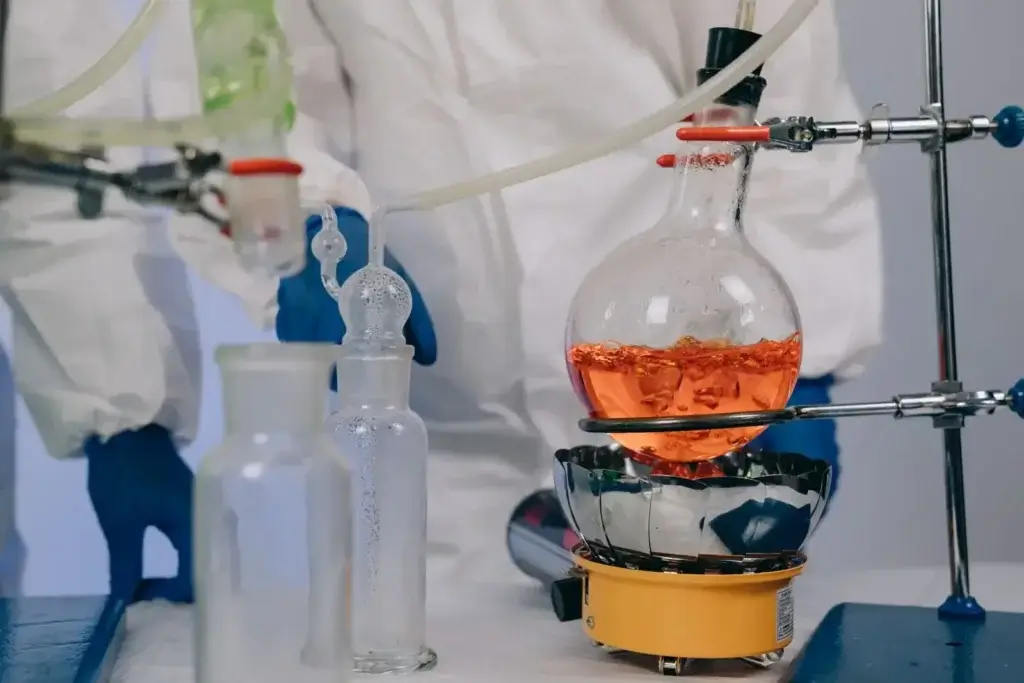
PFAS are a family of several thousand man-made chemicals built on a backbone of carbon atoms bonded to fluorine. The carbon-fluorine bond is one of the strongest in organic chemistry, which gives PFAS their commercially valuable properties: they repel water and oil, resist heat, and tolerate harsh chemical environments. These same properties explain why PFAS have been produced since the 1950s for firefighting foams, water-repellent textiles, food-contact paper coatings, metal plating baths, semiconductor manufacturing, and countless other industrial processes.
The family divides broadly into two groups. Long-chain PFAS, including the legacy compounds PFOA and PFOS, were phased out in many countries but persist in the environment because nothing in nature breaks the fluorine bond efficiently. Short-chain PFAS such as PFBS and GenX were introduced as replacements and are now widespread. Both groups are extremely persistent and mobile in water, and both are detectable in the blood of most people tested, which is why they are commonly called forever chemicals.
Why Conventional Treatment Fails
Conventional water treatment was simply not designed for PFAS. Coagulation, sedimentation, and sand filtration remove particles but pass dissolved PFAS straight through. Biological degradation is negligible because microorganisms cannot attack the carbon-fluorine bond. Conventional oxidation often transforms precursor compounds into other PFAS rather than destroying them, and air stripping is ineffective because ionic PFAS are essentially non-volatile. This resistance to standard processes is precisely why adsorptive separation technologies, namely activated carbon adsorption, ion exchange, and high-pressure membranes, became the dominant approaches for PFAS treatment.
PFAS Regulations Water Utilities Must Meet
Water suppliers in the United States now face enforceable federal limits of 4 parts per trillion for PFOA and PFOS, while European suppliers must meet a limit of 0.1 micrograms per litre for the sum of PFAS under the EU Drinking Water Directive, which makes advanced PFAS treatment a legal obligation rather than a discretionary upgrade.
In the United States, the PFAS National Primary Drinking Water Regulation finalized in April 2024 set enforceable Maximum Contaminant Levels for six PFAS compounds:
| PFAS Compound | Final MCLG | Final MCL (Enforceable) | Chain Length |
| PFOA | Zero | 4.0 ppt (ng/L) | Long-chain (C8) |
| PFOS | Zero | 4.0 ppt (ng/L) | Long-chain (C8) |
| PFHxS | 10 ppt | 10 ppt | Long-chain (C6) |
| PFNA | 10 ppt | 10 ppt | Long-chain (C9) |
| HFPO-DA (GenX) | 10 ppt | 10 ppt | Short-chain (C6) |
| Mixtures of two or more of PFHxS, PFNA, HFPO-DA, and PFBS | Hazard Index of 1 | Hazard Index of 1 | Mixed |
The final national drinking water standards for six PFAS compounds require public water systems to complete initial monitoring by 2027 and to implement treatment by 2029 where levels exceed the limits. In May 2026, the EPA proposed rules that would retain the PFOA and PFOS limits, offer qualifying systems a compliance extension to 2031, and rescind the standards for PFHxS, PFNA, HFPO-DA, and the Hazard Index mixture, so utilities should track the final rulemaking closely.
In Europe, the EU Drinking Water Directive 2020/2184 established a limit of 0.1 µg/L for the sum of PFAS in water intended for human consumption, applicable from January 2026, and explicitly targets PFAS among the modern pollutants it addresses. Industrial dischargers face the same direction of travel through tightening PFAS permit limits in wastewater. Both frameworks produce the same practical consequence: thousands of utilities and industrial operators need a treatment barrier that reliably reduces PFAS to parts-per-trillion levels.
How Activated Carbon Removes PFAS
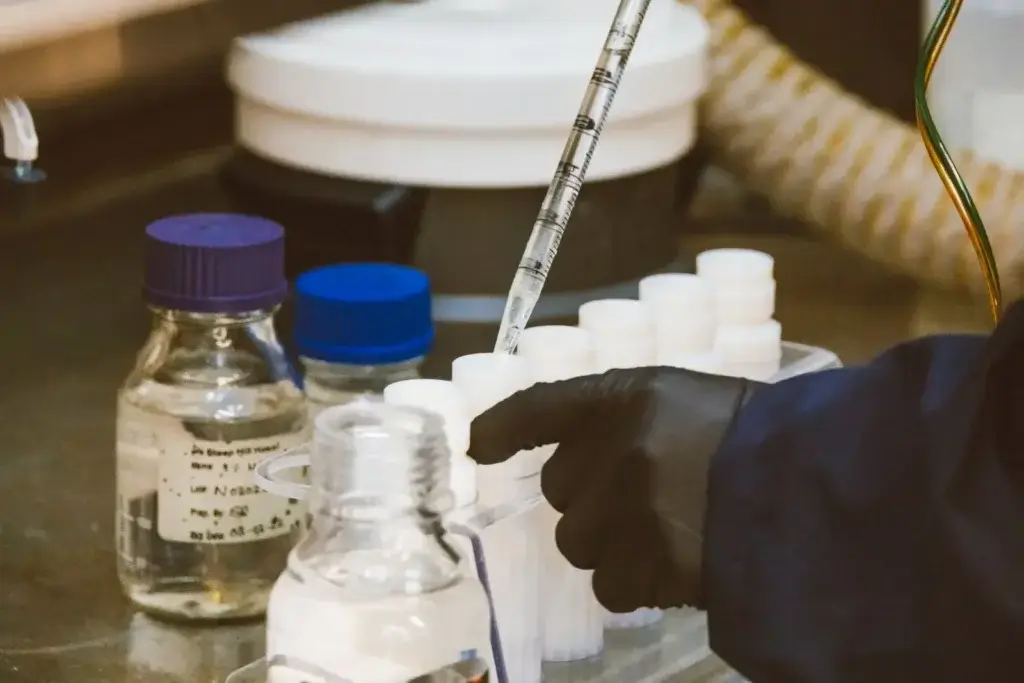
Activated carbon removes PFAS by adsorption: PFAS molecules attach to the vast internal surface of the porous carbon particles as water passes through, driven mainly by hydrophobic interactions between the fluorinated tail of the molecule and the carbon surface.
The Adsorption Mechanism
Activated carbon is produced by heating carbon-rich raw materials in an oxygen-starved environment and then activating them with steam or chemicals. The result is a particle riddled with pores and offering an internal surface area of 800 to 1,200 square metres per gram. This pore network spans micropores, mesopores, and macropores, and it is what allows water to flow through the bed while dissolved contaminants migrate to internal adsorption sites.
PFAS are anionic surfactants: one end of the molecule carries a charged, water-loving head group, while the long fluorinated tail is strongly water-repellent. At the water-carbon interface, the hydrophobic tail partitions onto the carbon surface, and electrostatic interactions between the charged head group and the carbon’s surface chemistry fine-tune the strength of that bond. Adsorption continues until the available surface sites saturate, after which PFAS begin to appear in the effluent, a point known as breakthrough. The Interstate Technology and Regulatory Council classifies these sorption-based processes among the principal technologies for separating and concentrating PFAS from water, and its guidance documents how carbon characteristics and water chemistry govern capacity in practice.
Media engineered specifically for activated carbon for PFAS treatment balances micropores, which provide adsorption capacity, with mesopores, which give relatively large PFAS molecules rapid access to internal sites.
Long-Chain vs Short-Chain PFAS Removal
Adsorption affinity increases with chain length. Longer molecules are less polar and more hydrophobic, so they bind more strongly and desorb more slowly, while short-chain compounds remain more soluble in water and break through earlier.
| PFAS Class | Examples | Typical Field Removal by GAC | Breakthrough Tendency |
| Long-chain (C8 and above) | PFOA, PFOS, PFNA | 80 to 99+ percent under low competing organics | Slow; run times of months to more than a year |
| Medium-chain | PFHxA, PFHpA | 40 to 80 percent | Moderate; sensitive to TOC and design |
| Short-chain (C4 to C6) | PFBA, PFBS, GenX | Often below 20 to 50 percent | Fast; breakthrough in weeks to months |
Two practical implications follow. First, a complete PFAS screen is essential before sizing a GAC system, because a bed specified for PFOA may pass GenX within weeks if short-chain compounds dominate the profile. Second, carbon condition matters as much as carbon type: laboratory studies show that fresh GAC removes more than 99 percent of most PFAS, while exhausted media can even release previously captured short-chain compounds back into the water, which turns timely replacement or reactivation into a compliance issue rather than a cost issue.
GAC vs PAC: Which Format Fits Your System?
Granular activated carbon is the right format for continuous, long-term PFAS removal in fixed-bed contactors, while powdered activated carbon suits plants that need occasional or emergency PFAS control without investing in new contactor infrastructure.
Granular Activated Carbon (GAC) Systems
GAC systems pass water through fixed beds of granular activated carbon held in pressure vessels or gravity contactors. Because the bed operates continuously, a lead-lag arrangement in series is standard practice: the lead vessel absorbs most of the PFAS load, the lag vessel polishes the effluent and acts as a safety buffer, and when the lead bed is exhausted it is replaced or reactivated while the lag bed moves into the lead position. This configuration maximizes the working capacity of the media, delivers the lowest carbon consumption per cubic metre of water treated, and keeps removal performance stable between change-outs. GAC contactors also handle other treatment duties at the same time, including taste and odor control and the removal of pesticides and other trace organics, which improves the overall economics of the investment.
Powdered Activated Carbon (PAC) Dosing
Powdered activated carbon is dosed directly into the water as a fine slurry, mixed for a defined contact time, and then removed together with the sludge during coagulation, sedimentation, or filtration. Its much smaller particle size shortens the diffusion path by a factor of 10 to 100 compared with GAC, which gives it faster adsorption kinetics. Because PAC requires no fixed-bed infrastructure, it is attractive for utilities responding to seasonal contamination spikes, temporary incidents, or short-chain-dominated profiles while a permanent solution is designed. Many plants already dose PAC for taste and odor control, so starting PFAS treatment can be as simple as adjusting the dose rate or moving to a higher-performance grade. The trade-offs are higher carbon consumption per unit of water treated, single use of the media, and the need to manage PFAS-laden sludge.
| Aspect | GAC (Fixed Bed) | PAC (Batch Dosing) |
| Typical application | Continuous base-load treatment | Seasonal spikes and emergency response |
| Capital cost | Contactors and piping required | Minimal; uses existing dosing and clarification |
| Carbon utilization | High; lead-lag maximizes capacity | Lower; higher dose per volume treated |
| Media reuse | Thermal reactivation possible | Single use; leaves with the sludge |
| Adsorption kinetics | Slower diffusion | 10 to 100 times faster diffusion |
| Best fit | Long-chain-dominated profiles | Interim or intermittent control |
Activated Carbon vs Other PFAS Treatment Technologies
Activated carbon, ion exchange resin, and reverse osmosis are the three technologies regulators recognize for PFAS treatment; activated carbon is usually the most cost-effective choice for long-chain-dominated water at moderate concentrations, while ion exchange and reverse osmosis are reserved for short-chain-heavy profiles or very stringent treatment targets.
| Technology | Mechanism | Best For | Strengths | Limitations |
| GAC | Hydrophobic adsorption | Long-chain PFAS in continuous municipal and industrial service | Proven at scale; reactivatable; co-removes other organics; simple operation | Weak for short chains; natural organic matter shortens bed life |
| Ion exchange (IX) | Electrostatic binding to selective resin | Short-chain PFAS and very low treatment targets (95 to 99+ percent removal) | High capacity; compact footprint | Costly resin; regenerant brine or single-use disposal; competing anions consume capacity |
| Reverse osmosis (RO) and nanofiltration | Size and charge rejection at the membrane | Broad-spectrum removal across the whole PFAS suite | Highest removal rates, including short chains | Highest energy and capital cost; concentrate stream requires management |
Technology selection should follow the water, not the vendor. When monitoring shows a profile dominated by long-chain compounds, GAC alone is usually sufficient and the most economical route. When short-chain PFAS or parts-per-trillion targets dominate the picture, a combined train performs best: GAC removes background organics and the bulk of long-chain PFAS, protecting a downstream ion exchange resin or membrane stage and extending its life. This layered logic, adsorption first and polishing second, has become standard design practice for compliance-grade PFAS treatment.
Key Factors That Affect PFAS Removal Performance
PFAS removal performance depends on three groups of variables: the physical and chemical properties of the carbon itself, the quality of the water being treated, and the hydraulic design of the system. Getting all three right is what separates a bed that lasts a year from one that exhausts in weeks.
Carbon Properties
Raw material determines pore architecture. Coconut shell activated carbon develops predominantly microporous structures with high mechanical hardness, which suits it well to adsorbing smaller organic molecules. Coal based activated carbon, particularly reagglomerated grades, offers a broader distribution of micro- and mesopores that gives large PFAS molecules both transport routes and accessible adsorption sites, which is why reagglomerated coal-based media is a common benchmark in PFAS applications. Beyond raw material, these specifications matter most:
- Pore size distribution: mesopores transport PFAS to internal micropores where adsorption actually occurs
- Surface charge: positively charged or amine-modified surfaces adsorb anionic PFAS more strongly than neutral ones
- Particle size: smaller granules improve kinetics but increase headloss through the bed
- Hardness and density: these influence attrition losses and backwash behavior
- Reactivation history: previously reactivated media can differ in capacity from virgin carbon
Water Quality Interference
Natural organic matter is the single most common driver of reduced PFAS capacity in carbon systems. Dissolved organics compete for the same adsorption sites and, because they are abundant, they pre-load the carbon and push PFAS breakthrough earlier. Water with elevated TOC or UV254 should be budgeted with extra media volume and more frequent monitoring. Other competitors include surfactants and assorted organic contaminants, while pH and background ionic strength modulate the electrostatic component of adsorption. None of these effects show up reliably in vendor isotherms, which is why testing on your actual water is non-negotiable.
System Design Parameters
Empty bed contact time is the central design variable: most published PFAS designs use 10 to 20 minutes of contact time, compared with 5 to 10 minutes for conventional organics removal. Deeper beds, lower loading rates, and lead-lag operation all extend bed life for long-chain compounds, although the returns diminish for short chains. Operational discipline completes the design: pretreatment to prevent iron and manganese fouling, a controlled backwash routine, and breakthrough tracking by sampling PFAS at defined bed-volume intervals rather than waiting for scheduled annual tests.
Where Activated Carbon Is Used for PFAS Treatment
Activated carbon PFAS treatment is deployed across four main settings: municipal drinking water plants, wastewater and industrial effluent polishing, groundwater remediation at contaminated sites, and temporary or emergency water supplies.
In municipal plants, drinking water treatment with GAC contactors is typically installed after conventional filtration as the final barrier before distribution, an arrangement that also continues to deliver taste and odor and trace-organic removal between PFAS change-outs. Point-of-entry systems using the same media serve small communities and private wells that fall outside central treatment.
For industrial and municipal effluent, wastewater treatment with activated carbon is applied as a polishing step where discharge permits now limit PFAS concentrations, for example at textile finishers, metal platers, and airports managing firefighting foam residues.
Groundwater remediation is the classic pump-and-treat application: extraction wells capture the plume at firefighting training grounds, military airfields, and manufacturing sites, and GAC vessels reduce long-chain PFAS to cleanup targets while protecting downgradient water users.
Finally, skid-mounted and mobile carbon filters give utilities rapid, temporary capacity during contamination incidents or while permanent contactors are under construction, and they are increasingly rented rather than purchased for short treatment campaigns.
What Happens to Spent Activated Carbon?
The most sustainable route for spent, PFAS-laden carbon is off-site thermal reactivation, which destroys the adsorbed PFAS at very high temperatures and returns 70 to 90 percent of the media for reuse, cutting lifecycle cost and waste dramatically compared with disposal.
In a reactivation furnace, the carbon is heated in a controlled, oxygen-limited atmosphere hot enough to break down the fluorinated molecules it carries. This is what distinguishes reactivation from simple cleaning: the PFAS are destroyed, not merely concentrated into another waste stream. Reactivated or fresh makeup carbon replaces roughly 10 to 30 percent of the bed, and the returned media continues in service with near-virgin capacity. Operators should confirm that the reactivation facility holds the environmental permits required to handle PFAS-laden material and that stack emissions are properly controlled.
The alternatives, sending spent carbon to landfill or incineration as waste, end the media’s useful life, retain long-term liability for the captured PFAS, and add recurring disposal costs that over a system’s lifetime typically exceed the reactivation fee. For water utilities reporting on sustainability performance, a closed carbon loop with documented PFAS destruction is also the outcome that best satisfies boards, regulators, and the public.
How to Select the Right Activated Carbon for PFAS Removal
The right carbon is selected with data, not catalogs: characterize your water fully, benchmark candidate carbons with isotherm and rapid small-scale column tests, validate with a pilot under realistic conditions, then choose a supplier that can document consistent quality and support reactivation logistics.
- Characterize the water. Run a complete PFAS profile using EPA Method 533 or 537.1, including the short-chain compounds, together with TOC, UV254, pH, and common anions. Sizing a system against an unknown contaminant profile is the most common and most expensive design error.
- Screen carbons in the laboratory. Isotherm tests rank candidate media by equilibrium capacity, and rapid small-scale column tests (RSSCT) predict breakthrough behavior on your actual water in weeks instead of months.
- Pilot at field conditions. A side-stream pilot fed with worst-case influent chemistry converts laboratory predictions into bed volumes to breakthrough, the number that ultimately drives lifecycle cost.
- Evaluate the supplier for the whole lifecycle. Batch-to-batch consistency, certification for drinking water use, documented PFAS performance data, and access to permitted reactivation services all matter as much as the initial price per kilogram. Low-cost carbon that exhausts early routinely costs more per cubic metre treated than premium media.
Suppliers with deep experience in activated carbon production can support each of these steps, from media selection and laboratory testing through system commissioning and spent carbon return.
Frequently Asked Questions
How long does a GAC bed last before PFAS breaks through?
Service life typically ranges from 6 to 18 months, but it is governed by bed volumes treated rather than calendar time. Long-chain PFAS beds commonly run for many months before breakthrough, while short-chain compounds can exhaust the same bed in a matter of weeks. Influent concentration, TOC, and contact time set the real number, which is why operators track cumulative bed volumes and confirm media condition with regular PFAS sampling instead of relying on fixed replacement schedules.
Is coconut shell or coal-based activated carbon better for PFAS removal?
Neither is universally better; pore structure decides. Coconut shell carbon is micropore-rich and very hard, making it excellent for many small organic molecules, while reagglomerated coal-based carbon provides a broader micro-and-mesopore network that better accommodates the comparatively large PFAS molecules and generally shows higher PFAS capacity in comparative testing. The decisive test is always a rapid small-scale column test on your own water, because the winning carbon varies with the PFAS profile and organic load of each individual source.
How much does activated carbon PFAS treatment cost?
Published project data place GAC operating cost around 0.10 to 0.35 dollars per cubic metre of water treated, with carbon replacement as the dominant variable, and capital cost at roughly 300 to 600 dollars per cubic metre per day of design flow. PAC systems spend less on capital but more on media per unit of water treated, and thermal reactivation typically reduces long-term carbon cost by reusing 70 to 90 percent of the media. Site-specific testing and quotations remain essential, because influent PFAS concentrations swing these figures widely.