
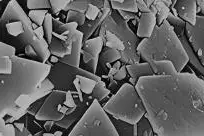
Alumina, or aluminum oxide (Al2O3), is one of the most extensively used ceramic materials in industrial manufacturing. Its crystalline polymorphs, particularly gamma alumina and alpha alumina, have anchored themselves in catalysis, adsorbents, coatings, abrasives, and advanced ceramics for decades. Far less attention, however, has been given to amorphous alumina, a non-crystalline form of Al2O3 that lacks long range atomic periodicity. As industries push toward thinner coatings, higher surface areas, precisely tuned porosity, and materials that perform at the extremes of temperature and chemical environment, amorphous alumina is emerging from the shadow of its crystalline counterparts as a material with distinct and commercially valuable properties.
Amorphous alumina is a non-crystalline form of aluminum oxide characterized by the absence of long range atomic order, high specific surface area (often exceeding 200 to 400 square meters per gram depending on synthesis method), a disordered network of aluminum-oxygen polyhedra, and thermal stability that persists up to approximately 800 to 900 degrees Celsius before crystallizing into gamma alumina. Its amorphous structure enables unique properties not found in crystalline phases, including isotropic behavior, tunable porosity at the mesoporous scale, high defect density beneficial for catalysis, and exceptional film forming capability for thin coating applications.
The growing interest in amorphous alumina is fueled by a convergence of demand from multiple high-value sectors. In lithium battery technology, amorphous alumina coatings on separators improve thermal stability, electrolyte wettability, and resistance to lithium dendrite penetration. In catalysis, its high defect density and surface area create active sites that differ fundamentally from those on crystalline supports. In electronics, amorphous alumina thin films serve as dielectric layers, passivation coatings, and encapsulation barriers. This article provides a comprehensive overview of amorphous alumina, covering its structural characteristics, synthesis routes, comparison with crystalline phases, key industrial and emerging applications, and the current limitations and challenges facing its commercial adoption.
What Is Amorphous Alumina and How Is It Structured?
Amorphous alumina is aluminum oxide in a glass like state where aluminum and oxygen atoms are arranged in a continuous random network of AlO4, AlO5, and AlO6 polyhedral units without the translational periodicity that defines crystalline phases. It can be viewed as a three-dimensional network of corner sharing, edge sharing, and face sharing polyhedra that collectively lack long range order. This disordered structure gives amorphous alumina fundamentally different surface chemistry, mechanical isotropy, and thermal evolution behavior compared to its crystalline counterparts.
The structure of amorphous alumina is best understood in contrast to crystalline alumina polymorphs. In alpha alumina (corundum), aluminum ions occupy two-thirds of the octahedral sites in a hexagonally close-packed oxygen sublattice, producing a dense, highly ordered, and exceptionally hard material. Gamma alumina adopts a defect spinel structure where aluminum ions are distributed across both tetrahedral and octahedral sites in a cubic close-packed oxygen framework, with cation vacancies providing the defect structure that makes gamma alumina an excellent catalyst support. In amorphous alumina, the oxygen sublattice lacks the regular close-packed arrangement found in either phase. Instead, aluminum ions occupy a distribution of coordination environments (tetrahedral AlO4, trigonal bipyramidal AlO5, and octahedral AlO6) within a disordered oxygen matrix.
This structural disorder gives amorphous alumina several distinctive characteristics. First, the absence of grain boundaries means the material is isotropic on a macroscopic scale, behaving identically in all directions. This is particularly valuable for thin film and coating applications where directional property variation would be detrimental. Second, the disordered network contains a high density of under-coordinated aluminum sites and oxygen vacancies, which serve as active sites for adsorption and catalysis. Third, the open, non-equilibrium structure accommodates high specific surface area, making amorphous alumina attractive for applications requiring abundant accessible surface sites.
The thermal evolution of amorphous alumina follows a predictable pathway. Upon heating, amorphous alumina remains structurally stable up to approximately 800 to 900 degrees Celsius, at which point it begins to crystallize into gamma alumina. Further heating to 900 to 1,100 degrees Celsius converts gamma alumina through a series of transition aluminas (delta, theta) before ultimately forming alpha alumina. This thermal sequence is irreversible, and once crystallized, the unique amorphous properties are permanently lost. The amorphous to gamma alumina transition temperature can be influenced by impurities, synthesis method, and heating rate.
How Is Amorphous Alumina Synthesized?
Amorphous alumina can be synthesized through multiple routes including thermal decomposition of aluminum hydroxide precursors at moderate temperatures, sol-gel processing with controlled hydrolysis and condensation, evaporation-induced self-assembly (EISA) using liquid crystal templates for mesoporous structures, and vapor phase deposition methods such as magnetron sputtering and atomic layer deposition (ALD) for thin films. Each method produces amorphous alumina with different characteristics in terms of surface area, porosity, film quality, and thermal stability.
Thermal decomposition of aluminum hydroxides is the most straightforward route. When aluminum hydroxide species such as gibbsite, boehmite, or bayerite are heated above approximately 300 degrees Celsius, they undergo dehydration and form amorphous alumina. This material is typically a powder with moderate surface area. The dehydration process is accompanied by significant mass loss and densification. The resulting amorphous alumina is metastable and will crystallize into gamma alumina upon further heating. This method is widely used for producing amorphous alumina powders for catalyst support applications, though the lack of porosity control limits its utility for applications requiring well defined pore architectures.
Sol-gel processing provides significantly greater control over the final material properties. In a typical sol-gel synthesis, an aluminum alkoxide precursor such as aluminum isopropoxide or aluminum sec-butoxide is hydrolyzed in a controlled manner, often in the presence of a chelating agent such as acetylacetone or citric acid to moderate the hydrolysis rate. The resulting sol undergoes condensation to form a gel, which is then dried and calcined at low to moderate temperatures (typically 300 to 600 degrees Celsius) to remove organics without inducing crystallization. By adjusting the water to alkoxide ratio, pH, chelating agent concentration, and aging conditions, the gel network structure can be tuned to control the final pore size distribution and surface area.
The evaporation-induced self-assembly (EISA) method represents the most advanced route for producing amorphous alumina with ordered mesoporosity. In this approach, a surfactant (typically a block copolymer such as Pluronic P123 or F127) serves as a structure directing agent. The surfactant, aluminum precursor, and solvent are combined and subjected to controlled evaporation, during which the surfactant self-assembles into liquid crystalline phases that template the alumina network. After calcination to remove the surfactant, the resulting material retains the templated mesostructure. Under optimized conditions, EISA derived amorphous alumina can achieve specific surface areas of approximately 400 square meters per gram with a narrow mesopore size distribution centered around 8 nanometers. The mesostructure and amorphous character can be preserved up to 800 degrees Celsius. Notably, approximately half of the organic template can be removed by solvent washing at room temperature rather than requiring full calcination, offering a pathway to more energy efficient and environmentally friendly processing.
Thin film deposition methods including magnetron sputtering, pulsed laser deposition, and atomic layer deposition enable the formation of dense, uniform amorphous alumina films on various substrates. These vapor phase methods operate at temperatures low enough to avoid crystallization and produce films with excellent adhesion, conformal coverage, and controlled thickness from nanometers to microns. ALD is particularly notable for its ability to deposit pinhole free amorphous alumina films with atomic scale thickness control on high aspect ratio structures, making it the method of choice for semiconductor, battery, and barrier coating applications.
How Does Amorphous Alumina Compare to Crystalline Alumina Phases?
Amorphous alumina differs from crystalline alumina phases in five critical aspects: structure (disordered versus ordered), surface area (typically higher in the amorphous form), thermal stability (metastable, converting to gamma alumina at 800 to 900 degrees Celsius), mechanical behavior (isotropic in amorphous, anisotropic in crystalline), and surface chemistry (higher defect density and distinct acid-base character in the amorphous state). These differences mean that amorphous and crystalline aluminas are complementary rather than competing materials, each suited to different application requirements.
Surface area and porosity represent the most commercially significant distinction. Amorphous alumina synthesized via sol-gel or EISA routes routinely achieves specific surface areas of 200 to 400 square meters per gram, compared with gamma alumina which typically ranges from 100 to 250 square meters per gram and alpha alumina which is typically below 10 square meters per gram. The higher surface area of amorphous alumina is a direct consequence of its non-equilibrium structure, which resists the sintering and grain growth that reduce surface area in crystalline materials. For applications such as catalysis and adsorption where accessible surface area directly determines performance, amorphous alumina can offer a meaningful advantage.
Mechanical and thermal behavior also diverge substantially. Amorphous alumina, lacking grain boundaries, behaves isotropically under mechanical stress and thermal expansion. Crystalline alumina, particularly in polycrystalline form, exhibits grain boundary dependent properties that can lead to anisotropic behavior, residual stress accumulation, and grain boundary mediated failure modes. However, the isotropic advantage of amorphous alumina is counterbalanced by its thermal metastability: above 800 to 900 degrees Celsius, amorphous alumina crystallizes irreversibly into gamma alumina, losing its amorphous character and associated properties. Alpha alumina, by contrast, is the thermodynamically stable phase at all temperatures and can operate at temperatures exceeding 1,500 degrees Celsius without phase change. This fundamental limitation restricts amorphous alumina to applications where processing and service temperatures remain below the crystallization threshold.
The surface chemistry of amorphous alumina is distinctly different from that of crystalline phases. The high density of under-coordinated aluminum sites and oxygen vacancies in the amorphous structure creates a population of Lewis acid and base sites with distribution and strength that differ from those on crystalline alumina surfaces. This can translate to different catalytic activity and selectivity patterns. In one particularly important difference, amorphous alumina surfaces show stronger interactions with water than crystalline gamma alumina, forming surface hydroxyl groups that influence adsorption, wettability, and chemical reactivity. For lithium battery separator coatings, this enhanced hydrophilicity improves electrolyte uptake and ionic conductivity. The table below summarizes the key comparison points:
| Property | Amorphous Alumina | Gamma Alumina | Alpha Alumina |
| Structure | Disordered, no long-range order | Defect spinel, cubic close-packed oxygen | Corundum, hexagonal close-packed oxygen |
| Typical Surface Area (m2/g) | 200 to 400 | 100 to 250 | Less than 10 |
| Thermal Stability | Up to 800 to 900 °C, then crystallizes | Transitional, converts above 900 °C | Stable above 1,500 °C |
| Mechanical Behavior | Isotropic | Anisotropic (polycrystalline) | Anisotropic, highest hardness |
| Surface Chemistry | High defect density, unique acid-base sites | Well-characterized Lewis acid sites | Low surface reactivity |
| Porosity Control | Tunable mesoporosity via templating | Limited to interparticle voids | Negligible |
What Are the Key Applications of Amorphous Alumina?
Amorphous alumina finds key applications in lithium battery separator coatings, heterogeneous catalysis and catalyst supports, thin film dielectric and passivation layers in electronics, protective and functional coatings, and advanced adsorbents. Its combination of high surface area, tunable porosity, isotropic properties, and unique surface chemistry positions it for emerging applications that demand performance characteristics not available from crystalline alumina phases.
Lithium battery separators represent one of the most promising emerging applications. Polyolefin separators in lithium metal and lithium ion batteries suffer from poor thermal stability, limited electrolyte wettability, and vulnerability to lithium dendrite penetration. Coating these separators with amorphous alumina nanoparticles addresses all three limitations simultaneously. The amorphous structure provides a high specific surface area of over 200 square meters per gram, leading to exceptional electrolyte uptake (over 240 percent in optimized systems) and high ionic conductivity exceeding 1 millisiemens per centimeter. The isotropic coating resists dendrite penetration and maintains uniform lithium ion flux across the separator surface. In lithium iron phosphate based cells, amorphous alumina coated separators have demonstrated superior rate performance and cycling stability, with lithium lithium symmetric cells achieving over 1,000 hours of stable cycling at 1 milliampere per square centimeter. Density functional theory simulations indicate that the amorphous structure promotes lithium ion diffusion and tolerates doping with foreign elements, positioning it as a long term solution for high performance battery coatings.
In catalysis, amorphous alumina serves both as a catalyst and as a catalyst support with distinct advantages over crystalline gamma alumina in certain reactions. The high density of under-coordinated aluminum sites creates Lewis acid centers that catalyze reactions including alcohol dehydration, olefin isomerization, and Friedel-Crafts alkylation. The amorphous structure’s resistance to sintering at moderate temperatures (below 800 degrees Celsius) helps maintain high dispersion of supported active metal nanoparticles. Mesoporous amorphous alumina synthesized via the EISA method is particularly valuable for catalytic applications involving larger molecules, such as biomass conversion and heavy petroleum fraction processing, where the ordered mesopore channels provide improved mass transport compared to the disordered porosity of conventional gamma alumina. The surface chemistry can also be tuned through doping with silica, titania, or zirconia to adjust acidity, basicity, and hydrothermal stability.
Thin film electronics applications leverage the excellent dielectric properties and conformal deposition capability of amorphous alumina. With a dielectric constant of approximately 7 to 9 and a breakdown field exceeding 5 megavolts per centimeter, amorphous alumina thin films deposited by ALD serve as gate dielectrics in thin film transistors, tunnel barriers in Josephson junctions, and passivation layers in photovoltaic devices. The pinhole free, conformal nature of ALD deposited films is particularly critical for encapsulation of organic light emitting diodes and perovskite solar cells, where even microscopic defects can cause rapid degradation. Amorphous alumina films also serve as diffusion barriers preventing copper migration in semiconductor interconnects and as chemical protection layers in microelectromechanical systems.
Coatings and protective layers benefit from the isotropic mechanical behavior and excellent adhesion of amorphous alumina. Unlike polycrystalline alumina coatings, which can suffer from grain boundary corrosion and stress induced cracking, amorphous alumina coatings provide uniform protection without microstructural weak points. Applications include wear resistant coatings on cutting tools, corrosion barriers on metallic components in chemical processing equipment, and thermal barrier underlayers in gas turbine engines. The ability to deposit amorphous alumina at relatively low temperatures (below 400 degrees Celsius) via sputtering or ALD enables coating of temperature sensitive substrates including polymers and low melting point alloys.
What Are the Limitations and Challenges of Amorphous Alumina?
The primary limitations of amorphous alumina are its thermal metastability, which restricts use to applications below 800 to 900 degrees Celsius, its sensitivity to moisture and hydrothermal conditions that can induce premature crystallization, its lower mechanical hardness compared to alpha alumina, and the higher production cost of advanced synthesis routes such as EISA and ALD compared to conventional alumina powder manufacturing. These challenges currently confine amorphous alumina to high-value, performance-driven applications rather than commodity markets.
Thermal metastability is the most fundamental limitation. The irreversible amorphous to gamma alumina phase transition at 800 to 900 degrees Celsius means that amorphous alumina cannot be used in any application involving sustained exposure to temperatures at or above this threshold. This precludes its use in high-temperature catalysis (such as automotive exhaust treatment operating above 900 degrees Celsius), high-temperature structural ceramics, and any process requiring post-deposition annealing above the crystallization temperature. The crystallization temperature can be depressed further by the presence of water vapor, alkali metal impurities, or certain transition metal dopants, narrowing the safe operating window in practical environments.
Moisture sensitivity presents a related but distinct challenge. Amorphous alumina surfaces are highly reactive toward water, forming surface hydroxyl groups that can catalyze the nucleation of crystalline aluminum hydroxide phases. In hydrothermal conditions (elevated temperature combined with water vapor or liquid water), amorphous alumina can crystallize at temperatures well below the 800 to 900 degrees Celsius dry air threshold. This sensitivity requires careful handling and storage, including moisture-free packaging and controlled humidity environments during processing. For applications in aqueous phase catalysis or humid gas streams, the hydrothermal stability of amorphous alumina must be carefully evaluated and may require compositional modification through doping with stabilizing elements.
Production cost currently limits the commercial reach of amorphous alumina. While thermal decomposition of aluminum hydroxide precursors is relatively inexpensive and well established, it yields amorphous alumina with uncontrolled porosity and relatively low surface area that does not realize the material’s full potential. The sol-gel and EISA methods that produce the highest performance amorphous alumina (with ordered mesoporosity and surface areas approaching 400 square meters per gram) involve aluminum alkoxide precursors, organic solvents, and structure directing agents that add significantly to production cost. ALD and sputtering, which produce the highest quality thin films, are inherently high-cost, low-throughput processes. As a result, amorphous alumina is currently most commercially viable in applications where its unique properties deliver performance improvements that justify the cost premium: battery separators, high-end electronic devices, specialty catalysts, and protective coatings for critical components.
Summary
Amorphous alumina is a distinct class of aluminum oxide whose disordered structure delivers high specific surface area, isotropic mechanical behavior, tunable mesoporosity, and unique surface chemistry, making it a valuable complementary material to crystalline alumina phases for applications in lithium batteries, catalyst supports, thin film electronics, and protective coatings that operate below approximately 800 degrees Celsius.
Amorphous alumina represents a distinct class of aluminum oxide with properties that differentiate it fundamentally from the well-known crystalline polymorphs. Its disordered structure, characterized by a continuous random network of aluminum-oxygen polyhedra, delivers high specific surface area, isotropic mechanical behavior, tunable mesoporosity, and a unique surface chemistry rich in defect sites. These properties are accessed through controlled synthesis routes including sol-gel processing, evaporation-induced self-assembly, and vapor phase thin film deposition methods.
The material’s advantages are most compelling in applications that demand a combination of high surface area, pore architecture control, and low-temperature processability: lithium battery separator coatings where amorphous alumina enhances electrolyte uptake, ionic conductivity, and dendrite resistance; mesoporous catalyst supports for large molecule conversion; conformal dielectric and barrier thin films in electronics; and isotropic protective coatings. These applications share the characteristic that their operating temperatures remain below the amorphous to crystalline phase transition threshold.
The limitations of amorphous alumina—thermal metastability, moisture sensitivity, and higher production costs for optimized synthesis routes—are genuine and define its commercial niche. It is not a replacement for gamma alumina or alpha alumina in applications requiring high-temperature stability or extreme hardness. Rather, it is a complementary material whose value proposition rests on properties that crystalline phases cannot replicate. As the lithium battery, advanced electronics, and specialty chemical processing sectors continue to grow, the commercial significance of amorphous alumina is likely to expand alongside the development of more cost-effective synthesis and stabilization technologies.
For a comprehensive review of the science and technology of amorphous alumina, the survey of advanced applications covering nano to bulk forms, catalysis, thin films, and mechanical behavior provides detailed insights. For readers interested in synthesis methodology, the detailed study of mesostructured amorphous alumina formation via EISA, including thermal stability data and pore architecture characterization documents the state of the art in porosity control. For those exploring battery applications, the recent work on flaky amorphous nano-alumina as a high-performance separator coating for lithium metal batteries includes electrolyte uptake, ionic conductivity, and cycling stability data.