
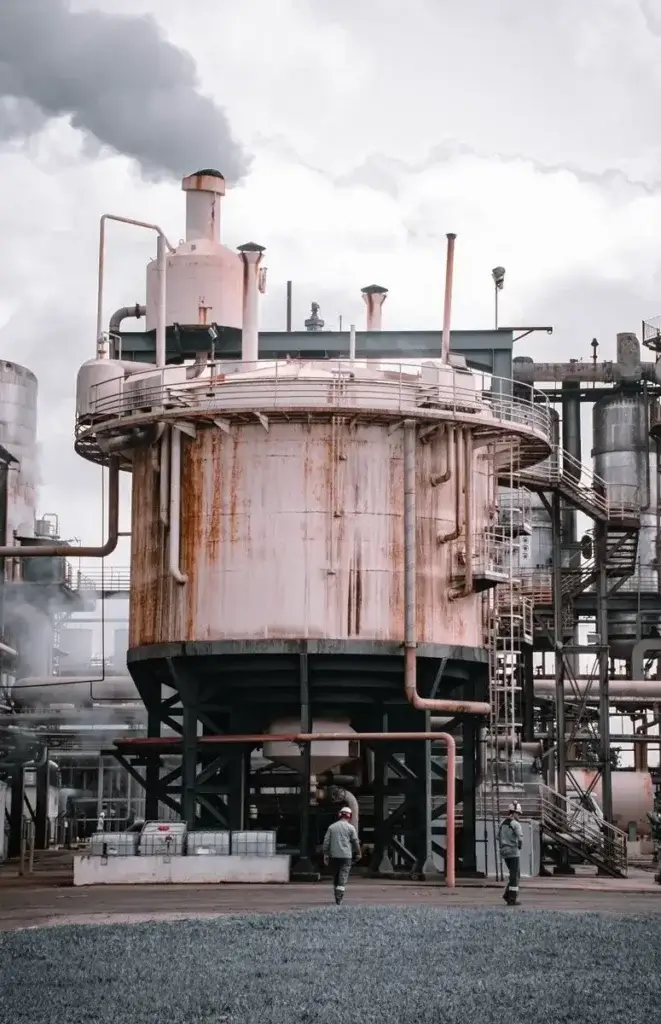
Mercury is one of the most stubborn pollutants in industrial emissions. The World Health Organization ranks it among the top ten chemicals of major public health concern, and once mercury is released it circulates through air, water and soil for decades, converting into methylmercury that bioaccumulates in fish and shellfish. Coal-fired power plants, waste incinerators, cement kilns and metal smelters all discharge mercury in their flue gas, and a large share of it — typically 30 to 70 percent depending on the fuel — leaves the stack as elemental mercury vapor that ordinary scrubbers and dust collectors simply cannot capture. Tightening emission limits across the United States, Europe and Asia have therefore turned dedicated mercury control from an optional upgrade into a standard permit condition.
Activated carbon removes mercury through two complementary mechanisms. First, its enormous internal pore surface physically adsorbs mercury vapor onto the carbon matrix. Second, and far more effectively, chemically impregnated grades react with mercury to form stable, non-volatile compounds such as mercury sulfide (HgS) and mercury bromide (HgBr2) that are permanently locked inside the pores. Deployed either as powdered activated carbon injected into flue gas ducts or as granular media in fixed-bed vessels, properly selected mercury removal activated carbon achieves 90 to 99 percent mercury capture in both gas and liquid streams.
The sections below break down the science behind each mechanism, the two engineering routes used to deploy carbon in real plants, and the practical criteria for selecting the right product grade.
Why Mercury Is So Hard to Capture
Mercury resists conventional pollution control because it travels in three very different forms, and the form that dominates in most flue gas — elemental mercury — is gaseous, water-insoluble and chemically inert, so it slips straight through scrubbers, electrostatic precipitators and baghouses that were designed to catch particles and acid gases.
According to the World Health Organization, even small exposures to mercury can damage the nervous, digestive and immune systems, lungs and kidneys, with the greatest risk to children developing in utero. This toxicity profile explains why regulators treat mercury as a priority hazardous air pollutant rather than one emission among many.
Understanding which form of mercury is present is the first step in any control strategy, because each form behaves differently:
| Mercury Form | Symbol | Key Characteristics | Removed By |
| Elemental mercury | Hg0 | Gaseous, insoluble in water, chemically inert, volatile | Activated carbon adsorption (injection or fixed bed) |
| Oxidized mercury | Hg2+ | Water-soluble and reactive | Wet scrubbers (FGD), activated carbon |
| Particulate-bound mercury | Hg(p) | Adsorbed onto fly ash particles | Electrostatic precipitators and baghouses |
Which form dominates depends mainly on the fuel. Chlorine naturally present in coal oxidizes mercury vapor during combustion, so high-chlorine bituminous coals produce more easily captured Hg2+, while low-chlorine subbituminous coals and lignite leave most mercury in the elemental form. This single chemical detail is the reason activated carbon systems are concentrated in plants burning Powder River Basin and lignite coals, and it drives the impregnation choices discussed later.
Industries where mercury emission control is now a routine requirement include:
- Coal-fired power plants and industrial boilers, the largest single source category
- Municipal and hazardous waste incinerators, where mercury input is variable and high
- Cement kilns, particularly those co-processing waste-derived fuels
- Non-ferrous metal smelters handling copper, lead, zinc and gold ores
- Chlor-alkali and other chemical plants with legacy mercury processes
Physical Adsorption: How Plain Activated Carbon Traps Mercury
Untreated activated carbon captures mercury through physical adsorption: mercury molecules diffuse into the pore network and are held on the internal surface — often 1,000 square meters per gram or more — by weak intermolecular forces. This mechanism reliably captures oxidized mercury, but it is far less effective against elemental mercury.
Activated carbon is manufactured by carbonizing and then activating a raw material such as coal, coconut shell or wood, a process that burns away volatile components and leaves behind an interconnected network of micro-, meso- and macropores. Micropores below two nanometers make up most of the internal surface area, and it is in this microscopic maze that adsorption happens. When a gas or liquid carrying mercury contacts the carbon, mercury molecules diffuse into the pores and adhere to the pore walls. Adsorption strength depends on surface area, pore size distribution relative to the mercury species, and contact time between the stream and the media.
The Limits of Untreated Carbon
Field performance data show that plain, untreated powdered carbon removes only 30 to 70 percent of mercury in flue gas, for three well-documented reasons:
- Weak affinity for elemental mercury. Physical adsorption energy is low, so Hg0 molecules can desorb back into the stream as conditions change.
- Temperature sensitivity. Adsorption capacity falls sharply as gas temperature rises, and above roughly 400 degrees Fahrenheit (200 degrees Celsius) performance drops off dramatically.
- Competitive adsorption. Acid gases such as sulfur dioxide occupy adsorption sites and crowd mercury off the surface.
These limitations are precisely why high-chlorine bituminous coal applications can sometimes meet targets with plain carbon, while low-chlorine fuels, higher gas temperatures and stricter outlet limits all push operators toward chemically treated grades.
Chemisorption: Why Impregnated Activated Carbon Performs Better
Impregnated activated carbon removes mercury by turning adsorption into chemical fixation: an active impregnant dispersed through the pore structure reacts with mercury and converts it into a stable compound — typically HgS or HgBr2 — that cannot re-release into the gas or liquid stream. This raises removal efficiency to 85 to 99 percent and multiplies the working capacity of every gram of carbon.
Modern impregnated activated carbon is produced by loading a precise dose of active chemical onto a high-quality base carbon, then drying and stabilizing it so the impregnant stays dispersed deep inside the micropores. Because the fixation reaction is irreversible at normal operating temperatures, capacity is consumed once and cannot be recovered by pressure or temperature swings — a fundamental difference from ordinary solvent-recovery adsorption. Two impregnation families dominate mercury service.
Sulfur-Impregnated Activated Carbon
Sulfur has one of the strongest known chemical affinities for mercury. When five to fifteen percent elemental sulfur is dispersed through the micropore network, captured mercury reacts at the surface to form mercury sulfide, a compound so insoluble and thermally stable that it effectively removes mercury from the environment permanently. The same chemistry works in gas streams and in water, which makes sulfur the default impregnant for both flue gas polishing and liquid-phase treatment.
The performance gain is well documented. A peer-reviewed study published in Water, Air, and Soil Pollution found that sulfur treatment more than doubled the maximum mercury adsorption capacity of granular carbon, from 73 milligrams per gram to 166 milligrams per gram, and shifted the adsorption mechanism toward true chemisorption (Springer). The critical manufacturing variable is dispersion: sulfur must coat the internal pore walls where mercury can reach it, rather than pooling at pore entrances and blocking access.
Brominated and Halogenated Activated Carbon
Brominated grades carry five to fifteen percent bromine by weight and are purpose-built for flue gas. Bromine on the carbon surface oxidizes elemental mercury into mercury bromide, which adsorbs strongly and immediately. The practical result is a step change in performance: brominated carbon typically achieves 85 to 95 percent total mercury removal, compared with 30 to 70 percent for untreated carbon, and reaches the same outlet target at 40 to 60 percent lower injection rates.
Brominated grades are essential wherever elemental mercury dominates, which means low-chlorine subbituminous and lignite coals and ESP-only plant configurations. The main trade-off is that some bromine migrates into the collected fly ash, which matters for plants that sell ash into concrete production; halogenated alternatives exist where this is a concern.
Other Impregnants
Not every mercury problem calls for sulfur or bromine. A few other impregnants cover specific niches:
- Iodine and potassium iodide capture trace mercury concentrations in air and gas purification systems where sulfur chemistry is unnecessary
- Potassium permanganate impregnated carbon oxidizes mercury and holds the reaction products on the surface, and is often selected where sulfur odor or chemistry is undesirable
- Silver-impregnated carbon forms a silver amalgam with mercury, tolerates higher temperatures, and is the standard choice for high-purity gas services such as natural gas treatment
Engineering Routes: Carbon Injection vs Fixed-Bed Systems
There are two proven engineering routes for mercury removal from gas streams: injecting powdered activated carbon directly into the flue gas duct for continuous, low-capital compliance, or passing the gas through a fixed bed of granular or pelletized carbon for maximum efficiency and, in some designs, regenerability. Liquid streams are almost always handled in granular beds. Regulatory pressure created this market: the US EPA’s Mercury and Air Toxics Standards helped cut power-sector mercury emissions by 86 percent by 2017, and comparable national limits now apply across the EU, China and much of Asia.
Activated Carbon Injection (ACI)
ACI is the most widely deployed mercury control technology worldwide because it retrofits onto existing plants with minimal investment. The process runs in three stages:
- Injection and dispersion. Finely ground powdered activated carbon is pneumatically conveyed from a storage silo and injected through lances into the duct between the air preheater and the particulate collector. Uniform distribution across the duct cross-section is critical, since every particle only treats the gas it actually touches.
- In-flight adsorption. The carbon travels with the gas for one to three seconds before collection. Oxidized mercury adsorbs physically, while elemental mercury reacts with surface impregnants and is converted on contact.
- Collection. The mercury-laden carbon is captured together with fly ash in the downstream ESP or baghouse and leaves the system in the solid waste stream.
Typical design parameters are summarized below:
| Design Parameter | Typical Range | Why It Matters |
| Injection rate | 1–10 lb/MMacf | The main compliance lever; returns diminish above roughly 5 lb/MMacf |
| Particle size (d50) | 10–25 μm | Finer particles adsorb faster but are harder to collect in an ESP |
| Flue gas temperature | 250–400 °F (120–200 °C) | Capacity falls sharply above 400 °F; acid gases condense below 250 °F |
| SO3 concentration | Below about 5 ppm | SO3 competes with mercury for adsorption sites |
| Particulate collector | ESP or baghouse | Determines the contact time available after injection |
The choice of particulate collector matters more than most buyers expect. With the same sorbent, ESP-only configurations typically achieve 60 to 85 percent mercury removal, while baghouses reach 90 to 99 percent, because the carbon-laden filter cake on the bags adds seconds to minutes of extra contact time as the gas percolates through it.
Because ACI reuses the existing duct and dust collector, a typical retrofit adds little more than a storage silo, metering equipment and an injection lance skid, and can move from engineering to operation within a few months. Field testing programs run by the US Department of Energy demonstrated better than 90 percent removal across most coal types and plant configurations, which is why injection remains the default compliance route for existing units.
Fixed-Bed Adsorbers
Where streams are smaller, targets stricter, or polishing required, vessels packed with granular activated carbon or three to four millimeter pellets provide contact times of seconds to minutes, routinely delivering 99 percent-plus capture and outlet concentrations below 0.01 milligrams per normal cubic meter. Moving-bed activated coke systems extend the concept further: the carbon circulates through the vessel, can be thermally regenerated and reused, and in the same housing co-removes sulfur dioxide and dioxins, which makes it attractive for waste incineration and sintering plants managing multiple pollutants at once.
| Dimension | ACI (PAC Injection) | Fixed Bed (GAC / Pellet / Coke) |
| Arrangement | Carbon injected into duct, captured downstream | Dedicated vessels, usually in lead/lag pairs |
| Best fit | Large retrofits needing quick compliance | New plants, polishing, strict outlet limits |
| Removal efficiency | 60–99%, collector dependent | 99%+ |
| Consumables | Continuous carbon consumption | Replacement or regeneration cycles |
| Regeneration | Not practical; leaves with ash | Possible with activated coke systems |
| Fly ash impact | Mercury enters the ash stream | Kept separate from ash |
Choosing the Right Mercury Removal Activated Carbon Product
Product selection comes down to four factors: the dominant mercury species, the medium being treated, the operating temperature and the required removal target. As a rule of thumb, coal-based powdered grades serve injection systems, sulfur-impregnated granular grades serve fixed-bed and liquid service, and brominated grades serve low-chlorine flue gas.
| Product | Form and Typical Specs | Best Suited For |
| Untreated PAC | Iodine number ≥600 mg/g, 90% finer than 325 mesh | Bituminous flue gas with baghouse, high-chlorine coals |
| Brominated PAC | Br 5–15%, d50 10–25 μm | Low-chlorine coals, ESP-only plants, high removal targets |
| Sulfur-impregnated GAC or pellets | S 5–15%, iodine ≥900 mg/g | Fixed-bed gas polishing, wastewater, groundwater |
| Extruded pellets, 3–4 mm | High crush strength, low dust | Fixed beds requiring low pressure drop |
Base material matters as much as impregnation. Coal based activated carbon offers the hardness, density and low dust levels that injection systems and deep fixed beds demand, while coconut shell grades provide the highest micropore density for liquid-phase polishing where capacity per gram is the priority.
A disciplined selection sequence avoids costly misorders:
- Characterize the stream — identify which mercury species dominate and what else is present
- Check the temperature window against the grades under consideration
- Define the removal target and the outlet limit the permit actually requires
- Match contact time to product form — seconds favor injected powder, minutes favor beds
- Verify capacity with bench-scale isotherm or pilot testing before committing to full-scale volumes
Removing Mercury from Water and Liquid Streams
In liquids, activated carbon removes mercury through the same adsorption-plus-reaction logic: dissolved mercury diffuses into the pores, where sulfur sites convert it into insoluble mercury sulfide. Properly designed sulfur-impregnated systems achieve 94 to 99.5 percent removal and can bring effluent concentrations below 0.001 milligrams per liter.
Activated carbon for water treatment covers mercury alongside many other contaminants, and the same fixed-bed hardware used for gas polishing serves liquid duty. Common applications include:
- Mining and smelting effluent, where mercury arrives with other dissolved metals
- Chlor-alkali plant and chemical process water with legacy mercury equipment
- Contaminated groundwater remediation, where sulfur-impregnated granular media is the established answer
- Drinking water, where the limit sits near 0.002 milligrams per liter and point-of-use filters commonly rely on coconut shell activated carbon for its dense micropore structure
Four operating factors decide whether a liquid system delivers design performance: empty bed contact time, typically 10 to 20 minutes for trace mercury; pH kept near neutral so sulfide sites stay reactive; prefiltration of suspended solids that would otherwise blind the bed; and changeout scheduled on breakthrough monitoring rather than fixed calendars. Breakthrough sampling at the lead vessel outlet, on a monthly or quarterly cadence agreed with the laboratory, keeps changeouts ahead of permit exceedances and doubles as the compliance record. One caution belongs in every specification: plain, unmodified carbon has only moderate affinity for ionic mercury, so trace-level targets should always be met with impregnated grades.
Managing Spent Mercury-Laden Carbon
Spent mercury-laden carbon is a controlled waste in most jurisdictions: when leachable mercury exceeds regulatory thresholds the material must be handled as hazardous waste through stabilized disposal or thermal desorption, and plants that sell their fly ash must keep mercury-laden carbon out of that stream entirely.
Disposal and recovery paths in current practice:
- Stabilization and secure landfill. Solidified spent carbon meeting leaching criteria goes to permitted cells designed for mercury-bearing waste.
- Thermal desorption and retorting. Heating the spent media drives mercury off for recovery as a raw material, allowing the carbon substrate to be reused or safely discarded.
- Segregation at the plant. Some facilities add a small downstream polishing baghouse so mercury-laden carbon is collected separately from merchantable fly ash, protecting the ash market.
A safety note applies to every vessel: wet activated carbon absorbs oxygen from air, so enclosed media vessels require ventilation and confined-space entry procedures during inspection and changeout. Documentation matters as much as logistics: retain chain-of-custody records and laboratory certificates for every batch shipped off site, since both regulators and fly ash buyers may audit them years later.
Frequently Asked Questions
Is mercury-laden spent activated carbon hazardous waste?
Not automatically; classification depends on mercury concentration and local rules. In the United States, the toxicity characteristic leaching procedure (TCLP) determines whether spent carbon exceeds the 0.2 milligrams per liter leachable mercury threshold, at which point it carries the D009 hazardous waste code. The EU and China apply comparable leaching tests with different cutoffs. Because transport, paperwork and disposal costs differ sharply between categories, buyers should request disposal guidance documentation from their supplier before the first changeout, not after.
Can activated carbon remove mercury from natural gas and biogas?
Yes, and the application is decades old. Mercury in natural gas attacks aluminum heat exchangers in LNG liquefaction and cryogenic processing plants, so operators install sulfur- or silver-impregnated carbon beds upstream to polish the gas below 0.01 micrograms per normal cubic meter. Biogas and landfill gas also carry trace mercury from waste inputs. Pelletized impregnated carbons are preferred in these services because they tolerate moisture saturation, keep pressure drop stable and do not require backwashing.
How is mercury removal activated carbon tested before shipment?
A certificate of analysis should state the iodine number or BET surface area, particle size distribution, hardness or attrition value, ash and moisture content, and the exact impregnant loading, such as sulfur or bromine percentage. For critical service, ask for a laboratory mercury breakthrough or isotherm test run on a sample of your actual gas or liquid, because capacity measured on the buyer’s own stream is the only figure that reliably predicts vessel or injection life. Third-party inspection before loading is standard practice for bulk export orders.