
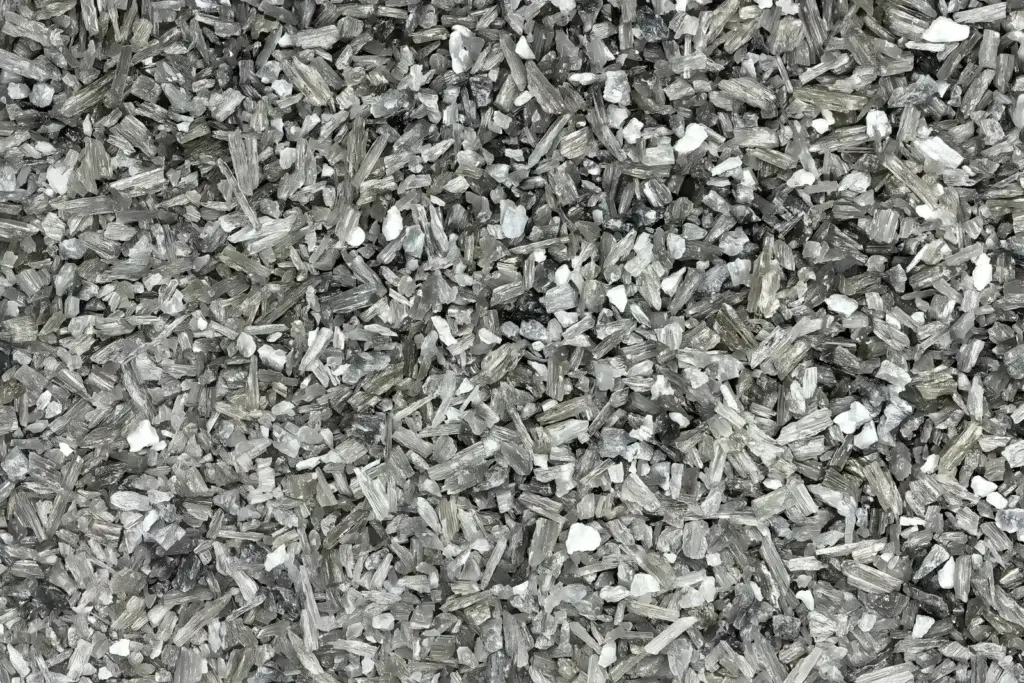
Sintered alumina has quietly become one of the most indispensable engineering materials in modern manufacturing. From the substrates inside your smartphone to the armor plating on military vehicles, this dense polycrystalline form of aluminum oxide delivers a combination of hardness, thermal stability, and electrical insulation that few other materials can match. With the global sintered alumina market approaching USD 300 million in 2024 and expanding rapidly across electronics, energy, and defense sectors, understanding this material is no longer optional for procurement professionals, design engineers, and manufacturing leaders.
Sintered alumina is a high-purity (typically over 99.5% Al2O3) polycrystalline ceramic produced by compacting fine alumina powder and firing it at temperatures near 1600-1800 degrees Celsius. This process yields a material with Vickers hardness up to 2000 HV, flexural strength of 300-400 MPa, volume resistivity exceeding 10^14 ohm-cm, and continuous operating temperatures up to 1700 degrees Celsius making it the most widely adopted advanced ceramic across electronics, medical, aerospace, and industrial wear applications.
The growing adoption of sintered alumina across industries is no accident. As manufacturers push toward smaller, faster, and more energy-dense products, traditional materials such as polymers and metals increasingly hit their thermal and electrical limits. Sintered alumina fills this gap, offering a balance of performance and cost that has made it the go-to ceramic for printed circuit substrates, semiconductor processing components, and high-temperature furnace furniture. Meanwhile, its biocompatibility and chemical inertness have opened doors in orthopedic implants and chemical processing equipment, where material failure is simply not an option.
The following guide covers everything technical buyers and engineers need to know: from the sintering process itself through key material properties, major application domains, comparative positioning against competing ceramics, market outlook, and practical guidance on grade selection.
What Is Sintered Alumina and How Is It Made?
Sintered alumina is a dense, polycrystalline ceramic material produced by compacting high-purity aluminum oxide powder and subjecting it to controlled high-temperature heat treatment, which causes the powder particles to bond through solid-state diffusion without fully melting the material.
The manufacturing process begins with powder preparation. High-purity alumina powder typically produced through chemical synthesis routes such as sol-gel or precipitation is milled to achieve fine, uniform particle size. Ball milling, planetary milling, or jet milling breaks up agglomerates and ensures homogeneous packing behavior during subsequent shaping stages. Small quantities of organic binders such as polyvinyl alcohol (PVA) and lubricants like stearic acid are introduced to improve mold filling and reduce pressing defects.
The prepared powder is then formed into a green body using one of several shaping techniques. Dry pressing applies high uniaxial pressure and is preferred for simple geometries at high volumes. Isostatic pressing uses uniform fluid pressure for complex shapes requiring homogeneous density distribution. Injection molding mixes the powder with a thermoplastic binder system and injects it into molds under heat and pressure, enabling production of small, intricate components with tight dimensional tolerances. Slip casting and tape casting form parts from an alumina slurry and are commonly used for thin sheets in multilayer electronic substrates.
Sintering is the critical thermal step that transforms the fragile green body into a dense, high-strength ceramic. The compacted part is heated to 1600-1800 degrees Celsius in controlled-atmosphere furnaces. During the heating stage, organic binders and moisture evaporate, requiring careful temperature ramping to prevent cracking. In the temperature-maintaining stage, the real densification occurs: alumina particles bond through diffusion, porosity collapses, and the material shrinks significantly. The final cooling stage must be carefully managed to control grain growth and prevent thermal shock.
Multiple sintering methods exist for different performance requirements. Pressureless sintering is the most common and cost-effective, suitable for large-scale production. Hot pressing sintering applies uniaxial pressure during heating and can achieve over 99% theoretical density at lower temperatures, making it ideal for transparent alumina and high-end structural parts. Hot isostatic pressing (HIP) uses all-around pressure transfer for the most uniform microstructures, though at higher cost. Spark plasma sintering (SPS) employs pulsed electric current for rapid heating, enabling extremely fine grain structures and excellent mechanical properties. The sintering process alone can account for 40-50% of total production costs, driven primarily by the energy demands of sustained high-temperature operation.
What Are the Key Properties of Sintered Alumina?
Sintered alumina combines extreme hardness (1500-2000 HV), high mechanical strength (300-450 MPa flexural), excellent electrical insulation (resistivity exceeding 10^14 ohm-cm), thermal stability up to 1700 degrees Celsius, and outstanding chemical resistance to acids, alkalis, and organic solvents making it one of the most versatile advanced ceramics available for demanding industrial applications.
Mechanically, sintered alumina ranks among the hardest engineering ceramics. Its Vickers hardness ranges from 1500 HV for 96% purity grades up to 2000 HV for 99.9% high-purity material, placing it just below diamond and cubic boron nitride on the hardness scale. Compressive strength reaches 2000-3000 MPa, while flexural strength typically falls between 300-450 MPa depending on purity and microstructure. The Young’s modulus ranges from 300 to 380 GPa, indicating high stiffness with minimal elastic deformation under load. These properties make sintered alumina an exceptional choice for wear-resistant liners, pump seals, cutting tools, and components subjected to abrasive environments.
Thermally, sintered alumina maintains structural integrity at temperatures where most metals and polymers would fail. Continuous operating temperature for high-purity grades reaches 1500-1700 degrees Celsius, with a melting point of approximately 2050 degrees Celsius. Thermal conductivity at room temperature ranges from 24 to 35 W/(mK), which is notably high for a ceramic material and supports heat dissipation in electronic packaging applications. The coefficient of thermal expansion is relatively low at 7-8 x 10^-6 per degree Celsius, providing dimensional stability across thermal cycles and making it suitable for precision components. As documented in recent market research, these thermal properties are central to sintered alumina’s expanding role in high-temperature industrial processes where refractories consume over 38% of global output.
Electrically, sintered alumina functions as an outstanding insulator. Volume resistivity exceeds 10^14 ohm-cm at room temperature, and dielectric strength ranges from 10 to 20 kV/mm depending on purity level. The dielectric constant is stable at approximately 9-10 at 1 MHz, with low dielectric loss characteristics. These electrical properties explain why sintered alumina substrates account for nearly 65% of the ceramic substrate market in power electronics, where reliable insulation combined with effective heat dissipation is critical for semiconductor packaging and high-frequency circuit applications.
Chemically, sintered alumina demonstrates exceptional inertness. It resists attack from concentrated acids, alkalis, organic solvents, and aggressive process chemicals that would rapidly degrade metals and polymers. This chemical stability, combined with its high-temperature capability, makes it the material of choice for chemical reactor linings, thermocouple protection tubes, and components in semiconductor wet processing where contamination control is paramount. Its biocompatibility further extends its reach into medical implants and surgical instruments, where long-term chemical stability in physiological environments is essential.
What Are the Primary Applications of Sintered Alumina?
Sintered alumina serves as a foundational material across six major industry domains: electronics and semiconductor manufacturing, industrial wear protection, medical devices and biomedical implants, aerospace and defense, chemical processing, and high-temperature furnace components each leveraging a different combination of its hardness, insulation, thermal stability, and chemical resistance.
In the electronics sector, sintered alumina substrates form the backbone of hybrid integrated circuits, LED packages, power modules, and high-frequency communication devices. The material’s combination of electrical insulation and thermal conductivity enables efficient heat dissipation from densely packed electronic components, preventing thermal runaway in power electronics. Semiconductor manufacturing equipment relies heavily on high-purity alumina for wafer handling components, reaction chamber linings, focus rings, and electrostatic chuck substrates, where resistance to aggressive plasma environments and freedom from particulate contamination are non-negotiable requirements.
Industrial wear protection represents the largest volume application by tonnage. Sintered alumina liners, tiles, grinding media, pump seals, impellers, and conveying system components replace metal parts in mining, mineral processing, cement production, and bulk material handling. The material’s Mohs 9 hardness dramatically extends service life compared to steel alternatives in abrasive environments, reducing maintenance downtime and replacement frequency. Thread guides for textile machinery, wire drawing dies, and sandblast nozzles similarly benefit from alumina’s wear resistance in applications where surface finish consistency is critical.
The medical device industry has adopted sintered alumina primarily for orthopedic implants. Femoral heads and acetabular liners in total hip replacement systems exploit the material’s exceptional combination of low wear, chemical inertness, and tissue biocompatibility. Compared to metal-on-polyethylene alternatives, alumina-on-alumina bearing surfaces generate significantly less wear debris, reducing the risk of osteolysis and implant loosening over decades of service. Dental prosthetics, orthodontic brackets, and surgical instrument components further extend alumina’s medical footprint.
Aerospace and defense applications demand the material’s unique balance of properties. Transparent and translucent alumina ceramics serve as windows and domes for infrared sensors and missile guidance systems. Ballistic armor tiles made from sintered alumina provide lightweight protection against high-velocity projectiles, with a weight advantage over steel armor solutions. High-temperature sensor housings, electrical feedthrough insulators, and radome components for radar-transparent nose cones rely on alumina’s thermal-mechanical-electrical stability under extreme operational conditions.
How Does Sintered Alumina Compare to Other Technical Ceramics?
Sintered alumina offers the best cost-to-performance ratio among advanced technical ceramics, outperforming zirconia and silicon nitride in hardness and chemical resistance at a significantly lower price point, though it trails in fracture toughness and thermal shock resistance compared to toughened variants of these competing materials.
The following table provides a direct property comparison across four major technical ceramics commonly evaluated alongside sintered alumina:
| Property | Sintered Alumina (99.5%) | Zirconia (Y-TZP) | Silicon Carbide | Silicon Nitride |
| Density (g/cm³) | 3.85-3.95 | 6.0-6.1 | 3.1-3.2 | 3.2-3.3 |
| Hardness (HV) | 1600-2000 | 1200-1300 | 2500-2800 | 1500-1700 |
| Flexural Strength (MPa) | 350-450 | 800-1200 | 400-550 | 600-900 |
| Fracture Toughness (MPa·m½) | 3.5-4.5 | 8-12 | 3-4 | 5-7 |
| Max Service Temp (°C) | 1500-1700 | 800-1000 | 1600-1750 | 1300-1500 |
| Thermal Conductivity (W/m·K) | 24-35 | 2-3 | 100-140 | 20-30 |
| Volume Resistivity (Ω·cm) | 10^14 | 10^10 | 10^2-10^6 | 10^14 |
| Relative Cost | 1x (reference) | 3-5x | 4-8x | 5-10x |
Compared to zirconia, sintered alumina offers superior hardness, higher temperature capability, and better chemical resistance at roughly one-third to one-fifth the material cost. Zirconia, however, delivers significantly higher fracture toughness (8-12 versus 3.5-4.5 MPa·m½) and flexural strength, making it the better choice for applications involving impact loading or where crack propagation resistance is paramount. Zirconia’s much lower thermal conductivity also makes it unsuitable for heat-dissipation applications where alumina excels.
Against silicon carbide, alumina loses on hardness and thermal conductivity but wins decisively on electrical insulation and cost. Silicon carbide is semi-conductive (resistivity 10^2 to 10^6 Ω·cm), making it unsuitable for electrical insulation applications where alumina is the standard. Silicon carbide’s superior thermal conductivity (100-140 W/m·K) makes it the choice for extreme heat dissipation scenarios, but at 4-8 times the cost of equivalent alumina components.
Silicon nitride competes most directly with alumina in structural applications, offering better fracture toughness and thermal shock resistance. However, sintered alumina’s broader chemical compatibility and substantially lower cost make it the default choice for the majority of wear, insulation, and corrosion-resistant applications. Component designers typically select alumina first and only move to alternative ceramics when specific property requirements cannot be met.
What Is the Market Outlook for Sintered Alumina?
The global sintered alumina market is projected to grow from approximately USD 298 million in 2024 to over USD 750 million by 2032, driven by accelerating demand from electronics miniaturization, electric vehicle battery systems, 5G infrastructure deployment, and continued expansion in steel and refractory industries, with a compound annual growth rate in the 12-15% range.
Multiple market research sources converge on a strong growth trajectory. One analysis pegs the 2024 market at USD 290.45 million with a 12.7% CAGR reaching USD 723.86 million by 2032. Another estimates a higher 14.6% CAGR reaching USD 757 million by 2031. The broader alumina ceramics market which includes sintered and non-sintered products was valued at USD 9.83 billion in 2024 and is projected to reach USD 16.40 billion by 2032 at a 6.6% CAGR, confirming sustained demand across all alumina-based advanced ceramics.
Regionally, Asia-Pacific dominates both production and consumption, driven by large-scale electronics manufacturing in China, Japan, and South Korea, coupled with rapid industrialization and infrastructure development. North America accounts for approximately 24% of global demand, with consumption concentrated in high-value custom applications for defense, aerospace, and semiconductor equipment. Europe maintains a strong position in precision engineering applications, particularly in medical devices and automotive sensor systems.
The electronics sector represents the single most important growth driver. As electric vehicle power modules demand higher voltage and current handling, sintered alumina substrates provide the electrical isolation and thermal management essential for reliable operation. The global push toward 5G and beyond-5G communication infrastructure creates demand for alumina-based components operating at higher frequencies. Simultaneously, the semiconductor industry’s transition to advanced nodes requires ever-purer alumina components for wafer processing environments.
Energy sector applications represent a rapidly emerging demand category. Sintered alumina separators in lithium-ion batteries improve thermal stability and safety. Solid oxide fuel cells employ alumina components for their chemical stability at elevated operating temperatures. The refractories sector, which consumes roughly 38% of global output, continues to modernize as steelmakers adopt higher-purity alumina linings to meet tightening environmental regulations. The primary constraint on market growth remains the energy-intensive manufacturing process, with sintering alone responsible for 40-60% of total production costs a factor that could moderate growth rates if energy prices remain elevated.
How to Select the Right Sintered Alumina Grade for Your Application
Grade selection for sintered alumina components follows three decision filters: determine your required purity level based on operating environment severity, evaluate the forming technique appropriate for your part geometry and volume, and balance performance requirements against cost constraints with 96% purity serving most industrial needs while 99.5% and 99.9% grades address electronics, semiconductor, and high-vacuum applications respectively.
The purity of sintered alumina is the single most important specification affecting both performance and cost. Commercial grades fall into three tiers that map clearly to application requirements:
| Grade | Al2O3 Content | Key Characteristics | Typical Applications | Relative Cost |
| 96% | 95-96% | Good mechanical strength, adequate wear resistance, standard insulation | Wear liners, pump seals, valve components, grinding media, textile guides | 1x (baseline) |
| 99.5% | 99.5-99.7% | Higher strength and hardness, improved dielectric strength, low outgassing | Electronic substrates, vacuum feedthroughs, high-voltage insulators, medical instruments | 2-3x |
| 99.9% | 99.9%+ | Maximum hardness and strength, exceptional wear resistance, plasma resistance, semi-transparency in thin sections | Semiconductor etch/deposition chambers, high-temperature furnace tubes, precision optics, laser components | 5-10x |
For general industrial wear and insulation applications where operating temperatures remain below 1500 degrees Celsius and environments are not chemically aggressive, 96% alumina delivers adequate performance at the lowest cost. The 4-5% glassy phase (typically silica, magnesia, or calcia additives) aids sintering but limits high-temperature and chemical resistance properties. Detailed property comparisons confirm that 96% alumina meets requirements for most pump seals, wear liners, and standard electrical insulators.
The 99.5% grade eliminates most of the glassy phase, substantially improving dielectric strength (from 10-12 to 12-15 kV/mm), chemical resistance, and outgassing behavior. This makes it the minimum purity for electronic substrates, vacuum chamber components, and high-voltage insulators where even small amounts of volatile glassy phase could compromise performance. It represents the most common specification for power electronics substrates and LED packaging applications.
High-purity 99.9% alumina is reserved for the most demanding environments: semiconductor plasma etch chambers where even trace glassy phase would contaminate wafers, high-vacuum systems requiring near-zero outgassing, and precision optical components where transparency or translucency is required. The cost premium is significant at 5-10 times the price of 96% material, but in semiconductor manufacturing where a single wafer lot can be worth millions of dollars, the material cost is negligible relative to the risk of contamination-induced yield loss.
Forming technique selection depends on part geometry and production volume. Dry pressing suits high-volume production of simple shapes. Injection molding enables complex, small components with tight tolerances for medical and electronic applications. Tape casting produces thin sheets for multilayer ceramic substrates. Isostatic pressing achieves uniform density in complex shapes that would crack under uniaxial pressing. The forming method should be discussed with the component supplier early in the design phase, as it directly affects achievable tolerances, surface finish, and unit cost.