γ Alumina
- Home /
- Alumina /
- Types of Alumina /
- γ Alumina
What Is Activated Alumina?
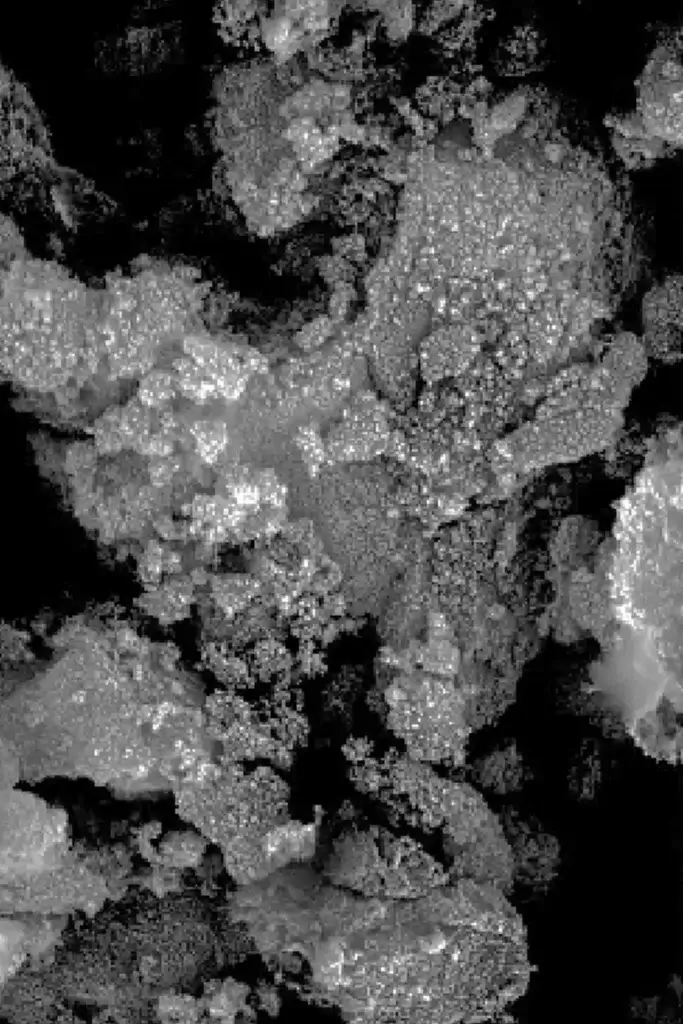
Activated alumina (γ-Al₂O₃) is a highly porous form of aluminum oxide produced through the controlled dehydration of aluminum hydroxide. This process creates an extensive internal pore network with a surface area typically ranging from 200 to 400 m²/g, giving the material its exceptional capacity for adsorption, catalysis, and surface-based chemical reactions.
Unlike standard alumina, the gamma-phase crystalline structure of activated alumina provides a unique combination of high surface activity, thermal resistance, and mechanical strength. Available in spherical, granular, and cylindrical forms, it can be precisely engineered to meet the specific pore size, crush strength, and surface chemistry requirements of diverse industrial processes. Its amphoteric nature allows it to interact with both acidic and basic compounds, broadening its functional range well beyond conventional adsorbent materials.
Why Choose Activated Alumina (γ-Al₂O₃)?
- Exceptional Adsorption Capacity The high surface area and uniform pore distribution enable activated alumina to efficiently capture moisture, fluoride, arsenic, and other contaminants, delivering consistent removal performance even under high-throughput operating conditions.
-
Outstanding Thermal & Mechanical Stability Activated alumina withstands repeated thermal regeneration cycles without significant loss of surface area or crush strength, making it a cost-effective, long-service-life solution for continuous industrial operations.
-
Broad Application Compatibility From compressed air drying and natural gas dehydration to drinking water fluoride removal and catalyst support in petrochemical refining, activated alumina performs reliably across a wide spectrum of industrial environments.
-
Regenerable & Cost-EfficientUnlike single-use desiccants, activated alumina can be thermally regenerated multiple times, significantly reducing material consumption and lowering the total cost of ownership over its operational lifespan.
-
Consistent Quality & Customizable Specifications Precise manufacturing controls ensure batch-to-batch consistency in surface area, pore volume, and particle size distribution, allowing engineers to specify and rely on predictable performance in critical process applications. of a wide range of systems in a wide range of sectors.
Industry Challenges
Moisture Saturation Limit
Activated alumina’s adsorption capacity is finite, requiring timely regeneration cycles to prevent breakthrough and maintain effective drying or purification performance.
Regeneration Energy Consumption
Thermal regeneration requires sustained high temperatures, making it an energy-intensive process that directly impacts overall operational costs in large-scale applications.
Sensitivity to Liquid Water Contact
Direct exposure to liquid water can cause mechanical degradation and surface area loss, reducing the material’s long-term adsorption efficiency and crush strength.
Performance Variability at High Humidity
Under extremely high relative humidity conditions, adsorption efficiency can decline, limiting its effectiveness in environments without adequate pre-treatment or flow control.
Fluoride & Arsenic Capacity Decline Over Time
Repeated adsorption-regeneration cycles in water treatment applications gradually reduce active site availability, eventually necessitating material replacement to sustain regulatory compliance.
Product overview
Alumina
AF-γ-NEW/D100
Alumina
AS-γ-NEW/D300
Why Use Our Activated Alumina
Excellent Mechanical Strength
Activated alumina's high crush strength and abrasion resistance allow it to withstand the physical stress of packed-bed operations, maintaining structural integrity through prolonged service cycles without significant particle breakdown or pressure drop increase.
Stable Performance Under High Temperatures
The gamma-phase alumina structure retains its surface area and mechanical properties at elevated temperatures, ensuring dependable performance in high-temperature drying, catalytic, and gas purification applications without premature structural degradation.
Precise, Customizable Specifications
Particle size, pore volume, surface area, and bulk density can be tailored to specific process requirements, enabling engineers to optimize bed design, contact time, and adsorption efficiency for their exact application needs.
Related Applications
Industry Solutions
Packaging & Logistics Services
Secure & Customizable Packaging
The products shall be enclosed in a durable, moistureproof pouch or bulk container, so as to guarantee the cleanliness and completeness of transportation. Customized packing options for special size and handling needs.
Reliable & Flexible Global Shipping
Working with reliable logistic partners, we provide a flexible delivery system for maritime, aerial and land-based cargo. Prompt delivery and safe transport to worldwide destinations.
Dedicated Order & Support Coordination
We offer special support for tracking and documenting from the order validation to the last shipment. Availability of technical and logistical support to guarantee the success of the supply chain experience.
Ready to Find Your Perfect Industrial Solution?
How to Order!
Send us your detailed question, or ask for a quote tailored to your activated carbon requirements.