
Activated carbon has been a cornerstone of industrial filtration and purification for over a century. Among the various raw materials used to produce activated carbon — including coal, wood, peat, and lignite — coconut shell has emerged as one of the most valued feedstocks. This shift is driven by growing environmental awareness, tightening regulatory standards on industrial emissions and water quality, and the unique structural advantages that coconut shell offers over conventional carbon sources. In 2024 alone, global production of coconut activated carbon exceeded 412,000 metric tons, with Asia-Pacific countries accounting for 71% of total supply, according to market research data. As industries worldwide seek more sustainable and high-performance filtration media, understanding what coconut activated carbon is and why it matters has never been more relevant.
Coconut activated carbon is a high-performance porous adsorbent material produced from carefully selected coconut shells through a controlled process of high-temperature carbonization and steam activation, resulting in a product dominated by micropores with an iodine number typically between 800 and 1200 mg/g, a BET surface area of 1000 to 1500 square meters per gram, and exceptional hardness and purity that make it the preferred choice for drinking water purification, air filtration, gold recovery, and food-grade applications.
This article provides a comprehensive technical overview of coconut activated carbon — from its manufacturing process and key performance metrics to its diverse industrial applications and market dynamics. Whether you are a procurement professional evaluating filtration media, an engineer designing a treatment system, or a business owner seeking to understand the supply chain, the following sections offer the detailed information you need to make informed decisions.
How Is Coconut Activated Carbon Made?
The production of coconut activated carbon involves a multi-stage thermal process: high-quality coconut shells are first carbonized at 400 to 600 degrees Celsius in an oxygen-deficient environment, converting them into a primary char, and then activated at 800 to 1000 degrees Celsius with steam or chemical agents to develop an extensive internal pore network that gives the material its remarkable adsorption capacity.
Raw Material Selection and Preparation
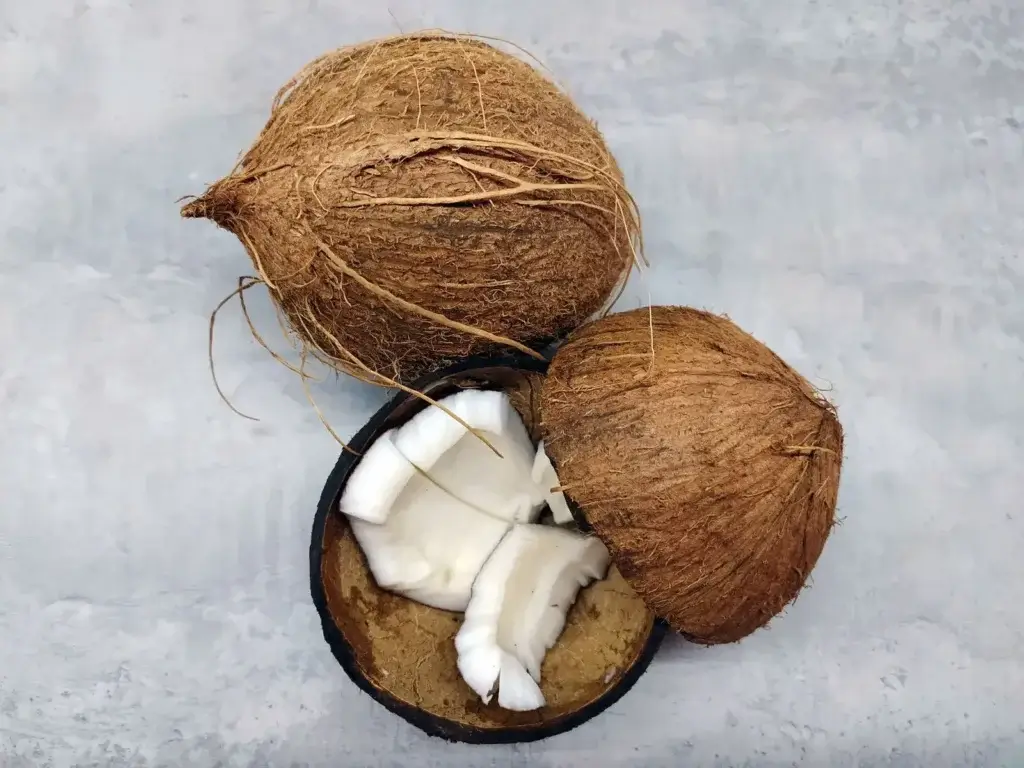
The quality of coconut activated carbon begins with the raw material. Not all coconut shells are equal. Indonesian coconut shells are widely favored in the industry due to their high density, low ash content, and consistent quality. According to a detailed production process overview, the shells are screened to remove impurities such as fiber, dust, and residual coconut meat, then crushed into uniform pieces approximately 2 to 3 centimeters in size. Moisture content is reduced to below 15 percent through controlled drying before the carbonization stage begins. Proper raw material preparation directly influences the final product’s hardness, purity, and adsorption performance.
Carbonization Stage
Carbonization takes place in rotary kilns or fluidized bed reactors under an oxygen-limited atmosphere. At temperatures between 400 and 600 degrees Celsius, volatile organic compounds are driven off, leaving behind a carbon-rich char with a rudimentary pore structure. The carbonized material at this stage has limited adsorption capability. It is the subsequent activation step that transforms this char into a high-performance adsorbent. The entire process requires precise control over temperature ramp rates and residence time to ensure consistent char quality.
Steam Activation Process
Activation is the most critical phase. The carbonized material is exposed to high-temperature steam, typically at 800 to 1000 degrees Celsius, which reacts with the carbon atoms to etch and expand the internal pore network. This steam activation process creates an extensive system of micropores — pores smaller than 2 nanometers in diameter — that are responsible for the material’s exceptional ability to trap small-molecule contaminants. Some manufacturers also employ chemical activation using agents such as zinc chloride or phosphoric acid, though steam activation remains the dominant method for producing food-grade and drinking-water-grade products. As detailed in this comprehensive guide to coconut shell activated carbon, steam activation at precisely controlled temperatures is the key differentiator that gives coconut-based products their superior performance characteristics.
Post-Treatment and Quality Control
After activation, the material is cooled and subjected to acid washing or water rinsing to remove residual ash and soluble impurities. Acid-washed grades achieve ash content as low as 3 percent, making them suitable for pharmaceutical and high-purity applications. The product is then dried, crushed, and screened into specific particle size ranges — common mesh sizes include 6×12, 8×16, 12×40, and 20×50 — depending on the intended application. Each batch undergoes rigorous testing for iodine number, moisture content, ash content, hardness, and bulk density before being packed in moisture-proof bags, typically 25 kilograms per bag or in one-ton supersacks, for global distribution.
Key Properties and Performance Characteristics
Coconut activated carbon is defined by a set of interrelated physical and chemical properties: a predominantly microporous structure with over 90 percent of pores below 2 nanometers, an iodine number ranging from 800 to 1200 mg/g, a BET surface area between 1000 and 1500 m²/g, high mechanical hardness with ball-pan hardness values of 95 to 99 percent, and low ash content typically between 3 and 5 percent for acid-washed grades.
Pore Structure and Adsorption Metrics
The performance of any activated carbon is fundamentally determined by its pore structure. Coconut shell activated carbon is unique in that its pores are overwhelmingly microporous — over 90 percent of total pore volume falls in the sub-2-nanometer range. This makes it exceptionally effective at capturing small-molecule contaminants such as chlorine, chloramines, hydrogen sulfide, trihalomethane precursors, and light volatile organic compounds. As noted in this technical comparison of water purification effects, the dense natural structure of coconut shell fibers forms a well-developed pore system during activation, with over 90 percent of pores being micropores.
The iodine number is the most widely cited quality indicator. It measures the amount of iodine (in milligrams) adsorbed by one gram of carbon under standard conditions, serving as a proxy for total micropore volume. Coconut shell grades routinely achieve iodine numbers of 1000 to 1200 mg/g, significantly exceeding typical coal-based carbons which range from 600 to 950 mg/g. The BET surface area, measured by nitrogen adsorption, quantifies the total internal surface area available for adsorption. Coconut shell activated carbon delivers 1000 to 1500 square meters per gram — roughly equivalent to the area of a football field in a single gram of material. Other important metrics include the methylene blue number (150 to 250 mg/g for coconut grades, indicating moderate mesopore volume) and molasses number, which together provide a fuller picture of the pore size distribution.
Mechanical Hardness and Durability
Beyond adsorption capacity, mechanical hardness is a critical parameter for industrial users. Coconut shell carbon exhibits exceptional hardness due to the dense natural fiber structure of the coconut shell. This translates to lower attrition rates, reduced dust generation, and longer service life in fixed-bed adsorbers where backwashing and handling cause gradual material loss. The high crush strength also means the carbon maintains its particle integrity under pressure, preventing channeling and ensuring consistent contact between the fluid and the carbon bed.
Chemical Purity and Ash Content
The low ash content of coconut shell activated carbon is another distinguishing advantage. Ash — the inorganic residue remaining after complete combustion — can leach into treated water or interfere with catalytic processes. Acid-washed coconut grades reduce ash to 3 to 5 percent, compared to 8 to 15 percent for typical coal-based products, making them the preferred choice for drinking water and pharmaceutical applications where purity is paramount. Coconut carbon also features a wide pH tolerance range of 2 to 10, demonstrating strong acid and alkali resistance that makes it particularly suitable for treating chlorine-containing drinking water.
Physical and Chemical Properties Overview
| Property | Typical Value (Coconut Shell) | Typical Value (Coal-Based) |
|---|---|---|
| Iodine Number (mg/g) | 800 – 1200 | 600 – 950 |
| BET Surface Area (m²/g) | 1000 – 1500 | 700 – 1100 |
| Ball-Pan Hardness (%) | 95 – 99 | 75 – 90 |
| Ash Content (%) | 3 – 5 (acid-washed) | 8 – 15 |
| Bulk Density (g/cm³) | 0.45 – 0.55 | 0.40 – 0.50 |
| Moisture Content (%) | Below 5 | Below 5 |
| pH Range Tolerance | 2 – 10 | 4 – 9 |
Major Applications of Coconut Activated Carbon
Coconut activated carbon is deployed across a wide range of industries, with the largest consuming sectors being water treatment (accounting for approximately 48 percent of global demand or 198,000 metric tons in 2024), air purification (74,000 metric tons), gold recovery (62,000 metric tons), and food and beverage processing (28,000 metric tons), according to global market analysis.
Drinking Water and Municipal Water Treatment
Water treatment is the single largest application for coconut activated carbon. Municipal drinking water plants across the United States, Germany, Japan, and other developed nations have incorporated coconut-based carbon filters into more than 67,000 treatment units. The material excels at removing chlorine and chlorination byproducts, improving taste and odor, and adsorbing trace organic contaminants including pesticides, pharmaceutical residues, and microplastics. In residential settings, point-of-use and point-of-entry water filtration systems consumed over 51,000 metric tons in 2024. The high micropore volume of coconut carbon makes it particularly effective for chlorine removal — a function that coal-based carbons perform less efficiently due to their broader pore distribution.
Industrial Wastewater Treatment
Industrial wastewater treatment is another growing segment, where coconut carbon is used to remove dissolved organics, color bodies, and specific chemical pollutants before discharge or reuse. The material’s strong chemical stability — acid and alkali resistant with a pH applicability range of 2 to 10 — makes it especially suitable for treating chlorine-containing industrial effluents. Its high mechanical strength with a crushing rate below 0.3 MPa ensures structural stability under the demanding conditions found in industrial treatment facilities.
Air Purification and Gas Phase Filtration
Air purification applications consumed 74,000 metric tons of coconut activated carbon in 2024, driven by increasing concerns about indoor air quality and volatile organic compound emissions. The material is used in HVAC systems, industrial gas masks, automotive cabin air filters, and standalone air purifiers. Its micropore-dominated structure is particularly suited to trapping small gaseous molecules such as formaldehyde, benzene, toluene, and sulfur dioxide. Hospital and pharmaceutical cleanroom air handling systems have increasingly adopted coconut shell-based carbon filters because of their high purity and low dust generation. Data centers in the United States and South Korea have also upgraded their air filtration systems with coconut carbon to control corrosive gases that can damage sensitive electronic equipment.
Gold Recovery and Mining Applications
The gold mining industry consumed 62,000 metric tons of coconut activated carbon in 2024, primarily for the carbon-in-pulp and carbon-in-leach processes. Coconut shell carbon is preferred over coal-based alternatives in this application because of its superior hardness and attrition resistance. The carbon must withstand aggressive agitation in leaching tanks and repeated handling across multiple adsorption-desorption-regeneration cycles without excessive breakage. Ghana alone accounted for 11,800 metric tons, while South Africa, Peru, and Tanzania together contributed another 26,000 metric tons. The high micropore volume also provides excellent adsorption kinetics for gold cyanide complexes, enabling efficient recovery even at low gold concentrations.
Food, Beverage, and Pharmaceutical Processing
In the food and beverage sector, 28,000 metric tons of coconut activated carbon were used in 2024 for decolorization, deodorization, and purification of sweeteners, edible oils, alcoholic beverages, and fruit juices. Asian food processors in Thailand, Malaysia, and Vietnam led this consumption with 15,600 metric tons. Acid-washed, high-purity grades are specified for these applications to meet food safety standards. The material removes color bodies, off-flavors, and trace contaminants without introducing impurities into the final product. In pharmaceutical manufacturing, high-purity coconut carbon is used to remove impurities from active pharmaceutical ingredients and as a catalyst support in chemical synthesis. Emerging applications include electrode material for supercapacitors and battery-grade carbon for energy storage, leveraging the material’s high surface area and electrical conductivity.
Coconut Activated Carbon vs. Coal-Based Activated Carbon
While both coconut shell and coal-based activated carbons serve as effective adsorbents, they differ fundamentally in pore structure, hardness, purity, and optimal application domains. Coconut shell carbon dominates applications requiring high micropore volume and purity, while coal-based carbon is often more cost-effective for applications targeting larger molecules and color bodies.
Pore Structure and Molecular Selectivity
The most fundamental difference lies in pore size distribution. Coconut shell carbon is overwhelmingly microporous, with over 90 percent of pores below 2 nanometers. This makes it highly selective for small molecules — chlorine, chloramines, light VOCs, and dissolved gases. Coal-based carbon, particularly from bituminous coal, has a broader pore distribution with significant mesopore and macropore content, making it more effective for larger molecules such as dyes, humic substances, and high-molecular-weight organics. According to industry technical analysis, the pore distribution of coal-based carbon is more inclined to mesopores (2 to 50 nm), and the retention efficiency for suspended matter is 20 to 30 percent higher than that of coconut shell carbon in high turbidity water treatment.
This structural difference has direct procurement implications. A buyer specifying a 1000 mg/g iodine number for an industrial wastewater application involving large dye molecules may be paying a premium for micropore capacity that cannot be accessed by the target contaminants. In such cases, a coal-based grade with a lower iodine number but higher methylene blue number may deliver superior performance at a lower cost.
Mechanical Durability and Service Life
Coconut shell activated carbon exhibits significantly higher mechanical strength, with ball-pan hardness values of 95 to 99 percent compared to 75 to 90 percent for coal-based grades. This translates to lower attrition losses during backwashing, transport, and handling. For applications requiring frequent regeneration or mechanical agitation — such as gold recovery circuits — coconut carbon’s durability directly reduces makeup carbon costs and extends bed life.
Purity and Regulatory Compliance
The lower ash content of coconut shell carbon (3 to 5 percent for acid-washed grades versus 8 to 15 percent for coal-based products) makes it the default choice for drinking water and food-contact applications where leachable impurities are a regulatory concern. Coconut carbon also has inherently lower sulfur content, reducing the risk of sulfate leaching and associated odor issues. These purity advantages are why coconut shell activated carbon is the preferred media in NSF/ANSI 61 certified drinking water systems and food-grade processing applications.
Cost and Total Ownership Considerations
Coal-based activated carbon typically has a lower upfront cost per ton. However, total cost of ownership analysis must account for service life, replacement frequency, regeneration capability, and application-specific performance. Coconut shell carbon can endure more regeneration cycles, offsetting its higher initial investment over the long term. The following table summarizes the key trade-offs that procurement teams should evaluate:
| Comparison Dimension | Coconut Shell Carbon | Coal-Based Carbon |
|---|---|---|
| Dominant Pore Type | Micropores (over 90%) | Mixed micro, meso, and macropores |
| Iodine Number (mg/g) | 1000 – 1200 | 600 – 950 |
| Best Target Molecule Size | Below 0.5 nm | 0.3 to 3 nm |
| Mechanical Hardness | High (95-99%) | Moderate (75-90%) |
| Ash Content | Low (3-5%) | Higher (8-15%) |
| Upfront Cost | Higher | Lower |
| Regeneration Cycles | More cycles possible | Fewer cycles |
| Primary Applications | Potable water, gold recovery, air purification | Wastewater, color removal, large-molecule adsorption |
Global Market Overview and Industry Trends
The global coconut activated carbon market was valued at approximately 126.9 million US dollars in 2024 and is projected to grow to 157.5 million US dollars by 2033, representing a compound annual growth rate of 5.5 percent, as reported by market research analysts. Demand is driven primarily by expanding water treatment infrastructure, tightening environmental regulations, and increasing adoption in air purification systems.
Production Geography and Supply Chain
Asia-Pacific dominates production, accounting for 71 percent of global supply. India is the largest exporter, shipping over 124,000 metric tons in 2024. Indonesia, the Philippines, and Sri Lanka together with India contribute over 68 percent of global production, leveraging their abundant coconut farming industries. These four countries exported more than 289,000 metric tons to over 100 countries, with the United States, Germany, Japan, and China being major importers. Granular activated carbon is the most consumed physical form, representing over 61 percent of global volume. Powdered activated carbon and extruded pellets account for the remainder, with powdered grades gaining traction in specialized liquid-phase applications and extruded pellets preferred for gas-phase filtration.
Key Growth Drivers
Several factors are propelling market growth. First, water quality regulations continue to tighten worldwide. Over 3.1 billion people relied on municipal water systems using activated carbon filters in 2024. In the United States alone, more than 4,300 public water systems have deployed coconut-based filtration units. Second, industrial emission controls are driving demand for air purification media. With over 2.6 million HVAC units incorporating activated carbon filters globally, the air purification segment is growing steadily. Medical facilities, pharmaceutical cleanrooms, and semiconductor fabrication plants are increasingly specifying coconut carbon for its purity and performance characteristics. Third, the renewable and sustainable nature of coconut shell as a raw material — a byproduct of the food industry — aligns with corporate sustainability goals and environmental procurement policies. This is particularly important for buyers in the European Union, the United States, and Australia, where environmental certification and supply chain traceability have become purchasing priorities.
Market Challenges and Supply Constraints
The market faces notable challenges. Raw material supply is inherently seasonal and geographically concentrated. In 2024, adverse weather and crop disease in Southeast Asia reduced global coconut shell yield by 2.8 percent, affecting 6.4 million hectares of coconut farms and triggering a temporary 9.6 percent price increase in the third quarter. Small-scale producers faced particular hardship, highlighting the supply chain’s vulnerability to climate events. Freight costs and logistics also represent significant cost components, especially for buyers in landlocked regions or distant markets. These supply-side constraints are driving interest in alternative feedstocks and in technological improvements that increase yield per ton of raw shell. Additionally, environmental certifications and traceability standards have become purchasing priorities in the EU, US, and Australian markets, adding compliance complexity for producers and exporters.
How to Select the Right Coconut Activated Carbon
Selecting the appropriate coconut activated carbon grade requires matching key performance specifications — iodine number, mesh size, hardness, ash content, and particle size distribution — to the specific requirements of your application, operating conditions, and regulatory environment.
Define Application Requirements First
The first step is to clearly define what you need the carbon to do. Are you removing chlorine from drinking water, recovering gold from cyanide solution, or adsorbing VOCs from an air stream? Each application places different demands on the carbon’s properties. For chlorine removal in potable water, a high iodine number (1000 mg/g or above) and a mesh size of 12×40 is a common specification. For gold recovery, hardness and attrition resistance are equally important as adsorption capacity, and mesh sizes of 6×12 or 8×16 are typical. For food and beverage decolorization, acid-washed grades with ash content below 5 percent and compliance with relevant food safety standards should be prioritized. For air purification, the focus should shift to micropore volume and the carbon’s capacity for specific target gases such as formaldehyde or hydrogen sulfide.
Evaluate Key Technical Specifications
When comparing products from different sources, the following laboratory-measured parameters should form the core of your evaluation:
- Iodine Number: The primary indicator of micropore volume and adsorption capacity for small molecules. Higher values indicate greater capacity, but only for contaminants within the micropore size range. Specify this carefully based on your target contaminant profile.
- Mesh Size and Particle Size Distribution: Determines pressure drop, flow characteristics, and backwash behavior in your system. A narrower distribution generally provides more predictable performance and reduces channeling.
- Ball-Pan Hardness: Critical for applications involving frequent backwashing, thermal regeneration, or mechanical agitation. Higher hardness directly reduces attrition losses and extends media life.
- Ash Content: Important for food-grade, pharmaceutical, and high-purity water applications. Acid-washed grades offer the lowest ash levels and are essential where leaching is a concern.
- Moisture Content: Affects net weight and can influence handling and feeding characteristics. Standard commercial grades maintain moisture below 5 percent.
- Bulk Density: Influences the amount of carbon needed to fill a given volume and directly affects backwash expansion calculations and vessel sizing.
The Importance of Pilot Testing
Before committing to large-volume purchases, pilot-scale testing under actual operating conditions is strongly recommended. Laboratory specifications provide a useful screening tool, but real-world performance depends on factors such as water chemistry, contaminant concentration, contact time, temperature, and the presence of competing adsorbates. A well-designed pilot test using the candidate carbon grade in your specific system configuration will provide the most reliable basis for procurement decisions and help avoid costly specification mismatches.
Supplier Qualification Criteria
Beyond product specifications, supplier reliability is critical. Evaluate potential suppliers on their quality control systems, batch-to-batch consistency, production capacity, lead times, and technical support capabilities. Request certificates of analysis for each shipment and consider third-party testing for critical applications. For buyers in regulated industries, verify that the supplier holds relevant certifications such as NSF/ANSI 61 for drinking water contact or food-grade certifications for food processing applications. As highlighted in this buyer’s guide to coconut shell activated carbon, requesting sample testing before large-scale procurement is an essential step that helps confirm product performance and avoid supply chain disruptions.
Conclusion
Coconut activated carbon represents a convergence of performance, sustainability, and versatility that has made it an indispensable material across multiple industries. Its uniquely microporous structure, derived from the dense natural fiber of coconut shells processed through carefully controlled carbonization and steam activation, delivers adsorption capacities that coal-based and wood-based alternatives struggle to match for small-molecule contaminants. The material’s high mechanical hardness, low ash content, and excellent regeneration characteristics further reinforce its position as the preferred choice for drinking water treatment, gold recovery, air purification, and food-grade processing applications.
With the global market on a steady growth trajectory — projected to reach 157.5 million US dollars by 2033 — and demand being driven by increasingly stringent water quality and air emission standards, coconut activated carbon will continue to play a central role in industrial filtration and purification strategies. For procurement professionals and engineers, understanding the relationship between raw material source, manufacturing process, performance specifications, and application requirements is essential to making cost-effective and technically sound decisions. As supply chains evolve and new applications emerge in energy storage and advanced manufacturing, coconut activated carbon is poised to remain at the forefront of adsorption technology for years to come.