
Article Opening
Water contamination events, industrial discharge violations, and tightening environmental regulations are driving industries worldwide to seek faster and more reliable purification solutions. In 2024 alone, the global activated carbon market exceeded USD 4.5 billion, with powdered activated carbon (PAC) accounting for a significant and growing share. From municipal drinking water plants responding to sudden algae blooms to pharmaceutical manufacturers requiring ultra-pure intermediates, PAC has established itself as the go-to adsorbent when speed, flexibility, and high surface area are non-negotiable.
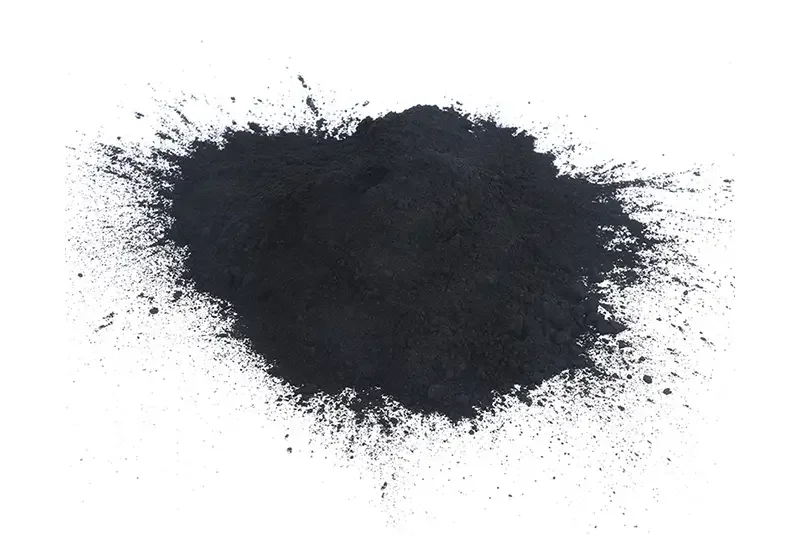
Powdered Activated Carbon (PAC) is a finely ground, highly porous carbonaceous adsorbent with particle sizes typically below 0.18 mm and a specific surface area ranging from 800 to 1,600 m²/g. It removes organic contaminants, micropollutants, taste and odor compounds, heavy metals, and residual disinfectants from liquids and gases through physical adsorption.
Despite its widespread use, many industry professionals still lack a clear understanding of how PAC differs from its granular counterpart, what makes a high-quality PAC product, and which applications benefit most from its unique properties. This guide provides a comprehensive technical overview of powdered activated carbon, from raw material selection and manufacturing to real-world performance data. Whether you are a water treatment engineer, a procurement manager in the food and beverage sector, or an environmental consultant, this article equips you with the knowledge to evaluate and select PAC products with confidence.
What Is Powdered Activated Carbon and How Is It Different from Granular Activated Carbon?
Powdered Activated Carbon is an amorphous form of activated carbon processed into fine particles generally smaller than 0.18 mm (80 mesh or finer), characterized by an extensive microporous structure, rapid adsorption kinetics, and the ability to be directly dosed into liquid or gas streams as a suspended slurry.
Powdered Activated Carbon belongs to the broader activated carbon family, which also includes granular activated carbon (GAC), extruded/pelletized activated carbon, and honeycomb activated carbon. As detailed in the comprehensive overview of powdered activated carbon, the fundamental distinction lies in particle size and the resulting operational behavior. PAC particles are so fine that they can be directly injected into a treatment stream and remain suspended, maximizing contact between the adsorbent surface and target contaminants. In contrast, GAC particles (typically 0.2–5 mm) are designed for use in fixed-bed columns where water or gas flows through a stationary carbon bed.
The raw materials used for PAC production mirror those of other activated carbon types: coconut shells, wood, and coal are the three dominant precursors. However, the downstream grinding and sizing operations for PAC are far more intensive. Coconut shell based PAC is prized for its high microporosity and hardness, making it ideal for drinking water and pharmaceutical applications. Wood based PAC offers a higher proportion of mesopores, which excel at adsorbing larger molecules such as color bodies and tannins. Coal based PAC provides a cost-effective option with good chemical resistance for industrial wastewater and flue gas treatment.
A crucial structural difference is that PAC’s fine grinding process exposes more internal pore surfaces directly to the surrounding medium, resulting in faster adsorption rates. However, this same fine particle size means PAC cannot be easily regenerated or reused; it is typically applied as a single-use consumable. GAC, by comparison, can undergo thermal reactivation multiple times, making it more economical for continuous, long-term operations.
How Is Powdered Activated Carbon Manufactured?
PAC manufacturing involves four core stages: raw material selection and pretreatment, carbonization (pyrolysis at 600–900°C in an oxygen-free environment), activation (physical steam activation at 850–950°C or chemical activation with phosphoric acid or zinc chloride), and post-processing including acid washing, drying, and precision grinding to the target particle size.
The quality of the final PAC product is largely determined at the raw material stage. According to a detailed manufacturing guide on PAC production, premium precursors such as coconut shells must have a fixed carbon content above 50% and low ash levels. Wood requires careful ash removal to keep inorganic content below 3%. Coal-based precursors demand precise density monitoring throughout processing. Raw materials are first cleaned, crushed, and screened to a uniform pre-carbonization particle size of approximately 45–150 μm.
Carbonization takes place in oxygen-free rotary kilns or fluidized bed furnaces. The process occurs in two distinct temperature zones: the dehydration phase at 200–350°C, where moisture and volatile organic compounds are driven off, and the carbon enrichment phase at 500–900°C, during which fixed carbon content rises to 85–90%. Heating rate is critical. A controlled ramp of approximately 5°C per minute prevents structural collapse of the developing carbon skeleton. The resulting char, with an initial porosity of only 2–3%, serves as the foundation for activation.
Activation is the most technically demanding stage and the primary determinant of adsorption performance. In physical activation, steam at 850–950°C reacts with the carbon surface according to the equation C + H₂O → CO + H₂, selectively gasifying carbon atoms and creating an intricate network of micropores and mesopores. Key process parameters include activation time (2–4 hours), steam flow rate (0.8–1.2 kg per kg of char), and real-time density monitoring via mercury porosimetry. In chemical activation, phosphoric acid or zinc chloride impregnates the precursor before heating, producing a different pore size distribution particularly effective for decolorization applications.
Post-processing tailors the PAC to its end use. Acid washing reduces ash content below 5% for food-grade and pharmaceutical-grade products. Surface oxidation treatments can enhance metal adsorption capacity by up to 40%. Jet milling achieves final particle sizes of 10–50 μm with over 95% passing 325 mesh. Density adjustments using binders such as starch (0.5–1%) help meet the 4–5% apparent density target for slurry-based dosing systems without compromising adsorption kinetics.
| Manufacturing Stage | Key Parameters | Quality Impact |
| Raw Material Selection | Fixed carbon > 50%, ash < 3–5% | Determines base porosity and purity |
| Carbonization | 600–900°C, oxygen-free, 5°C/min ramp | Builds carbon skeleton with 2–3% initial porosity |
| Physical Activation | 850–950°C, 2–4 hr, steam 0.8–1.2 kg/kg | Develops 800–1,600 m²/g surface area |
| Chemical Activation | H₃PO₄ or ZnCl₂, 400–600°C | Produces mesopore-rich structure for decolorization |
| Post-Processing | Acid wash, jet milling, sizing | Achieves target purity, particle size, and density |
What Are the Key Properties and Performance Indicators of PAC?
The most critical PAC quality indicators are iodine number (800–1,300 mg/g), methylene blue adsorption (100–230 mg/g), BET surface area (800–1,600 m²/g), apparent density (0.35–0.55 g/cm³), ash content (below 5%), moisture content (below 5–10%), and pH (3–9). These parameters collectively determine adsorption capacity, application suitability, and cost effectiveness.
Iodine number is the industry-standard metric for evaluating the microporosity and general adsorption capacity of PAC. As referenced in a technical specification for PAC products, it measures the milligrams of iodine adsorbed per gram of carbon and correlates strongly with surface area available for small-molecule adsorption. A PAC with an iodine number above 1,000 mg/g is considered high-performance and suitable for drinking water treatment and pharmaceutical purification. Methylene blue adsorption, ranging from 100 to 230 mg/g, specifically indicates the capacity for medium-sized organic molecules such as dyes and color bodies, making it a critical specification for decolorization applications in the food and sugar industries.
BET surface area, measured by nitrogen adsorption isotherm, quantifies the total internal surface available for contaminant capture. Premium PAC products achieve 1,200–1,600 m²/g, translating to roughly three to four football fields of surface area in a single gram of material. The pore size distribution is equally important: micropores (diameter below 2 nm) typically account for 70–85% of total pore volume and are responsible for adsorbing small organic molecules, while mesopores (2–50 nm, comprising 10–25% of volume) provide transport channels and adsorption sites for larger molecules such as humic acids and proteins.
Apparent density, typically 0.35–0.55 g/cm³ for PAC, affects dosing accuracy and slurry handling characteristics. Lower density products disperse more readily but occupy greater storage volume. Ash content, primarily from inorganic residues in the raw material, must remain below 5% for general industrial use and below 3% for food-grade products. Elevated ash can leach into treated media and interfere with adsorption. Moisture content is maintained below 10% to prevent microbial growth during storage and to ensure accurate weight-based dosing.
| Property | Typical Range | Significance |
| Iodine Number | 800–1,300 mg/g | General adsorption capacity for small molecules |
| Methylene Blue Adsorption | 100–230 mg/g | Capacity for medium-sized organics and color bodies |
| BET Surface Area | 800–1,600 m²/g | Total available adsorption surface |
| Apparent Density | 0.35–0.55 g/cm³ | Dosing, handling, and storage characteristics |
| Ash Content | Below 5% (general), below 3% (food grade) | Product purity and potential leaching risk |
| Moisture Content | Below 5–10% | Storage stability and dosing accuracy |
| pH | 3–9 | Compatibility with treatment media |
What Are the Primary Industrial Applications of Powdered Activated Carbon?
Powdered Activated Carbon is used across municipal drinking water treatment, industrial wastewater remediation, food and beverage processing, pharmaceutical purification, air pollution control, and soil remediation. Its rapid adsorption kinetics and flexible dosing make it particularly effective for emergency response, seasonal contaminant spikes, and batch purification processes.
Municipal drinking water treatment represents one of the largest PAC application segments. Water utilities deploy PAC to address seasonal taste and odor episodes caused by algae blooms, which release compounds such as geosmin and 2-methylisoborneol (MIB) detectable by humans at concentrations as low as 5–10 ng/L. PAC is also effective at removing pesticides, herbicides, and natural organic matter (NOM) that would otherwise react with chlorine disinfection to form regulated disinfection byproducts such as trihalomethanes (THMs) and haloacetic acids (HAAs). As outlined in a detailed guide on PAC treatment applications, during emergencies such as chemical spills, PAC serves as a rapid-response barrier, with contact times as short as 15–30 minutes sufficient to achieve significant contaminant reduction.
Industrial wastewater treatment relies on PAC to address contaminants that resist conventional biological treatment. Non-biodegradable organics including phenols, chlorinated solvents, and synthetic dyes are effectively removed through adsorption. In textile manufacturing, PAC rescues dye-laden effluent that would otherwise violate discharge permits. Pharmaceutical factories use PAC to capture antibiotic residues and active pharmaceutical ingredients (APIs) before they enter the environment. Landfill leachate treatment facilities dose PAC to adsorb refractory COD and ammonia. Modified PAC products with surface oxidation or impregnation treatments can achieve enhanced heavy metal removal, capturing mercury, lead, and cadmium at efficiencies exceeding 95% under optimized conditions.
In the food and beverage sector, PAC is indispensable for decolorization and purification. Sugar refineries depend on PAC to remove dark pigments from raw cane and beet syrups, producing the crystal-clear end products consumers expect. Breweries and beverage manufacturers dose PAC to strip off-flavors, musty notes, and residual chlorine from process water. Edible oil processors use PAC to adsorb oxidation byproducts that cause rancidity. As noted in the CSG Corporate PAC product overview, food-grade PAC products meeting FDA and European Commission standards are characterized by ash content below 3%, heavy metal levels under 10 ppm, and rigorous microbiological control.
Air pollution control is a growing application area. PAC is injected into flue gas streams at waste incinerators and coal-fired power plants to capture dioxins, furans, and vapor-phase mercury. The fine particle size ensures rapid dispersion and contact with target pollutants in the gas phase. PAC is also used in odor control systems at wastewater treatment plants and rendering facilities. In personal protective equipment, PAC-impregnated fabrics and cartridges provide broad-spectrum protection against industrial chemicals and warfare agents.
How Does PAC Compare to Granular Activated Carbon in Cost and Performance?
PAC offers lower initial capital investment, simpler equipment requirements, and faster adsorption kinetics, making it economical for intermittent, emergency, and short-term applications. GAC provides lower long-term operating costs through thermal regeneration, higher adsorption capacity for large molecules, and inherent filtration capability, making it superior for continuous, high-flow treatment systems.
The decision between PAC and GAC is fundamentally an economic and operational trade-off rather than a question of absolute superiority. A comprehensive PAC versus GAC comparison highlights that both forms have distinct advantages depending on the treatment context. The table below summarizes the key differences across multiple dimensions.
| Comparison Factor | Powdered Activated Carbon (PAC) | Granular Activated Carbon (GAC) |
| Particle Size | Below 0.18 mm (15–100 μm typical) | 0.2–5 mm |
| Initial Capital Investment | Low (dosing pump and mixing tank) | High (fixed-bed columns, piping, backwash system) |
| Unit Price per Ton | Lower | Higher |
| Operating Cost (Long-Term) | Higher (single use, continuous purchase) | Lower (thermal regeneration, 5–10+ cycles) |
| Adsorption Rate | Fast (minutes to hours) | Slower (hours to days to reach equilibrium) |
| Contact Time Required | 15–60 minutes typical | 10–30 minutes EBCT (empty bed contact time) |
| Filtration Capability | None (requires downstream separation) | Yes (acts as both adsorbent and filter) |
| Reuse and Regeneration | Not regenerable, dispose after use | Thermally reactivatable, multiple cycles |
| Dosing Flexibility | High (adjust dosage on demand) | Low (system design limits adjustment) |
| Best for Continuous Flow | Not ideal | Excellent |
| Best for Emergency Response | Excellent | Not suitable |
| Best for Intermittent Treatment | Excellent | Not economical |
From a cost perspective, PAC has a lower barrier to entry. A basic PAC dosing system consists of a storage silo, a slurry preparation tank, a metering pump, and a contact basin. Total capital expenditure can be a fraction of a GAC installation requiring pressure vessels, underdrain systems, backwash pumps, and spent carbon handling infrastructure. For a facility treating 10 million gallons per day, a PAC system might cost USD 200,000–500,000 in capital, while a GAC system could exceed USD 2 million. Another detailed structural and performance comparison confirms that PAC’s finer particle size and larger exposed surface area drive significantly faster adsorption kinetics. However, the cumulative PAC purchase cost over a 10-year period may surpass the combined capital and operating cost of a GAC system if treatment is continuous.
Operationally, PAC provides unmatched flexibility. Operators can increase or decrease dosage in real time based on raw water quality changes, with no physical modification to equipment. GAC systems, by contrast, have a fixed adsorption capacity per contactor. Once breakthrough occurs, the entire bed must be taken offline for carbon changeout or regeneration. PAC’s rapid kinetics also mean that target removals can be achieved with shorter contact times, an advantage in retrofit scenarios where existing basin volume is limited.
In terms of treatment performance, PAC excels at removing small-molecule organics, taste and odor compounds, and trace micropollutants where rapid mass transfer into micropores is rate-limiting. GAC performs better for larger molecules that require mesopore and macropore transport pathways, and its bed configuration provides additional filtration of suspended solids. For applications requiring both adsorption and particle filtration, GAC is the clear choice.
What Are the Latest Market Trends and Innovations in PAC Technology?
The global PAC market is projected to grow at a compound annual growth rate (CAGR) of 8.7% through 2030, driven by tightening environmental regulations on PFAS and dioxin emissions, increasing adoption in emerging economies, and technological innovations including microwave activation, nanopore-engineered carbons, and AI-driven process optimization.
Regulatory pressure is the single most powerful growth driver. The United States Environmental Protection Agency has proposed enforceable maximum contaminant levels for six per- and polyfluoroalkyl substances (PFAS) in drinking water, with limits as low as 4 ng/L for PFOA and PFOS. PAC is one of the designated best available technologies for PFAS removal, and water utilities across North America are investing in PAC infrastructure to meet compliance deadlines. Similarly, the European Union’s updated Industrial Emissions Directive and China’s increasingly stringent wastewater discharge standards are compelling industries to adopt advanced adsorption solutions.
On the technology front, microwave activation is emerging as a promising alternative to conventional thermal processing. Microwave energy heats the carbon precursor volumetrically rather than through surface conduction, reducing activation time by approximately 20% and lowering energy consumption. Pilot-scale studies indicate that microwave-activated PAC can achieve comparable surface areas to conventionally activated products with a modest 0.3% reduction in apparent density, a trade-off that many manufacturers consider acceptable given the processing speed gains.
Nanopore engineering represents another frontier. Researchers are developing metal-organic framework (MOF) derived carbons that achieve apparent densities of 5.1% while maintaining surface areas of 1,500 m²/g. These materials offer precise pore size control at the angstrom level, enabling selective adsorption of target contaminants while minimizing competition from background organic matter. Although currently at the laboratory and pilot scale, MOF-derived PAC products are expected to enter niche high-value markets such as pharmaceutical catalyst supports and semiconductor process water within the next three to five years.
Artificial intelligence and machine learning are being applied to PAC manufacturing process control. Neural network models trained on historical production data can predict product density changes with accuracy within ±0.15%, enabling real-time adjustment of activation parameters to maintain tight specifications. This reduces batch-to-batch variation to under 2%, a critical requirement for regulated applications. AI is also being used to optimize PAC dosing in water treatment plants, with models that integrate real-time water quality data, weather forecasts, and historical contaminant trends to recommend optimal dosage rates, reducing chemical consumption by an estimated 10–15%.
Sustainability is an increasing priority. Manufacturers are exploring bio-based precursors from agricultural waste streams, including rice husks, olive stones, and bamboo. These materials offer a lower carbon footprint compared to coal-based production and align with corporate environmental, social, and governance (ESG) goals. Additionally, research into PAC reactivation and reuse, historically considered infeasible due to particle size limitations, is gaining traction. Emerging techniques using chemical regeneration or low-temperature thermal treatment may enable limited reuse cycles for certain PAC applications, further improving lifecycle economics.
Summary
Powdered Activated Carbon is a versatile, high-performance adsorbent that plays an indispensable role in modern water treatment, industrial processing, and environmental protection. Its defining characteristics (sub-0.18 mm particle size, 800–1,600 m²/g surface area, and rapid adsorption kinetics) make it the material of choice for emergency response, seasonal contaminant control, and batch purification across municipal, industrial, and food-grade applications.
Understanding the manufacturing process, from raw material selection through carbonization, activation, and post-processing, is essential for evaluating product quality. Key performance indicators including iodine number, methylene blue adsorption, BET surface area, and ash content provide objective benchmarks for comparing PAC products from different suppliers.
The PAC versus GAC decision hinges on operational context. PAC delivers lower upfront costs, simpler infrastructure, and dosing flexibility, making it ideal for intermittent and emergency use. GAC provides long-term economy through regeneration and offers combined adsorption and filtration in a single unit operation. Rather than viewing one as superior, informed buyers match the technology to the treatment objective.
Looking ahead, the PAC market is poised for sustained growth driven by PFAS regulations, industrial expansion in Asia-Pacific and Latin America, and technological advances in microwave activation, nanopore engineering, and AI-optimized manufacturing. Organizations that invest in understanding PAC technology today will be well positioned to meet tomorrow’s purification challenges efficiently and cost-effectively.