
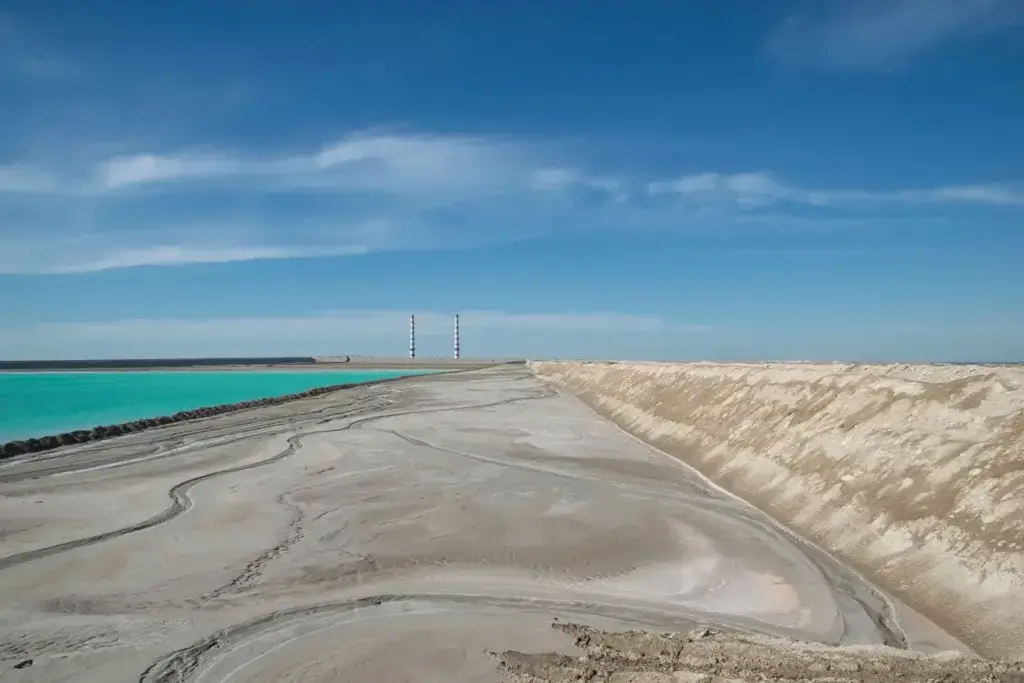
Activated carbon is one of the most versatile adsorbent materials in industrial water chemistry, and its role in seawater desalination has grown steadily as global capacity has expanded. The International Desalination Association estimates worldwide production above 100 million cubic meters per day, and in Qatar roughly 97 percent of drinking water comes from desalination plants. Every one of those facilities depends on the performance of the materials inside it — and few materials face a more demanding combination of duties than the carbon used in desalination service, where high salinity, chlorinated feed water, and continuous operation test every property the media has.
Activated carbon cannot remove dissolved salt on its own, so it does not desalinate water through conventional adsorption. But it is not a bystander either: engineered as the electrode material in capacitive deionization (CDI) systems, it directly captures salt ions, and in its more common role as a pretreatment and polishing medium it removes chlorine, organics, and colloids that would otherwise destroy reverse osmosis (RO) membranes. Understanding what the material itself can and cannot do — and which grade to specify — is the difference between a carbon investment that pays for itself and one that fails silently.
This guide examines desalination activated carbon from the material outward: what it is, how its mechanisms work, which types and specifications matter for desalination duty, and where its limits lie.
What Is Desalination Activated Carbon?
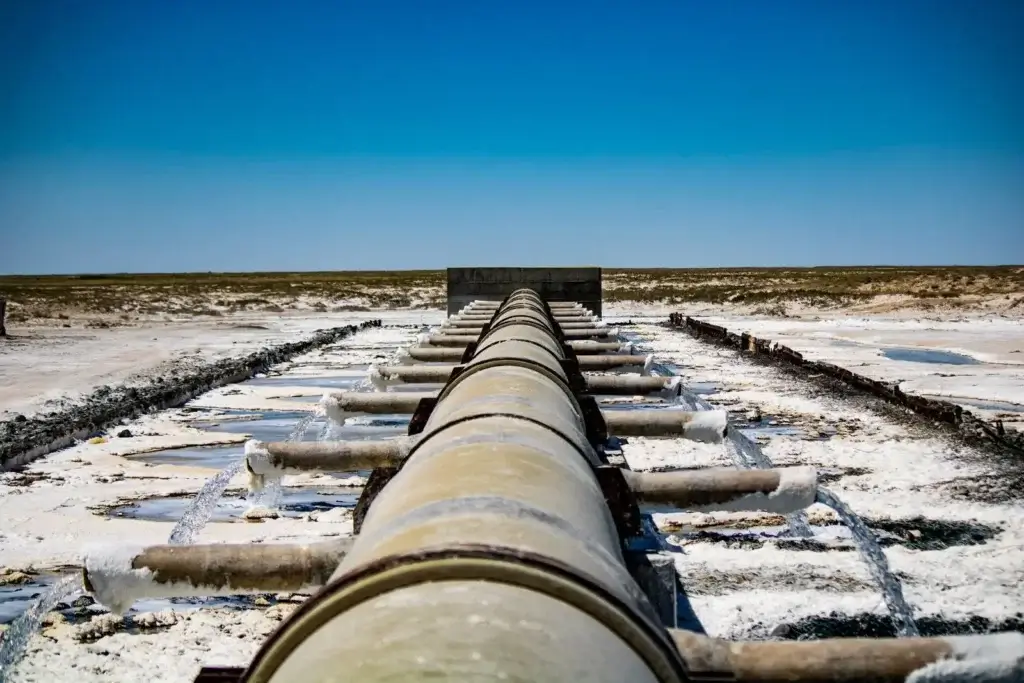
Desalination activated carbon is a porous carbonaceous adsorbent — typically derived from coconut shell, coal, or wood — engineered with an internal pore network of 500 to 2,000 square meters of surface area per gram, and manufactured to the hardness and purity standards that high-salinity, chlorinated service demands.
At its core, activated carbon is ordinary carbon that has been given an extraordinary interior. Raw material is carbonized at high temperature, then “activated” with steam or chemicals, which burns out volatile components and etches an enormous network of interconnected pores into each particle. Chemically speaking, the resulting material is mostly amorphous elemental carbon, but physically it is closer to a rigid sponge: a single gram can unfold into an internal surface area comparable to several tennis courts.
That surface is organized into three pore classes, each with a distinct job:
- Micropores (under 2 nm) — the deep interior channels where small molecules such as chlorine and many dissolved organics are captured; the dominant pore class in coconut shell carbon.
- Mesopores (2–50 nm) — intermediate channels that admit larger organic molecules, color bodies, and humic substances; most abundant in wood-based carbon.
- Macropores (over 50 nm) — the transport corridors at particle exteriors that speed water into the finer network and reduce pressure drop across the bed.
What separates desalination-grade carbon from general-purpose grades is the environment it must survive. Seawater feed is aggressive on three fronts: chlorination doses are high to control marine biofouling, which raises the oxidant load the carbon must decompose; constant flow through deep beds rewards high mechanical hardness, because particle breakdown generates fines that blind downstream cartridge filters; and any leachable impurities in the material end up in product water, which pushes ash content specifications down. A carbon that performs well in an air filter or sugar decolorizer will not necessarily survive six months in a seawater pretreatment train — which is exactly why the material deserves material-first scrutiny.
Raw Materials and How They Shape Performance
The feedstock a carbon is made from largely pre-determines its pore architecture and mechanical character:
- Coconut shell carbon — carbonized fruit-shell char with a predominantly microporous structure, naturally high hardness, and low ash. It is the reference material for dechlorination and small-molecule adsorption duty.
- Coal-based carbon — bituminous or anthracite-derived, offering a balanced micro-to-mesopore mix, strong mechanical strength, and the economies of scale that large municipal plants require.
- Wood-based carbon — steam-activated sawdust or chip char, rich in mesopores and macropores, suited to larger organic molecules and color removal.
Can Activated Carbon Actually Remove Salt?
By ordinary adsorption, no — dissolved salt ions pass straight through an activated carbon bed. But when activated carbon is built into electrodes for capacitive deionization, an applied electric field forces those same ions onto its surface, making it a genuine desalination medium for brackish and low-salinity water.
The answer to the title question therefore depends entirely on which of the material’s two working mechanisms is in play. Both are worth understanding, because they define both the limits and the opportunity.
Adsorption Mechanism: What Activated Carbon Captures and What It Cannot
Adsorption is a surface phenomenon: contaminant molecules in the water stick to the carbon’s internal surfaces through a combination of physical attraction (van der Waals forces), pore-size fit, and, in some cases, chemical reaction with surface functional groups. This mechanism is highly effective against chlorine, organic compounds, taste and odor molecules, and some colloidal material — and completely ineffective against dissolved salts.
The reason is chemical state. Salt in water exists not as particles but as fully dissociated, hydrated ions — sodium and chloride surrounded by shells of water molecules. These ions are far smaller and far more polar than the organic molecules carbon attracts, they interact weakly with nonpolar carbon surfaces, and the attractive forces available in an uncharged carbon bed cannot hold them. They flow through the pore network as if it were an open pipe.
| Contaminant Category | Typical Examples | Removed by Carbon Adsorption? |
| Dissolved inorganic salts | NaCl, MgCl₂, CaSO₄ | No |
| Residual disinfectants | Free chlorine, chloramines | Yes (catalytic decomposition) |
| Natural organic matter | Humic and fulvic acids | Yes |
| Synthetic organics | Pesticides, VOCs, pharmaceuticals | Yes |
| Taste, odor, color compounds | Algal metabolites, sulfides | Yes |
| Colloids and suspended solids | Fine particles, silt | Partially |
| Some heavy metal species | Certain metal complexes | Partially |
This is why no credible supplier sells a plain carbon cartridge as a desalination device — and why any treatment proposal claiming carbon “softens” seawater should be treated with suspicion.
Electrosorption Mechanism: Activated Carbon as a CDI Electrode
Capacitive deionization changes the physics entirely. In a CDI cell, two porous carbon electrodes face each other across a flow channel, and a low direct voltage — typically 1.0 to 1.4 volts — is applied between them. Salt ions now have an electrostatic reason to leave the water: cations migrate to the negative electrode, anions to the positive one, and each is held in the electrical double layer that forms at the charged carbon surface. Discharge or reverse the voltage and the ions release back into a concentrated waste stream, regenerating the electrodes with no chemical dosing.
Activated carbon dominates CDI electrode construction because it uniquely combines the three material properties the application needs: enormous surface area for ion storage, adequate electrical conductivity for charge distribution, and electrochemical stability across thousands of charge-discharge cycles. Peer-reviewed work quantifies the promise: a study published in ACS Omega on activated carbon CDI electrodes reported a desalination capacity of 23.8 mg of salt per gram of electrode at 1.2 V in a 3,000 µS/cm NaCl solution, with meaningful capacity retention after 150 cycles, while research on biomass-derived carbon electrodes has demonstrated salinity reductions approaching 90 percent in brackish feed.
Electrode performance, however, is a direct function of material parameters:
| Material / Design Parameter | Influence on Desalination Performance |
| Specific surface area | More area means more electrosorption sites and higher salt capacity |
| Pore size distribution | Micropores store ions; macropores accelerate ion transport |
| Electrical conductivity | Higher conductivity reduces internal resistance and energy use |
| Electrode thickness | Thinner electrodes improve capacitance and ion accessibility |
| Surface modification | Metal oxide or heteroatom doping adds pseudocapacitance and durability |
The commercial picture for buyers is straightforward: CDI with activated carbon electrodes is real desalination, best matched to brackish groundwater, industrial rinse streams, and low-to-medium salinity feeds. For full-strength seawater, RO and thermal evaporation remain the workhorses — and there, carbon’s job is protecting the process rather than performing it.
How Activated Carbon Works Inside a Desalination Plant

Inside a desalination plant, activated carbon works through three mechanisms: catalytic dechlorination that protects polyamide membranes, organic adsorption that controls fouling at its source, and final polishing that makes product water palatable and safe.
Each mechanism draws on a different material property, which is why a single plant may deploy different carbon grades at different points in the train.
Catalytic Dechlorination: Protecting Polyamide Membranes
Seawater intakes are chlorinated to suppress biofouling, but the thin-film polyamide membranes at the heart of every SWRO plant are among the most chlorine-sensitive materials in industrial use. Even fractional parts per million of free chlorine attack the polymer’s amide bonds, causing irreversible loss of salt rejection. Chloramines cause the same degradation more slowly.
Activated carbon removes these oxidants through catalytic reduction on its internal surface — chlorine is deprotonated and reduced to harmless chloride, consuming water in the reaction but very little of the carbon’s own adsorption capacity. Because the process is catalytic rather than stoichiometric, a well-designed dechlorination bed delivers non-detectable chlorine residuals for an exceptionally long service life, making it one of the cheapest insurance policies in the plant.
Organic Adsorption: Controlling Fouling at the Source
The economically larger duty is fouling control. Natural organic matter, algal bloom residues, trace hydrocarbons, and colloids deposit on membrane surfaces, raising required feed pressure and forcing frequent clean-in-place (CIP) cycles — each one a stoppage that costs production, chemicals, and membrane life. A World Bank assessment of Gulf desalination operations underscores that pretreatment maturity is the single biggest determinant of RO plant reliability.
Carbon adsorption strips these foulants before they reach the membrane. Plants operating carbon pretreatment typically record:
- Lower silt density index (SDI) in membrane feed water
- Longer intervals between chemical cleanings
- Extended membrane replacement cycles
- Stable permeate flux and quality over time
- Reduced CIP chemical consumption
| Operating Metric | Without Carbon Pretreatment | With Carbon Pretreatment |
| Membrane fouling rate | High | Low |
| CIP frequency | Frequent | Occasional |
| Membrane service life | Shortened by oxidative and organic damage | Extended |
| Maintenance cost | Elevated | Reduced |
| Permeate quality stability | Fluctuating | Consistent |
Post-Treatment Polishing: Improving Final Water Quality
After desalination, product water is remineralized and disinfected — but it can still carry residual volatile organics, disinfection by-products, and taste or odor compounds. A final granular activated carbon polishing barrier removes them, ensuring the water meets drinking water purification expectations.
This function also answers a frequent public question: is it safe to drink water treated with activated carbon? Yes. Carbon filtration is among the most widely certified treatment methods in municipal and point-of-use drinking water practice worldwide, and it removes contaminants rather than adding anything. The operational caveat is bed management: exhausted carbon can become a bacterial colonization site, so disciplined replacement schedules and microbiological monitoring are part of responsible use — not a flaw in the material, but a maintenance requirement like any other.
Types of Activated Carbon Used for Desalination
The main carbon families used in desalination are coconut shell, coal-based, and wood-based carbons, deployed as granular (GAC), powdered (PAC), or extruded (pellet) formats — the right choice depends on whether the bed must decompose chlorine, adsorb large organics, or survive high-pressure deep-bed service.
For procurement teams, matching the material to the duty is the central decision. The comparison below summarizes the field:
| Carbon Type / Format | Pore Character | Key Strengths | Typical Desalination Duty |
| Coconut shell activated carbon | Predominantly microporous | High hardness, low ash, superior dechlorination, long bed life | SWRO pretreatment, polishing barriers |
| Coal based activated carbon | Mixed micro-mesoporous | Balanced capacity and cost, high mechanical strength | Large-scale municipal pretreatment |
| Wood based activated carbon | Mesopore-rich | Efficient on larger organic molecules and color | High-NOM feeds, bloom response |
| Granular activated carbon (GAC) | Bed-format granules | Reloadable fixed beds, low pressure drop | Continuous pretreatment filters |
| Powdered activated carbon (PAC) | Fine powder | Fast response, dosing flexibility | Algal bloom events, transient spikes |
| Extruded activated carbon | Uniform pellets | High crush resistance, low dust | High-pressure, deep-bed columns |
Three selection principles keep this table practical:
- Match pore structure to target contaminant. Dechlorination lives in micropores; humic substances and color bodies need mesopores. Analyze the feed before choosing the media.
- Match format to operation. Continuous fixed beds call for GAC or extruded carbon; episodic raw-water spikes are handled faster and cheaper with PAC dosing.
- Match hardness to hydraulics. Deep, high-flow seawater beds punish weak particles; attrition losses that look minor on paper translate into blinded cartridge filters within weeks.
Key Specifications to Evaluate Before Buying
The five specifications that matter most in desalination carbon procurement are iodine number, methylene blue adsorption, hardness or attrition value, ash content, and particle size distribution — each one maps directly to a field failure mode if it is under-specified.
Specifications are where marketing language meets measurable material performance. Buyers should treat the following as non-negotiable data points, verified by third-party test where possible:
- Iodine number — a proxy for micropore volume and small-molecule capacity; the primary indicator for dechlorination and trace-organic duty. Higher is generally better; under-specified values predict short bed life.
- Methylene blue adsorption — reflects mesopore capacity for medium-sized organics and color bodies; critical where NOM loads are high or seasonal.
- Hardness / attrition value — measures resistance to particle breakdown under flow and handling. Low hardness in seawater service means fines, pressure drop, and cartridge blinding.
- Ash content — leachable mineral impurities that can end up in product water or foul beds; lower ash also signals cleaner activation.
- Moisture and particle size distribution — govern delivered value, bed hydraulics, and pressure drop. Oversized or over-wet lots quietly reduce effective capacity.
A disciplined procurement practice ties each specification to the bed’s primary duty — a dechlorination barrier, an NOM barrier, and an emergency PAC system may each justify different numbers on the same datasheet.
Advantages and Limitations of Activated Carbon in Desalination
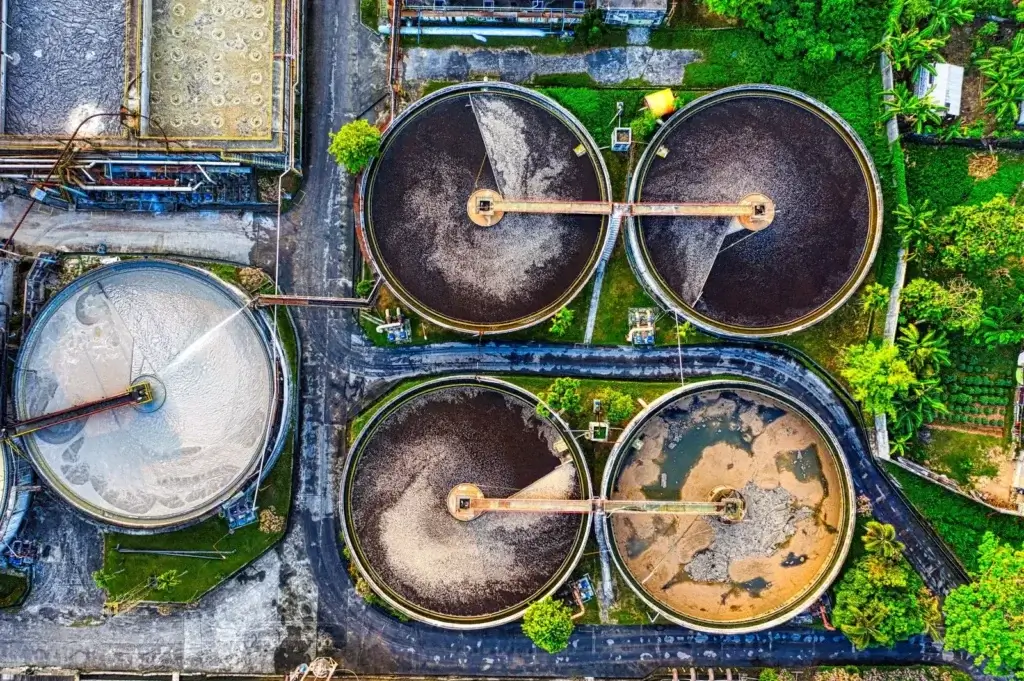
Activated carbon brings membrane protection, operating cost reduction, and water quality improvement to desalination plants, along with genuine limitations: it cannot desalinate by adsorption, exhausted beds can harbor bacteria, and it is a consumable that demands disciplined replacement.
A balanced view of the material’s strengths and weaknesses:
Advantages:
- Protects high-value RO membranes from chlorine and organic attack
- Reduces CIP frequency, chemical use, and unplanned downtime
- Improves final water taste, odor, and acceptance
- Flexible across formats and duties, from fixed beds to emergency dosing
- Proven, certified, and globally available at industrial scale
Limitations — and how to manage them:
- No salt removal through adsorption. Desalination itself requires RO, thermal, or CDI technology; carbon’s role is enabling those processes.
- Microbiological growth in exhausted beds. Managed through scheduled replacement, backwashing, and downstream disinfection.
- Breakthrough risk. Capacity is finite and exhaustion is invisible to the eye; continuous chlorine and TOC monitoring with data-driven replacement triggers is mandatory.
- Limited removal of some by-product precursors. Low-molecular-weight organics are only partially adsorbed; multibarrier design compensates.
- Consumable cost. A recurring operating expense — but one consistently offset by avoided membrane damage and cleaning costs in desalination service.
None of these limitations argues against the material; they argue for specifying it correctly and operating it with the same rigor as any other process equipment.
The Future of Activated Carbon in Desalination
The material’s future in desalination runs on three tracks: engineered carbon electrodes for commercial CDI, sustainable biomass-derived carbons for both electrodes and pretreatment media, and increasingly stringent performance specifications as global capacity expands.
Capacitive deionization is moving from laboratory to commercial deployment for brackish and industrial streams, and every generation of CDI performance gains traces back to better carbon: tuned pore architectures, conductive additives, and surface modifications that raise salt capacity and cycle life. In parallel, coconut shell, wood waste, and agricultural residues are displacing fossil feedstocks in both electrode and granular media production, improving the sustainability profile of the supply chain. And as new desalination markets open across Africa, South Asia, and Latin America, demand for technically reliable carbon supply will grow with them — making supplier evaluation a strategic, not routine, procurement decision. For buyers building that evaluation, starting from a technically documented range of activated carbon products with full specification transparency is the shortest path to a material that performs in the field, not just on the datasheet.
Frequently Asked Questions
How often should activated carbon be replaced in desalination pretreatment?
Intervals vary with feed quality and bed design, typically from several months to a few years. Condition-based replacement — triggered by chlorine breakthrough, rising SDI, or declining TOC removal — outperforms any fixed calendar schedule.
Can a household activated carbon filter desalinate tap water or brackish water?
No. Home carbon filters improve taste and remove chlorine and organics, but dissolved salt passes through unaffected. Household desalination requires a reverse osmosis system, usually paired with carbon pre- and post-filters.
What is the difference between granular and powdered activated carbon in desalination plants?
Granular carbon is loaded into fixed-bed filters for continuous long-run service; powdered carbon is dosed into the water for fast-response events such as algal blooms. Many plants maintain PAC dosing capability as a supplement to their GAC beds.