
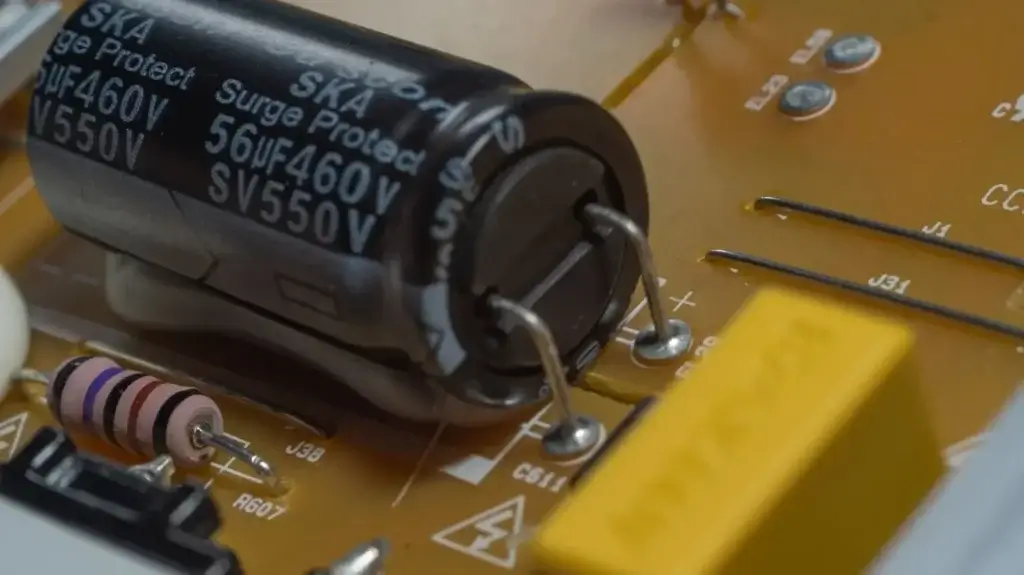
As renewable power generation, electrified transportation, and industrial automation expand, more and more systems need energy storage that can deliver large bursts of power in seconds, survive hundreds of thousands of charge and discharge cycles, and keep working in extreme temperatures. Conventional batteries struggle to meet all three demands at once, which is why supercapacitors have moved from a niche technology into wind turbine pitch systems, hybrid buses, grid frequency regulation, and backup power modules. At the heart of nearly every commercial supercapacitor sits one humble material: activated carbon.
An activated carbon supercapacitor is an energy storage device, usually called an electric double-layer capacitor (EDLC) or ultracapacitor, that uses porous activated carbon as its electrode material to store electrical energy electrostatically. Ions in the electrolyte accumulate on the enormous internal surface of the activated carbon electrodes to form electric double layers, so charging and discharging rely on physical adsorption and desorption rather than chemical reactions, which gives the device high power density, a service life of up to one million cycles, and stable operation from about -40°C to 70°C.
In the sections below, we break down how this device works, why activated carbon dominates the electrode market, what performance you can expect, where it is used, and how buyers should evaluate supercapacitor activated carbon for production.
What Is an Activated Carbon Supercapacitor?
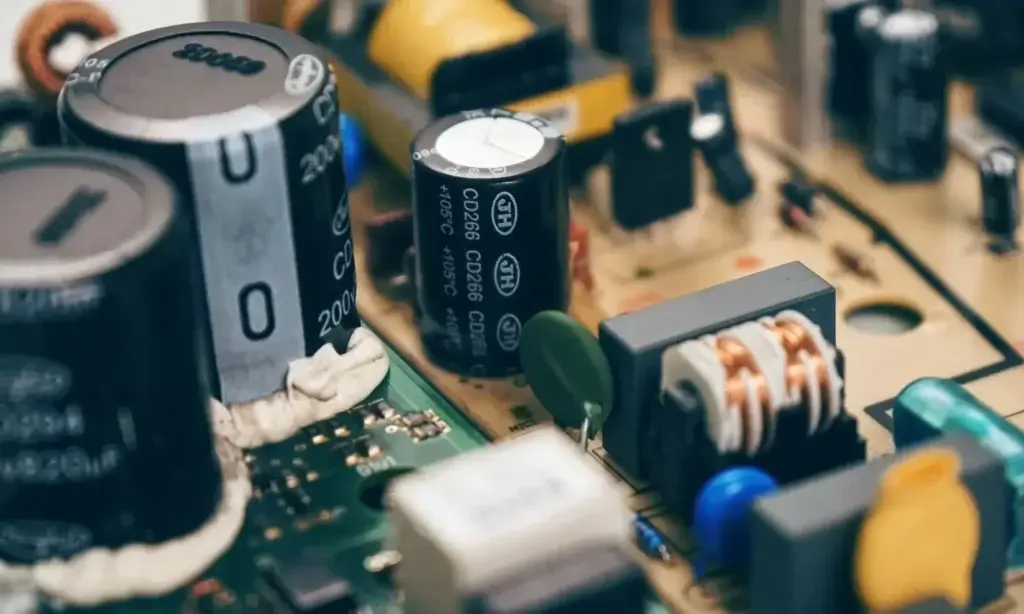
An activated carbon supercapacitor is a capacitor-type energy storage device built from two porous activated carbon electrodes, a separator, and an electrolyte, in which energy is stored in the electric double layers that form at the interface between the carbon surface and the electrolyte when a voltage is applied. Unlike a battery, no faradaic charge transfer or bulk chemical reaction is involved during normal operation, so the process is almost perfectly reversible.
The concept is easier to grasp by comparing it with an ordinary capacitor. A traditional capacitor stores charge on two flat metal plates separated by a dielectric, and its capacitance scales with plate area and shrinks with plate spacing. An activated carbon supercapacitor applies the same physics in an extreme way: the “plates” are activated carbon electrodes with a specific surface area that can exceed 1,000 to 3,000 square meters per gram, and the “dielectric spacing” is only the thickness of a single solvent-molecule layer at the electrode-electrolyte interface. This combination of enormous area and tiny spacing is what allows a device the size of a soda can to reach capacitance values thousands of farads, millions of times higher than conventional capacitors of similar volume.
Because the activated carbon electrodes are symmetric and the storage mechanism is electrostatic, the discharge voltage falls linearly with stored charge, following the relation V = Q/C, rather than holding a flat plateau as a battery does. This characteristic, together with very low internal resistance, makes the technology exceptionally good at delivering short, high-current pulses and absorbing regenerative energy quickly.
How the Electric Double Layer Stores Energy
The working principle dates back to Helmholtz’s nineteenth-century work on interfacial charge. When two carbon electrodes are immersed in an electrolyte and a voltage is applied:
- Cations in the electrolyte migrate toward the negative electrode, while anions migrate toward the positive electrode.
- At each electrode surface, the adsorbed ions line up against electronic charges in the carbon, forming two nanometer-thin charge layers known as Helmholtz double layers.
- The device therefore behaves like two capacitors connected in series, one at each electrode-electrolyte interface.
- When the circuit discharges, the ions simply diffuse back into the electrolyte bulk and the stored charge flows out through the external circuit.
Because this is pure physics rather than chemistry, there is no phase change, no electrode swelling, and no electrolyte decomposition during normal cycling. That is why activated carbon supercapacitors routinely achieve cycle lives of 500,000 to 1,000,000 cycles, roughly two to three orders of magnitude more than lithium-ion batteries.
Internal Structure and Key Components
A commercial cell contains four core components:
- Electrodes: thin coatings of activated carbon mixed with a conductive additive and a polymer binder, applied to metallic foil current collectors, usually aluminum.
- Separator: an ion-permeable membrane, typically cellulose or polypropylene, that prevents electronic contact between the electrodes while allowing ion transport.
- Electrolyte: an aqueous solution, an organic salt solution such as quaternary ammonium salts in acetonitrile or propylene carbonate, or an ionic liquid. The electrolyte supplies the ions and largely determines the operating voltage window.
- Current collectors and casing: foils or etched metal plates that carry current out of the cell, sealed inside cylindrical or prismatic housings using winding or stacking designs.
Modules are then built by connecting cells in series to reach the required operating voltage and in parallel to reach the required energy or power rating.
Why Activated Carbon Is the Preferred Electrode Material
Activated carbon is the preferred electrode material because it combines an extremely high specific surface area, a tunable hierarchical pore structure, good electrical conductivity, strong chemical stability, and a low raw material cost, making it the only carbon material that satisfies both the performance and the mass-production requirements of commercial supercapacitors. Industry estimates suggest that roughly 60 percent of the raw material input of a typical commercial supercapacitor is activated carbon, most of it derived from coconut shells.
Three properties matter most. First, surface area: capacitance in an EDLC is proportional to the electrochemically accessible surface area, so carbons offering 1,000 to 3,000 m²/g can reach specific capacitance values of roughly 25 to 30 F/g in commercial cells with organic electrolytes. Second, conductivity: the delocalized pi-electrons of the sp2-bonded carbon framework provide enough electronic conductivity for high-rate operation once a small amount of carbon black is added to the electrode. Third, stability: carbon is chemically inert across the full voltage window of common electrolytes, which supports long cycle life and wide temperature tolerance. For these reasons, alternatives such as carbon nanotubes, graphene, and carbon aerogels have been studied extensively, but none has displaced activated carbon in mass production on cost and manufacturability.
Raw Material Sources: Coconut Shell, Coal, and Wood Based Carbon
The choice of precursor strongly shapes the pore system and the final device performance. The three mainstream families compare as follows:
| Precursor | Typical Pore Character | Ash Content | Relative Cost | Typical Use in Supercapacitors |
| Coconut shell | Dominated by narrow micropores; very high surface area per mass; hard microstructure | Low | Medium | Mainstream choice for organic electrolyte cells; high capacitance and voltage stability |
| Coal based | Mixed micro- and mesopores; density advantage | Medium to high | Low | Cost-sensitive industrial cells; good volumetric capacitance |
| Wood based | More mesopores and macropores; lower density | Low to medium | Low to medium | High-rate and low-ESR designs where ion transport speed matters more than total capacitance |
Coconut shell derived carbon has become the de facto industry standard because the natural microstructure yields dense, narrowly distributed micropores after activation, and the material is available at industrial scale from agricultural supply chains. Many manufacturers source coconut shell activated carbon specifically because its low ash content and hardness support consistent electrode quality.
How Supercapacitor Grade Activated Carbon Is Produced
Producing activated carbon for supercapacitors follows two industrial routes:
- Physical activation. The precursor is carbonized at 600 to 900°C in an inert atmosphere to drive off volatiles, then exposed to superheated steam or carbon dioxide at a similar temperature, which selectively etches the carbon skeleton and opens an extensive pore network.
- Chemical activation. The precursor is impregnated with an activating agent such as potassium hydroxide or phosphoric acid and heated at 400 to 900°C. Chemical activation develops higher surface areas at lower temperatures and gives finer control over pore size distribution, which is why KOH activation is the most common route for premium supercapacitor carbons.
After activation, the carbon is washed to remove residual chemicals, milled and classified to a controlled particle size, and dried. Typical commercial specifications for supercapacitor grade material include a specific surface area of 1,500 to 2,500 m²/g, total pore volume above 0.8 cm³/g, ash content below 0.5 percent, moisture below 1 percent, and a median particle size (D50) of roughly 5 to 10 micrometers for slurry coating processes. For electrode formulations based on fine powders, buyers often work with powdered activated carbon grades that have been milled specifically for dispersion stability in water-based or NMP-based slurries.
Pore Structure and Its Effect on Performance
Not every square meter of surface area contributes to capacitance. Following the IUPAC classification, the pore system divides into three regimes, and each plays a different role:
- Micropores (below 2 nm): hold most of the total surface area and therefore the bulk of the capacitance, but very narrow pores restrict ion diffusion, especially for the larger solvated ions of organic electrolytes.
- Mesopores (2 to 50 nm): act as ion highways that keep electrolyte resistance low at high current, contributing strongly to rate capability and power density.
- Macropores (above 50 nm): serve as electrolyte reservoirs that shorten diffusion paths into the particle interior.
The practical implication is that the best electrode carbon is not simply the one with the highest surface area, but the one whose pore size distribution matches the ion size of the chosen electrolyte. A hierarchical pore structure that balances micropore volume for charge storage with mesoporosity for ion transport consistently outperforms a carbon that maximizes surface area alone, and it also keeps equivalent series resistance (ESR) low.
Types of Supercapacitors Based on Activated Carbon
Activated carbon appears in three commercial supercapacitor families: pure symmetric EDLCs where both electrodes are activated carbon, pseudocapacitors where carbon carries redox-active coatings, and hybrid supercapacitors where an activated carbon electrode is paired with a battery-type electrode. Each family trades cycle life and power against energy density in a different way.
| Type | Electrode Configuration | Storage Mechanism | Energy Density | Cycle Life | Typical Cell Voltage |
| EDLC (symmetric) | Activated carbon on both electrodes | Pure electric double layer | 4 to 7 Wh/kg | Up to 1,000,000 | 2.3 to 2.8 V (organic) |
| Pseudocapacitor | Activated carbon with metal oxide or conductive polymer coatings | Double layer plus surface redox reactions | Higher than EDLC | Lower, typically 10,000 to 100,000 | 1.0 to 1.6 V (aqueous) |
| Hybrid / lithium-ion capacitor | Activated carbon cathode with lithiated graphite or similar anode | Double layer plus lithium intercalation | 10 to 20 Wh/kg | 50,000 to 100,000 | 3.8 to 4.0 V |
For buyers, the takeaway is straightforward: when the priority is maximum power, maximum cycle life, and minimum maintenance, the symmetric activated carbon EDLC remains the most robust and cost-effective choice, which is why it accounts for the majority of units shipped today.
Performance Characteristics of Activated Carbon Supercapacitors
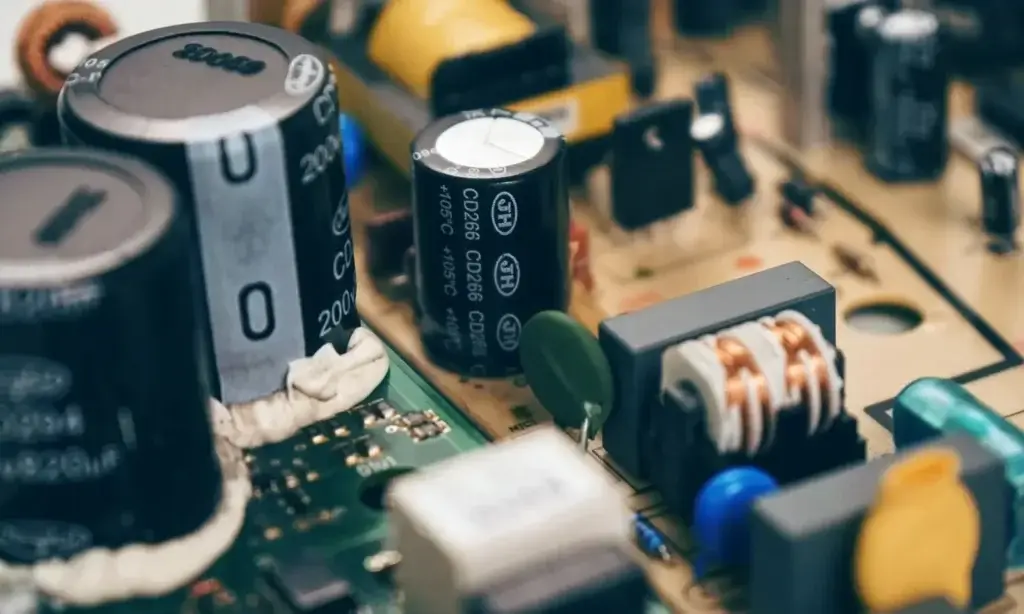
An activated carbon supercapacitor delivers high power density on the order of 5 to 8 kW/kg, a cycle life of up to one million cycles, charge times of seconds, roughly 90 percent round-trip efficiency, and stable operation from -40°C to 70°C, at the cost of an energy density of only 4 to 7 Wh/kg, far below that of batteries. The table below summarizes typical values for a commercial organic-electrolyte cell.
| Parameter | Typical Value (Commercial EDLC) |
| Cell voltage (organic electrolyte) | 2.3 to 2.8 V |
| Cell voltage (aqueous electrolyte) | 0.9 to 1.0 V |
| Specific capacitance (electrode material) | 25 to 30 F/g |
| Energy density | 4 to 7 Wh/kg |
| Power density | 5 to 8 kW/kg |
| Charge/discharge time | 1 second to a few minutes |
| Round-trip efficiency | About 90 percent |
| Cycle life | 500,000 to 1,000,000 cycles |
| Operating temperature | -40°C to 70°C |
| Calendar life | Around 10 years at room temperature |
Two aspects deserve a closer look because they drive most design and purchasing decisions.
The Role of the Electrolyte
The electrolyte is as important as the carbon itself, because it sets the voltage window, and since stored energy scales with the square of voltage, electrolyte choice directly determines energy density.
- Aqueous electrolytes such as potassium hydroxide or sulfuric acid solutions offer high ionic conductivity and low cost, but water decomposes above about 1.0 to 1.23 V, which caps cell voltage and therefore energy density.
- Organic electrolytes, most commonly quaternary ammonium salts such as tetraethylammonium tetrafluoroborate dissolved in acetonitrile or propylene carbonate, tolerate roughly 2.7 V per cell and are the standard in commercial devices, although they have higher resistance and require careful moisture control.
- Ionic liquids can push voltage windows even higher and improve thermal stability, but their viscosity reduces ionic conductivity, they usually need elevated operating temperature, and their cost remains high.
Importantly, the organic electrolyte’s larger solvated ions need slightly wider pores than aqueous systems do, which is another reason pore engineering and electrolyte selection must be decided together.
Activated Carbon Supercapacitor vs. Battery
The comparison against batteries, particularly lithium-ion, is the most common question from engineers evaluating storage options.
| Attribute | Activated Carbon Supercapacitor | Lithium-Ion Battery |
| Storage mechanism | Electrostatic adsorption (physical) | Chemical redox reactions |
| Charge time | Seconds to minutes | 30 minutes to several hours |
| Cycle life | 500,000 to 1,000,000 cycles | 500 to 5,000 cycles |
| Energy density | 4 to 7 Wh/kg | 150 to 260 Wh/kg |
| Power density | 5 to 8 kW/kg | 0.3 to 1 kW/kg |
| Voltage behavior | Linear discharge curve | Flat discharge plateau |
| Low-temperature performance | Stable to -40°C | Significantly degraded below 0°C |
| Efficiency | About 90 percent | 85 to 95 percent |
| Safety in pulse abuse | High, no thermal runaway mechanism | Requires protection systems |
So are supercapacitors better than lithium batteries? Neither replaces the other. When energy must be stored in bulk and released over hours, the battery wins decisively. When power must surge for seconds, when millions of cycles are needed, or when the device must survive arctic cold, the supercapacitor is the superior engineering choice, and many systems deliberately pair the two: the energy storage applications landscape increasingly uses supercapacitors to handle transients and thereby extend battery life rather than to replace the battery outright.
Applications of Activated Carbon Supercapacitors
Activated carbon supercapacitors excel wherever energy must be delivered or absorbed in seconds with high reliability and minimal degradation, which makes them the default solution for pulse power, bridge power, and memory backup duties across transportation, grid, and industrial markets. Since the late 1990s, millions of large-format cells have operated under harsh conditions, for example in the pitch control systems of utility-scale wind turbines.
Main application categories include:
- Transportation: regenerative braking energy recovery in buses, trams, and metro systems; diesel engine cranking support; hybrid drive buffering; voltage drop compensation in start-stop vehicles.
- Renewable energy and grid: wind turbine pitch backup, solar tracking, grid frequency regulation, and transient buffering in weak or fluctuating networks.
- Industrial equipment: uninterruptible power supplies, crane and materials-handling energy recovery, elevator controller backup, automated meter reading, and telecom base station peak shaving.
- Consumer and data systems: memory backup, server and SSD ride-through power, IoT device pulses, and solar-powered lighting.
- Emergency and backup power: short-duration ride-through until generators or batteries come online, where the supercapacitor’s instant availability and long float life are decisive.
Across all of these segments the common thread is duty cycling: an application that charges and discharges thousands of times per year would exhaust a battery in months, while a supercapacitor shrugs off the same duty for a decade or more.
How to Choose Activated Carbon for Supercapacitor Production
When sourcing activated carbon for supercapacitor manufacturing, buyers should match the pore size distribution to their electrolyte system, insist on low ash and moisture, demand batch-to-batch consistency with certified test data, and verify that particle size and purity are compatible with their slurry and coating process. Unlike water treatment or air purification grades, supercapacitor carbon is an electronic-grade material, and small impurity differences translate directly into higher ESR and shorter float life.
A practical supplier evaluation checklist:
- Specify the pore system first. For organic electrolyte cells, prioritize carbon with abundant sub-nanometer to 2 nm micropores plus sufficient mesoporosity; for aqueous systems, wider pore distributions can be tolerated.
- Demand certified analytical data. Request BET surface area, total pore volume, pore size distribution, ash content, moisture, and metal impurity analysis for the actual batch, not just datasheet averages.
- Check particle size and distribution. The D50 and the fines fraction determine slurry viscosity, coating quality, and electrode density; a typical target is a narrow distribution centered near 5 to 10 micrometers.
- Control contamination. Iron, chloride, and soluble salts accelerate self-discharge and corrosion; ppm-level limits should be written into the purchase specification.
- Verify batch consistency and capacity. Long-term supply stability matters as much as initial quality, so audit the production process and ask for multi-batch historical data.
- Match the precursor to the duty. Coconut shell grades for high-capacitance organic cells, or coal based activated carbon grades where volumetric efficiency and cost dominate.
Finally, storage and handling deserve attention on the buyer’s side: supercapacitor carbon is strongly hygroscopic, and adsorbed moisture raises ESR and degrades the organic electrolyte, so material should be stored sealed, in dry conditions, and dried per the electrode recipe before slurry preparation.
FAQ
Can activated carbon supercapacitors replace batteries? Not in most systems. With an energy density of 4 to 7 Wh/kg, they store far less energy per kilogram than lithium batteries, so they cannot power an application for hours. Their role is complementary: they handle high-power pulses, regenerative braking, and frequent cycling, which allows the accompanying battery to be sized smaller and to last longer. In some short-duration applications such as memory backup or pitch control, supercapacitors do fully replace batteries.
What is the real-world lifespan of an activated carbon supercapacitor? Manufacturers typically specify around 10 years of service at room temperature and up to one million charge-discharge cycles. Lifespan depends mainly on operating voltage, temperature, and humidity control in the electrolyte system; derating the operating voltage by about 0.1 V per cell and keeping temperatures below 65°C can extend service life substantially, while prolonged exposure to maximum voltage and high temperature accelerates electrolyte decomposition.
How should supercapacitor activated carbon be stored and handled before use? Because the material adsorbs moisture rapidly, it should be kept in sealed, moisture-barrier packaging, stored below 40°C in a dry warehouse, and allowed to equilibrate in sealed containers before opening. Before slurry production, most factories dry the carbon under vacuum at 120 to 150°C until moisture falls below 0.5 percent, since even small amounts of adsorbed water raise ESR, promote gas generation in organic electrolyte cells, and shorten shelf life.